
Creative BusinessName Ideas
How to name a creative business -The Complete Guide
Creative business name ideas backed by real brand examples, proven naming patterns, and domain strategy. Helps founders choose a name worth remembering.
A creative business name is the part of your brand that does the most work with the fewest letters. It appears on your storefront and your invoices, in your ads and your email signature, on the app icon and the conference badge, and in every conversation where someone says "you have to check out ___." Long before a customer reads your tagline, compares your prices, or scrolls your reviews, the name has already told them something: that this is a business with imagination, or that it is one more option that blends into the background. A creative name earns a second look. A flat one gets skipped.
It helps to be clear about what creative naming is and is not. A creative name is not automatically a catchy one. A catchy name is built for stickiness and instant recall, the kind of name that lodges in your head after one exposure. A creative name is built for originality and distinctiveness, the kind of name that feels like nobody else could have made it. The two often overlap, and the best names manage both, but when you are naming with creativity as the goal, you are optimizing for imagination, surprise, and a brand world that competitors cannot copy. You want a name that signals, before you say a single word about your product, that the thinking behind this business is original too.
There is a real tension to manage. Push creativity too far and a name becomes a liability: people cannot pronounce it, cannot spell it when they try to find you, or cannot tell what feeling it is going for. Push it too little and you end up with another forgettable descriptor. The names worth studying are the ones that found the line. They took a genuine creative risk, then sanded down the edges that would have created friction, so the name keeps its spark without costing the business customers. This guide walks through the main creative naming styles, with real, live brands in each, so you can see exactly how the imaginative leap was made and how it was kept usable.
At a Glance
If you are short on time, here is the shape of what follows.
• Creative names compete on originality and distinctiveness,
which is what gets a brand noticed, remembered, and recommended when competitors all sound alike.
• Six main creative naming styles, each with real, live examples:
brandable (coined words), compound (blended words), alternate spelling (respelled words), real word (familiar words used in an unexpected way), acronym (initials backed by a creative expansion), and evocative (words chosen for a feeling or image).
• Creative is not the same as catchy.
Catchy optimizes for instant recall, creative optimizes for originality, and the names that last tend to be original first and sticky as a result.
• A creative name and a clean matching domain work as a pair.
An exact .com match is the strongest home for a creative name, and coined or respelled names often make one reachable.
• Usability is non-negotiable.
Whatever style you choose, the name has to stay easy to say, easy to spell, clear in feeling, and recognizable when small, or the creativity starts costing you customers.
• The fastest path is range, then discipline.
Generate a wide spread of options, narrow with simple tests, avoid the common mistakes, and secure the name and its domain early.
Should your domain name match your creative business name?
For a creative name, the short answer is yes: wherever possible, the domain should match the name exactly. A creative name asks customers to remember something unfamiliar, and the easiest way to reward that effort is to make the address identical to the name, so there is nothing extra to recall and nothing to get wrong. When the name someone hears is the address they type, the brand presents as one coherent unit, trust builds faster, word of mouth turns into direct visits, and none of the recognition you earn leaks away to a lookalike. A mismatch, by contrast, splits the brand: people say one thing and type another, and the gap quietly costs you traffic and credibility.
The good news is that creative names make an exact match unusually achievable. Coined words and respelled words have no prior owners, so the exact .com is far more likely to be open than it is for a common descriptive phrase. That is one of the quiet advantages of naming creatively in the first place: the same originality that makes a name distinctive also makes its domain easier to own outright.
When the exact .com is not within reach, you have better options than compromising the name. You can lean into a coined or respelled variant that keeps the spirit of the idea while opening up a clean match. You can choose a relevant alternative extension that genuinely fits your audience and category, so the address still reads as one deliberate idea rather than a workaround. Or, if the exact word truly is the brand and anything less would weaken it, you can consider acquiring the matching domain outright. What is usually worth avoiding is padding the domain with filler words, extra syllables, or hyphens, because that is exactly what erodes the memorability and trust the creative name was meant to create. Treat the domain as part of the naming decision, not an afterthought, and choose the path that keeps the name and its address feeling like a single thing.
Why a strong creative business name and domain are worth the effort
A creative name is a compounding advantage, and a clean matching domain is what lets it compound. In a crowded market, the first job of any name is to be different enough to be noticed and remembered, and creativity is the most direct route to that difference. When every competitor is using some variation of the same descriptive words, an original name cuts through simply by refusing to sound like the others. That distinctiveness is what makes a brand easier to recall when a customer is ready to buy, and easier to recommend when they are talking to a friend.
Creativity gives the brand personality.
A name that makes an unexpected leap tells customers how the business thinks and feels before they have any other information. It can signal playfulness, boldness, craft, warmth, or precision, and it can do it instantly. That personality becomes the seed of the entire brand identity, the thing the logo, the voice, and the visual world all grow from. A flat name gives a designer nothing to work with. A creative name gives them a whole direction.
Original names are easier to own and protect.
Original names, especially coined and respelled ones, are far easier to protect and to own across every place a brand needs to live. They are more likely to clear a trademark search, more likely to have a matching exact domain, and more likely to be available as a clean handle on every social platform. Once you own a distinctive word, no competitor can dilute it, and your brand searches, your direct traffic, and your word of mouth all point to one place instead of being split across lookalikes.
A matching domain makes the name compound.
A creative name and an exact, clean domain reinforce each other: the name makes people curious and the domain makes them confident, and together they present as a single, coherent brand. When the address is identical to the name, every mention, every recommendation, and every search points to exactly one place, so the recognition the name earns is never scattered or handed to a near match. A creative name with a clean matching domain is a complete asset. A creative name attached to a compromised address is only half of one.
A creative name strengthens the signals that drive visibility.
A name and its domain do not, on their own, push you up the search rankings. What a strong, creative, ownable name does is strengthen all the indirect signals that compound over time. A distinctive name is more memorable, so more people search for it directly by brand. It earns a higher click-through rate when people recognize it in a list of results. It attracts more links and mentions because it is more quotable. It drives more return visits because people remember where they went.
A creative name lowers the cost of being remembered.
Marketing is, in large part, the work of getting a name remembered, and a name that is distinctive and original does some of that work for free. When people recall your brand after one exposure, recommend it without prompting, and type it directly into a browser, you spend less to reach the same customers than a business whose forgettable name has to be reintroduced again and again. Over months and years, that compounding memorability translates into word of mouth you did not pay for and a recognition you did not have to keep buying.
An original name makes the business more interesting to everyone.
Talented people are more drawn to work for a brand with a name that signals imagination and confidence. Partners and collaborators take a distinctive brand more seriously. Writers and creators find an original name easier and more appealing to mention, which is exactly how earned coverage and organic links begin. A flat, descriptive name gives none of these audiences anything to latch onto, while a creative one gives them a reason to lean in.
A creative name buys room to grow.
Descriptive names trap a business inside the first thing it sold. A name built on imagination rather than a literal product can stretch across new categories, new markets, and new offerings without ever feeling wrong. The business can evolve, and the name evolves with it, because it was never tied to a single shelf in the first place.
What matters most when naming a creative business
The imaginative leap
The most creative business names make an imaginative leap that still lands somewhere useful. They take a familiar idea and twist it, fuse two unrelated words into one, respell a common term so it becomes ownable, borrow an image from somewhere unexpected, or invent a word from nothing. The leap is what makes the name original, the thing that signals imagination before you have said a word about your product. But the leap alone is not enough, because a name also has to survive contact with real customers, and that is where usability comes in.
Easy to say
A creative name works when it is easy to say, so it flows in conversation and in a voicemail without making anyone hesitate. If you find yourself spelling it out, bracing for a follow-up question, or pausing over the emphasis, the name is carrying more cleverness than it can support, and that friction repeats every day for every customer.
Easy to spell
It has to be easy to spell, so someone who hears it can type it correctly and actually find you. This matters most for coined and respelled names, where the altered or invented form has to be the one a listener would naturally guess. If the spelling sends people to the wrong address, the creativity is costing you traffic.
Clear in feeling
It has to be clear in feeling, so the imaginative leap points at a mood that fits the business rather than a vague or contradictory one. A beautiful word that pulls up the wrong feeling makes the rest of your marketing fight an impression the name created. The mood of the name should match the positioning of the brand.
Recognizable when small
It has to be recognizable at a small size, so it works as an app icon, a handle, and a line of text on a phone, where most people will first meet it. A creative name that only works in a large, stylized treatment loses most of the places it actually lives.
Creative first, catchy as a result
A catchy name is built for instant recall, and a creative name is built for originality. The strongest names manage both, but when creativity is your explicit goal you protect the imaginative leap and the brand world it opens up, not just the stickiness. The aim is a name that is original first and usable always, so it is both worth remembering and easy to act on.
Creative business name ideas by naming style
Six proven approaches to naming your creative business, each with real examples and practical guidance.
Brandable (coined words) creative business name ideas
A brandable name is coined or invented. It does not come from the dictionary, and that is exactly the point. A made-up word carries no prior meaning, which means the business gets to define it from scratch and own it completely. This is the most inherently creative naming style, because you are not choosing a word, you are building one.
The freedom is total, and so is the ownership: a coined word is the easiest kind of name to trademark, to match with an exact domain, and to claim across every platform. The best brandable names feel like the thing they represent, through rhythm, length, and the texture of their letters, even though they are technically nonsense.
Five real examples worth studying
- •Funko at funko.com:
A fully coined word with a bouncy, playful sound that fits a company built on pop-culture collectibles. The name means nothing on its own, which let it expand from bobbleheads to a vast licensed-figure empire without the word ever feeling too narrow. The double syllable is easy to say and easy to chant, and the clean .com match anchors the brand. It demonstrates how an invented word with a fun sound can own an entire category of joy.
- •Doximity at doximity.com:
A coined name that telescopes "doctor" and a proximity- and-community feel into one smooth, professional-sounding word. For a medical network, it manages to suggest both the profession and closeness without literally spelling either out. The word reads as a single ownable unit, and the .com matches directly. It demonstrates how fusing a profession with an abstract, suffix-like ending can produce a coinage that feels both serious and new.
- •Vessi at vessi.com:
A short, smooth, invented name for a waterproof-footwear brand, with no prior meaning and a modern, almost aerodynamic sound. The brevity makes it effortless to type, to say, and to remember, and the clean .com gives it a confident home. The softness of the word keeps it approachable rather than technical. It demonstrates how a compact coined word can feel contemporary and ownable from the very first exposure.
- •Suno at suno.com:
A short, musical, invented-feeling name for an AI music platform, borrowed from a word meaning "listen" in Hindi and reintroduced as a coinage for a global audience. The sound is melodic and open, which fits a product about making songs from an idea. The four-letter .com is as clean as a brand can hope for. It demonstrates how a borrowed or coined word with the right sound can carry a creative product and travel across languages.
- •Replit at replit.com:
A coined name built from "REPL," a programming term for an interactive coding loop, plus a friendly "it" ending. For developers it carries an insider wink, while for everyone else it simply reads as a distinctive tech word. The compression is clever without being obscure, and the .com matches directly. It demonstrates how an industry term can be coined into a memorable, ownable brand that rewards the people in the know.
The craft of coining a word is mostly the craft of choosing sounds. Soft consonants and open vowels feel friendly and approachable, while hard consonants and short syllables feel punchy and bold, and the right combination can signal a brand's personality before any meaning is attached. Length matters too, since shorter coinages are easier to say, type, and remember, which is why so many invented brands land at two syllables. It is also worth saying a candidate out loud in a sentence and checking that it does not accidentally collide with a real word in another language or an awkward sound when spoken quickly.
Brandable naming is the boldest creative path and the one with the most upside in ownership. Try generating coined options in the Creative Business Name Generator and pay attention to how each invented word sounds out loud and looks as a logo.
Compound (blended words) creative business name ideas
A compound creative name fuses two or more words, or trimmed pieces of words, into a single new one. This is different from simply placing two words side by side. The creativity lives in the cut and the fuse: you take the meaningful parts of each word, trim what you do not need, and telescope them together into something that reads as one unit. Done well, the result keeps a hint of meaning from each source while becoming distinct enough to own.
The strongest compounds pair or blend words that are not obvious neighbors, or compress a longer phrase so far that the seams disappear. The surprise of the combination is what makes it creative, and the smoothness of the fusion is what makes it usable.
Five real examples worth studying
- •Memrise at memrise.com:
"Memory" and "rise" trimmed and fused into one word for a language-learning app. The blend is doing argument work: it names the method, memory, and the promise, rising progress, in a single coined-feeling unit. The seams are smooth enough that it reads as one word, not two glued together, and the .com matches directly. It demonstrates how trimming and telescoping two words can create a name that quietly states what the product does for you.
- •Vodafone at vodafone.com:
"Voice," "data," and "phone" compressed into a single brand, Vo-Da-Fone, from the earliest days of mobile communications. Three category words are telescoped so tightly that most people never notice the parts, which is the mark of a successful fusion. The result is a global, ownable word with a clean .com. It demonstrates how even multiple descriptive words can be trimmed to their first syllables and fused into one distinctive brand.
- •Garmin at garmin.com:
A fusion of the founders' first names, Gary and Min, trimmed to "Gar" and "Min" and joined into one neutral, corporate-sounding word. The name carries no category baggage, which let a navigation company expand into wearables, aviation, and fitness without the word ever feeling wrong. The .com matches directly. It demonstrates how blending two people's names can produce a flexible, ownable brand that outlives its origin story.
- •Sega at sega.com:
A compression of "Service Games," trimmed to its leading syllables, SE and GA, and fused into a short, punchy word. The brevity gives it energy that suits a gaming brand, and the origin phrase disappears entirely into a name that feels coined. The clean four-letter .com anchors it. It demonstrates how trimming a descriptive company phrase down to its opening sounds can yield a brand with real momentum.
- •Velcro at velcro.com:
A cross-language fusion of the French "velours," meaning velvet, and "crochet," meaning hook, trimmed to "Vel" and "Cro" to describe the invention itself, hooked velvet. The blend is so apt and so distinctive that the word became shorthand for an entire kind of fastener. The .com matches directly. It demonstrates how fusing descriptive roots, even borrowed from another language, can name an invention so precisely that the coinage becomes iconic.
The mechanics are worth understanding, because a good blend is engineered, not stumbled upon. You can fuse two whole words, trim each word to its strongest syllable and join the pieces, or telescope a longer phrase down until only its opening sounds remain. The seams are what separate a brandable-feeling blend from an obvious mashup: when the join is clean, people read the result as one word and never pause to take it apart, but when it is clumsy, the two halves stay visibly glued and the name feels like a compromise. Aim for a fusion smooth enough to say in one breath and unexpected enough to be worth remembering.
Compound naming rewards unexpected pairings and clean fusion. Explore blended directions in the Creative Business Name Generator and watch how trimming each word changes the rhythm of the result.
Alternate spelling (respelled words) creative business name ideas
An alternate spelling creative name takes a familiar word and modifies just enough of it to become ownable. You keep the sound and the meaning of the original, but you change the form, through a swapped letter, a dropped or doubled letter, or a reshaped ending. The creativity is in choosing a change that adds personality or distinctiveness without making the word hard to find. A respelling lets you ride the instant recognition of a known word while owning a version of it that no competitor can claim.
Some modifications travel better than others. Swapping a C for a K or a Q, trading an S for a Z, doubling a vowel, or dropping a silent letter tends to keep a word instantly readable while making it ownable, because the sound stays put and only the look changes. Reshaping an ending, such as turning a word into an unexpected suffix, can work too, as long as the root stays obvious.
Five real examples worth studying
- •Krazy Glue at krazyglue.com:
"Crazy" respelled with a K for an adhesive brand, a single-letter swap that signals intensity and strength while staying instantly readable. The K gives the word a jolt of personality that matches a product known for an aggressive bond, and nobody hesitates over how to say it. The .com matches directly. It demonstrates how swapping one opening letter can make a common word ownable and inject attitude at the same time.
- •Nuuly at nuuly.com:
"Newly" reshaped with a doubled u for a clothing-rental service, keeping the sound of freshness and newness while creating a distinctive, trademarkable form. The double vowel looks modern and a little playful, which fits a brand built on always having something new to wear. The .com matches directly. It demonstrates how doubling a vowel can transform an everyday word into an ownable brand without losing its meaning.
- •Qapital at qapital.com:
"Capital" respelled with an opening Q for a savings app, a bold swap that preserves the financial meaning while making the word completely distinctive. The Q is unexpected enough to be memorable, yet the word still reads instantly as "capital," so the meaning carries through. The .com matches directly. It demonstrates how changing the first letter of a category word can create instant distinctiveness while keeping the message intact.
- •Bratz at bratz.com:
"Brats" respelled with a Z for a fashion-doll brand, a single ending swap that loads the name with edge and attitude. The Z does almost all the branding work, turning a plain plural into a word that signals personality and pop-culture confidence. The .com matches directly. It demonstrates how a single ending-letter swap can carry a brand's entire attitude while keeping the word easy to say.
- •Eventbrite at eventbrite.com:
"Bright" respelled as "brite" inside an events-platform name, trimming the word while keeping its upbeat, optimistic connotation. The respelling shortens and modernizes the second half of the name, and it keeps the positive feeling that suits gatherings and celebrations. The .com matches directly. It demonstrates how respelling one part of a name can preserve meaning while creating a cleaner, more ownable whole.
The modifications that get businesses into trouble are the ones that change how a word sounds, or that require the reader to already know the trick, because those are the ones that send people to the wrong address. A useful test is to ask whether someone hearing the name for the first time would land on your spelling or a different one. If the altered form is the version most people would naturally guess, the respelling is doing its job.
Alternate spelling lets you borrow a known word and still own it. Test respelled directions in the Creative Business Name Generator, and say each option out loud to make sure the altered form is the one people would type.
Real word (familiar word, unexpected use) creative business name ideas
A real word creative name takes an existing word from the dictionary and applies it to a business in a fresh or unexpected way. The strength is instant familiarity: people already know the word, already know how to spell it, and already carry feelings about it. The creativity is in the gap between what the word usually means and what you are using it for. When that gap is interesting, the name becomes memorable, because the brain enjoys the small surprise of a known word in a new role.
Choosing the right real word is an exercise in finding distance without losing relevance. The sweet spot is a word that sits one step to the side of your category, close enough that the connection clicks once people understand the business, far enough that it feels intentional and memorable. Concrete words, like objects from nature, tend to create sharper images than abstract ones, and shorter words tend to own a cleaner domain.
Five real examples worth studying
- •Patch at patch.com:
A plain, everyday word applied to hyperlocal news, where it evokes a small local area and the patchwork of neighborhoods a community is made of. The word is warm and human in a category that often sounds corporate, and it quietly frames the whole concept of covering one place at a time. The .com matches directly. It demonstrates how an ordinary word, chosen for an unexpected angle, can give a business its entire point of view.
- •Public at public.com:
A familiar word applied to an investing app, where it stakes out the brand's core value of openness, transparency, and shared access to markets. The word is bold precisely because it is so plain, and it reframes investing as something communal rather than private and intimidating. The .com matches directly. It demonstrates how a single common word can claim a brand value and make a stance feel built in.
- •Seed at seed.com:
A short, concrete word applied to a probiotics company, where it carries a whole metaphor of growth, beginnings, and cultivation that fits the science of the gut. The word is calm and natural in a category full of clinical language, and it makes a complex product feel approachable. The .com matches directly. It demonstrates how one well-chosen concrete word can carry a brand's entire metaphor without a word of explanation.
- •Betterment at betterment.com:
A real word meaning improvement, applied to an investing platform, where it names the outcome customers actually want rather than the mechanism behind it. By naming the result, the brand sounds aspirational and reassuring at the same time. The .com matches directly. It demonstrates how choosing a word for the benefit, not the method, can make a real-word name feel motivating.
- •Cedar at cedar.com:
The name of an evergreen tree applied to a healthcare-payments platform, where it lends strength, calm, and a sense of longevity to a stressful, technical category. The nature word humanizes an industry built on billing and software, and it suggests something steady and rooted. The .com matches directly. It demonstrates how a nature word can soften a complex business and make it feel more trustworthy and human.
The best real-word names also tend to carry a feeling along with their literal meaning, so the word is working on two levels at once: it says something true about the business and it sets a mood at the same time.
Real word naming works when the word is familiar but the use is not. Try word-led directions in the Creative Business Name Generator and look for the spark between a word's everyday meaning and your category.
Acronym (initials with a creative expansion) creative business name ideas
An acronym name compresses a longer phrase or set of words into initials. On its own, this is the least inherently creative style, because a string of letters usually carries no feeling and is easy to forget. The creativity comes from what is behind the letters and how they sound. The acronyms worth studying either expand into a phrase chosen with real imagination, or they happen to spell something that reads like a coined word, or they pair short initials with an extension that gives them new energy. A creative acronym hides a good idea inside a compact form.
There are really only a few ways to make an acronym creative, and they are all about what you hide inside it. You can build the initials from a phrase chosen with genuine imagination, so the expansion itself is a small reward for anyone who learns it. You can engineer the letters so they spell or sound like a real word, which lets the acronym function like a coined name rather than a string of capitals. Or you can pair short, memorable initials with an extension or a treatment that gives them fresh energy.
Five real examples worth studying
- •IMAX at imax.com:
Built from "Image Maximum," an expansion that is itself a promise of scale and immersion. The letters read almost like a coined word, big and cinematic, and the meaning behind them reinforces the experience of the format. The .com matches directly. It demonstrates how an acronym drawn from an evocative phrase can feel less like initials and more like an invented brand.
- •Asics at asics.com:
Drawn from the Latin phrase "Anima Sana In Corpore Sano," meaning a sound mind in a sound body, a classical motto compressed into a sportswear brand. The expansion gives the name a depth and intention that ordinary initials never carry, and the word itself is short and easy to say. The .com matches directly. It demonstrates how building initials from a meaningful phrase can give an acronym a story most acronyms lack.
- •Spam at spam.com:
Popularly understood as "Spiced Ham," a tiny, punchy acronym that became so distinctive it entered everyday language far beyond the product. The brevity and the hard consonants make it instantly sayable and impossible to confuse with anything else in its aisle. The .com matches directly. It demonstrates how a very short, well-sounded acronym can become a household word in its own right.
- •FIAT at fiat.com:
From "Fabbrica Italiana Automobili Torino," initials that also happen to spell the Latin word "fiat," meaning let it be done. That double meaning is baked right into the letters, giving the name an extra layer for anyone who notices it. The .com matches directly. It demonstrates how an acronym that doubles as a real word carries built-in creativity that pure initials cannot.
- •MS.now at ms.now:
The new name of the news network formerly known as MSNBC, rebranded as part of the Versant spin-off from NBCUniversal. The compact, familiar initials are paired with the .now extension, which gives a long-established news brand a fresh, urgent, of-the-moment energy. The extension is not an afterthought here, it is part of the name and part of the message. It demonstrates how pairing short initials with a meaningful modern extension can re-energize a recognizable name.
The ones that succeed tend to be short, easy to say as a unit, and backed by an expansion that is itself a little creative. If you reach for initials, make the phrase behind them worth the compression.
Acronym naming works only when the letters are short and the idea behind them is strong. If you are weighing initials against a pronounceable alternative, test both in the Creative Business Name Generator and compare how each one sounds in conversation.
Evocative (feeling, image, or world) creative business name ideas
An evocative creative name suggests a feeling, an image, or a world instead of describing the business directly. It works by association: the word pulls up a mood or a picture, and that mood transfers to the brand. This is one of the most powerful creative styles, because it lets a name carry emotion that a literal description never could. An evocative name does not tell customers what you do, it tells them how it feels to be part of what you do.
The strongest evocative names borrow from nature, science, mythology, or the wider world, and they pick a word vivid enough to create a clear picture while still leaving room for the brand to define itself.
Five real examples worth studying
- •Marmot at marmot.com:
The name of an alpine animal, applied to an outdoor-gear brand, where it instantly transports customers to mountains, altitude, and rugged wild places. The animal is hardy and at home in harsh conditions, which is exactly the association a gear company wants. The .com matches directly. It demonstrates how an animal name can carry a whole environment and lifestyle into a brand in a single word.
- •Equinox at equinox.com:
The astronomical moment when day and night are in perfect balance, applied to a fitness brand, where it evokes balance, transformation, and an elevated, premium kind of wellness. The word feels aspirational and a little celestial, which lifts the brand above ordinary gyms. The .com matches directly. It demonstrates how a precise word borrowed from science or the sky can set a sophisticated, aspirational mood.
- •Sage at sage.com:
A word that means both a fragrant herb and a wise person, applied to a business-software company, where the double meaning quietly suggests calm competence and trustworthy knowledge. The name promises wisdom without ever saying the word, and it sounds steady in a category that can feel cold. The .com matches directly. It demonstrates how a word with two gentle connotations can promise expertise through association alone.
- •Mammut at mammut.com:
The German word for mammoth, applied to an alpine-equipment brand, where it evokes strength, endurance, and a kind of ancient, unstoppable power. The slightly foreign spelling adds to the sense of something massive and enduring, which is reassuring for gear your safety depends on. The .com matches directly. It demonstrates how a vivid, slightly foreign word can signal durability and weight in a way a plain term cannot.
- •Lumen at lumen.com:
A scientific unit of light, applied to a technology company, where it evokes clarity, energy, and illumination. The word is clean and bright, suggesting a business that brings things to light and moves things forward. The .com matches directly. It demonstrates how a precise scientific word can suggest a forward-looking, luminous brand without describing a single product.
The skill in evocative naming is matching the image to the emotion you want the brand to own. Animals carry instincts and environments, celestial and scientific words carry precision and aspiration, mythological references carry scale and meaning, and words from nature carry calm, strength, or growth. Before you choose, decide what a customer should feel in the first second of contact, then look for a word whose associations point in exactly that direction.
Evocative naming works when the image is vivid and the fit is honest. Explore feeling-led directions in the Creative Business Name Generator and choose the word that paints the clearest picture of your brand's world.
Domain strategy: standard registration vs. premium domains
Once you have a creative name you love, you face a decision every founder runs into: how to put it online. There are two broad paths. The first is standard registration, where you register whatever domain is currently free, which for a desirable creative name often means accepting a compromise, a longer phrase, an added word like "get" or "go," a hyphen, or an extension that was not your first choice. The second is acquiring a premium domain, a short, exact, already-owned match that has been secured and held precisely because it is valuable. Neither path is automatically right. The best choice depends on your budget, your timeline, and how central the brand is to the whole business.
• Trust.
A creative name asks customers to take a small leap, to remember something unfamiliar, and the domain either rewards that leap or undercuts it. When someone hears an original name and finds it at a clean, exact address, the business feels real, established, and worth taking seriously. When the same name leads to a padded or hyphenated address, a flicker of doubt creeps in, and doubt is expensive at the exact moment you are trying to win someone over. A premium domain removes that hesitation by making the address as confident as the name.
• Memorability.
The whole value of an imaginative name is that it sticks, but it can only bring people back if the address they need is just as easy to recall. A short, exact domain keeps the name and the address identical, so there is nothing extra to remember and nothing to get wrong. A standard registration that adds words or hyphens forces customers to memorize a longer string, and every extra piece is a chance to forget or mistype, which quietly erases the memorability you worked so hard to build.
• Brand strength.
A creative name carries personality, and that personality should travel intact across every place the brand appears, from the storefront to the ad to the packaging to the link a customer shares. When the domain matches the name exactly, the brand presents as one coherent unit, and the creative idea stays whole. A compromised domain splits the brand into a name people say one way and an address they type another way, which dilutes the very distinctiveness that made the name worth choosing.
• Discoverability.
A clean, exact domain does not push a business up the rankings by itself, and it is worth being honest about that. What it does is strengthen the indirect signals that help the right people find you over time. An exact match is what customers type when they search by brand, it is the link that gets shared and recognized, and it supports the steady accumulation of brand searches and direct navigation that come from a name people remember. A compromised address scatters those signals, because some people will guess the cleaner version and land somewhere that is not you.
• Direct traffic.
Creative names are unusually good at earning word of mouth, and word of mouth turns into direct visits when the address is obvious. Someone who hears a memorable name once will often type it straight into the address bar later, and an exact premium domain means they arrive in a single step. If the obvious address belongs to someone else and your real address has an extra word tacked on, that direct traffic leaks away to whoever owns the cleaner match, and you end up paying through ads for visitors who were already trying to reach you.
• Long-term positioning.
A creative name is a long-term asset, and the domain beneath it is part of that asset. Securing the exact match early prevents a future in which a competitor, a copycat, or a domain holder controls the address customers most associate with your brand. It also spares you the painful and costly prospect of rebranding or re-domaining later, after you have already built recognition.
• Conversion.
Everything comes together at the moment of decision, when a customer is about to buy, subscribe, or sign up. A clean, exact, on-brand address reduces friction and reassures the customer that they are in the right place, while a hyphenated or off-brand URL introduces a last flicker of doubt that can be enough to lose the sale. A premium domain supports conversion not through any trick, but by removing that final hesitation, so the confidence your creative name created carries all the way through to the action you want.
If you decide that an exact, memorable match is worth investing in, you can explore options in the NextBrand high-impact domains collection and see how a strong domain can give a creative brand a more confident start. The right answer is different for every business, but the question is always worth asking before you settle.
Readable .com pairings worth studying
The examples below include real operating brands and strategic .com pairings that show how creative naming patterns can work on a clean matching domain. The first two are strategic domain pairings rather than case studies of live companies, and the rest are operating brands.
• BioInspired at BioInspired.com:
A strategic domain pairing rather than a live company, included to show the pattern. The name is a vivid compound that suggests design and engineering drawn from nature and biology, and the exact .com reinforces a premium, science-forward identity. It is a creative pattern worth studying: an abstract scientific idea expressed as a compound and anchored by an exact .com.
• FontNinja at FontNinja.com:
Another strategic domain pairing rather than an operating brand, included for the pattern. It reframes a typography tool as a stealthy, skilled helper, turning something technical into something approachable through the ninja metaphor, with the exact .com keeping the whole idea tidy. It is a creative pattern worth studying: a vivid metaphor compound that makes a niche product feel friendly, matched by a clean .com.
• Skims at Skims.com:
A wordplay name that evokes both skin and a smooth, slimming fit, sitting on a clean five-letter .com. The word is familiar but pointed at an unexpected use, which is what gives it personality. It is a creative pattern worth studying: real-word wordplay with an exact match that reads as effortless.
• Quizlet at Quizlet.com:
A familiar word softened with a friendly ending and paired with a clean .com for a study tool. The name feels light and approachable, which suits a product students reach for under pressure. It is a creative pattern worth studying: a known word made warmer and more ownable, with an exact match that is easy to type.
• Mojang at Mojang.com:
A short, coined word, drawn from a Swedish term for gadget, sitting on a clean .com, the studio behind one of the most played games in the world. The word means nothing in English, which made it fully ownable from the start. It is a creative pattern worth studying: a short foreign-coined word with an exact match that travels globally.
Strong alternative TLD pairings worth studying
• TimeTravel at TimeTravel.now:
A strategic domain pairing where the .now extension turns the phrase into a small joke about the present moment, since time travel that lands you in the now is a playful contradiction. The extension is not just an address, it completes the idea. It is a creative pattern worth studying: a two-word concept where the right extension finishes the thought or the pun.
• Swag at Swag.now:
A strategic domain pairing where a single, punchy cultural word meets a .now extension that adds immediacy and an on-demand, of-the-moment feel. The short word and the energetic ending reinforce each other. It is a creative pattern worth studying: a brief, expressive word sharpened by an extension that adds a layer of meaning.
• Character at Character.ai:
A real word on the .ai extension, where the ending signals that the product is an artificial-intelligence experience built around chatting with characters. The extension carries the category, so the name itself can stay simple and human. It is a creative pattern worth studying: a plain real word whose extension declares exactly what kind of product it is.
• Snyk at Snyk.io:
A coined, respelled word, echoing "sneak," for a security tool that catches hidden risks, sitting on the developer-native .io extension. The respelling hints at the product's job, and the extension speaks directly to its technical audience. It is a creative pattern worth studying: a coined or respelled word paired with an extension that fits its community.
How to choose the right domain extension
A creative name and a clean domain are two halves of the same decision, and the extension you choose is where that decision gets settled. For most businesses, a .com is still the default people assume and type without thinking, which makes an exact .com match the strongest possible home for a creative name. Because coined and respelled names so often have an exact .com open, naming creatively and matching the domain exactly tend to go hand in hand.
For a creative brand, the extension can also do more than label an address: it can become part of the creative idea itself. The most interesting pairings are the ones where the name and the extension read as a single thought, so the ending completes a word, finishes a phrase, or sharpens the brand's meaning rather than just sitting at the end of it. That is where extensions beyond .com earn their place, not as decoration or as a consolation prize, but as a deliberate choice that adds a layer the name alone could not.
When the exact .com is not the right fit, several other extensions can suit a creative brand well, as long as the choice is grounded rather than chosen for effect. A .now extension can work in two distinct ways: it can signal immediacy and on-demand energy for a business built around speed, or it can act as a clean brand suffix that completes a word or a phrase. A .ai extension fits a product that is genuinely built on artificial intelligence, where the extension doubles as a category signal. A .io or a .dev extension feels native to developer and technology audiences, who read those endings as a sign you speak their language. A .app extension suits a product that lives primarily as an application, and a .org extension carries a sense of mission and community for nonprofits and public-interest projects. A .xyz extension reads as forward-looking and unconventional, which can suit a brand that wants to feel new. Other concise endings, such as .co, exist as options too, but none of these alternatives should be chosen simply because it is open. The test is always the same: pick a relevant alternative extension that genuinely fits your audience and category, reinforce the story the name is telling, and never promise a customer an ending you cannot actually use.
Shortlist the strongest names
Coming up with creative options is the fun part. Narrowing them to the one you will commit to is where most of the value is, and a few simple tests make the choice far easier and far more confident.
Start with the say-it-out-loud test.
Read each finalist as if you were introducing your business to a stranger or leaving it in a voicemail. A name that is a pleasure to say and impossible to misunderstand has cleared the highest bar. If you find yourself spelling it out, hesitating over the emphasis, or bracing for a follow-up question, the name is carrying more cleverness than it can support, and it will create that same friction every day for every customer.
Run the spell-it test, which matters most for coined and respelled names.
Say the name once and ask whether a listener could type it correctly without seeing it written. A respelling that people would naturally guess passes easily. A modification that sends people to the wrong address fails, no matter how good it looks on a logo.
Apply the feeling test next.
A creative name should make a deliberate impression, so name the feeling each finalist creates and check it against the brand you want to build. Playful, bold, premium, warm, precise: whatever the intended mood, the strongest candidate is the one whose feeling matches your positioning without you having to explain it.
Do not skip the small-screen test.
Picture each name as an app icon, a social handle, and a line of text on a phone, because that is where most people will first meet it. A creative name that stays legible and recognizable when it is tiny is far more useful than one that only works in a large, stylized treatment.
Let ownership break the tie.
When two names survive all four tests, check which one has the cleaner exact domain and the more available set of matching handles, since that consistency compounds for years, and consider which name gives the business more room to grow into new products and markets. Finally, gather a few honest reactions from people who match your audience rather than friends who only want to be kind. Often one name quietly wins on several of these dimensions at once, and the decision makes itself.
Common mistakes to avoid
Most creative names fail in a handful of predictable ways, and knowing them in advance is the easiest way to avoid them.
Being clever at the customer's expense.
A pun that needs explaining, an inside joke, or a reference only some people will catch can feel brilliant in a brainstorm and fall flat in the market, because a name has to work for people who encounter it cold. If a name only lands once someone has had it explained, it is too clever to carry a business.
Being so abstract that the name leaves no impression.
A coined or evocative name still needs a thread of feeling or meaning for customers to hold onto. When a name is pure abstraction with nothing to anchor it, it is not mysterious, it is forgettable.
Sacrificing pronounceability or spelling for distinctiveness.
A name that people cannot confidently say will not travel by word of mouth, and a respelling that people cannot guess will send them to the wrong address or straight to a competitor. Distinctiveness is only valuable when it does not block discovery.
A mismatch between the feeling and the business.
A beautiful word that pulls up the wrong mood works against you, because the rest of your marketing then has to fight the impression the name created. The feeling the name evokes should point in the same direction as the brand.
Padding a compromised domain.
A fifth mistake lives in the domain rather than the name. Padding a compromised domain with filler words, extra syllables, or hyphens quietly undoes the memorability and trust the creative name was supposed to build. If the exact match is out of reach, a coined variant or a grounded alternative extension is almost always better than a cluttered address.
Ignoring how the name reads in other languages.
The same originality that makes a name powerful can hide an awkward or unfortunate meaning elsewhere, so any name with international ambitions is worth checking with native speakers before it is locked.
Imitating the naming style of the competitors you are trying to stand out from.
Borrowing the same sounds, structures, or buzzwords as everyone else in your category defeats the entire purpose of naming creatively. The point is to sound like no one else, and that means choosing the name for your audience and your brand, not for what already fills the category.
How to get better results from a name generator
A name generator is most useful when you treat it as a way to widen your options, not as a machine that hands you a finished answer. The difference between a good name and a great one is often the difference between judging your first few ideas and choosing from genuine range, and a generator exists to give you that range quickly. The free, unlimited Creative Business Name Generator uses advanced artificial intelligence and proprietary algorithms to produce a wide spread of original directions, so you start from breadth rather than from your first three thoughts.
Steer it with the styles in this guide.
Advanced filters let you push toward coined words, blends, respellings, real words, or evocative imagery, so instead of a generic list you get options shaped like the kind of creative name you are actually after. Exploring several styles side by side also helps you discover which direction fits the brand, which is hard to judge in the abstract.
Check ownership as you go, not after you have fallen in love with a name.
Instant domain and social handle availability checks let you see in real time whether the exact match and the clean handles exist, so every name you seriously consider is one you can actually own across the web. Pairing each idea with its domain at the moment you find it saves you from building attachment to a name that is already taken.
Use the visual tools to judge personality.
Logo-style name previews show you how an option looks as a brand mark, which makes a name's character obvious in a way a plain list never does, and that is especially useful for a creative name whose whole job is to set a mood.
Put the shortlist to work.
You can save your favorites, rank them, and share the list with cofounders, friends, or early customers to gather honest reactions before you commit. Because the generator learns your preferences as you browse, the suggestions sharpen the longer you explore, so the tool gets more useful the more you use it rather than less.
Move decisively once a name earns the most confident yes.
The advantage of checking domains and handles along the way is that when you find the one, you already know it is ownable, so you can claim the name and its domain quickly before someone else does. A generator turns naming from a blank-page problem into an editing problem, and editing from a strong, broad list is how you end up with a creative name you can commit to.
Premium domain marketplace
Want to start strong?Secure an unforgettable domain name
The Featured category holds hand-picked creative business brand domains, each chosen for immediate presence, lasting trust, and the market positioning a fresh registration cannot match.
- Immediate online presence
- Signals authority from day one
- Memorable and easy to share
- Strong market positioning
- Builds trust and brand loyalty
- Designed for long-term growth


Beyond the name
Everything you need after the name is yours
Once your brand name is set, we get you live and running with the partners that handle everything else - fast, professional, and ready for customers.
Business formation
Spin up an LLC, Corporation or similar entity through vetted formation partners - paperwork, EIN and registered agent in one flow.
Form your business
Logo design
Hand the brief to professional designers or run a full design contest, whichever fits your budget and timeline.
Design your logo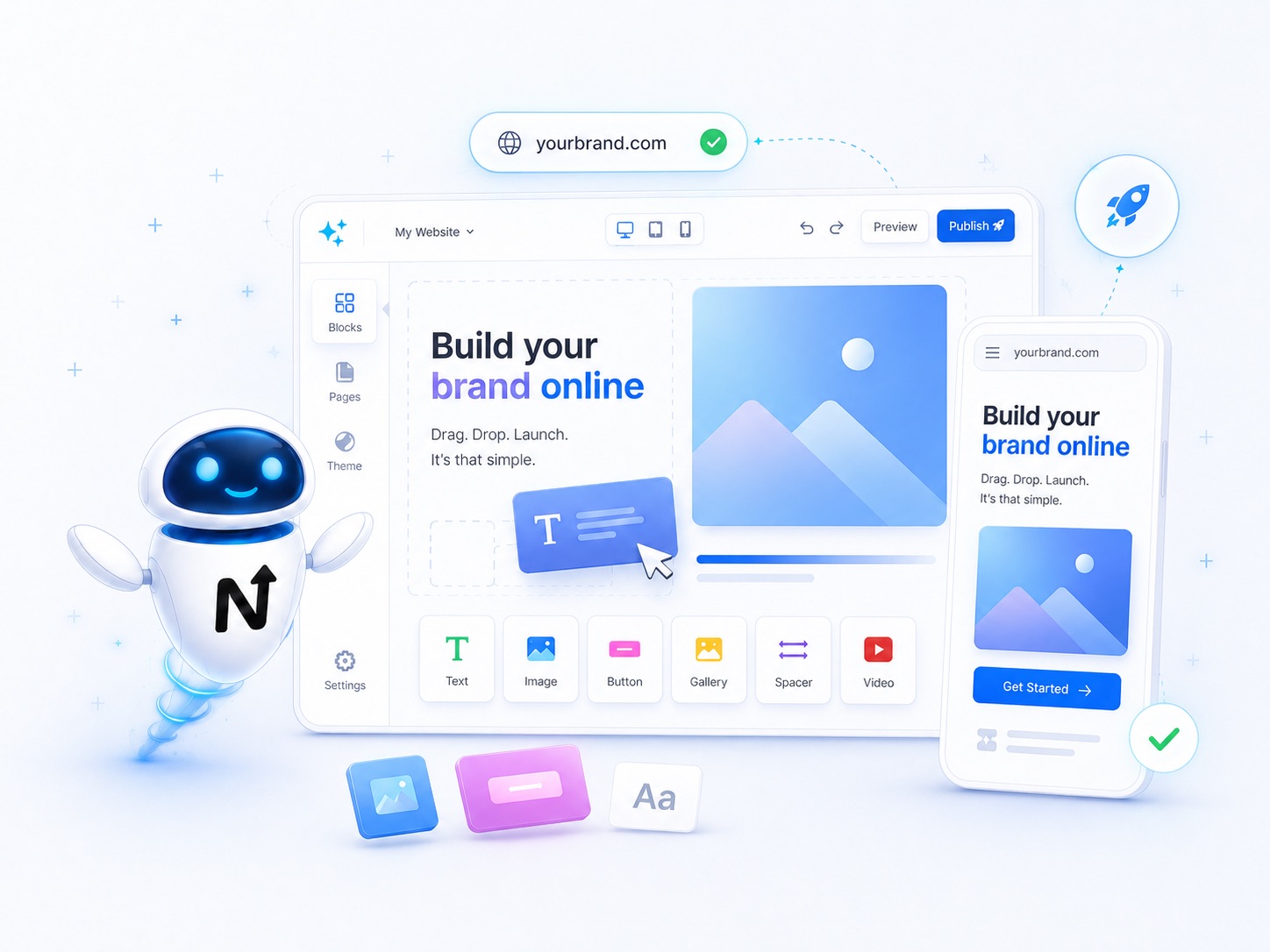
Website builders
AI website builders with drag-and-drop editing turn a simple prompt into a live, mobile-ready brand site in minutes - no developer required.
Build a website
Professional email
you@yourbrand.com on enterprise-grade email, set up the moment you own the domain. Calendar, drive and meetings included.
Set up emailFrequently Asked Questions
Start by getting clear on the feeling and the world you want the name to suggest, then explore the styles in this guide as different routes to that feeling. Coined words give you total originality and ownership, blends fuse two ideas into one surprising whole, respellings let you own a familiar word, real words create a spark when pointed at an unexpected use, and evocative words borrow a mood from nature, science, or mythology. The most productive approach is to generate a wide range of options across several of these styles before you judge any of them, because the first ideas are rarely the best and creativity comes from volume and combination. Write down the words, roots, images, and feelings connected to your business, then push each one through a different style. An artificial-intelligence tool can accelerate this enormously by producing dozens of directions you would not have reached on your own, which you can then filter by the style and tone you want. The goal at this stage is range, not perfection. You are trying to surprise yourself, and the editing comes later.
It depends on what you are optimizing for, but creativity wins on the dimensions that matter most over time. A descriptive name has one short-term advantage: it tells a first-time customer what you do without any explanation. The cost is that descriptive names are generic, hard to own, hard to trademark, and easy to confuse with competitors using the same obvious words, and they trap the business inside its first product. A creative name asks customers to learn something new, which is a small upfront cost, but in exchange it is distinctive, memorable, ownable, protectable, and flexible enough to grow with the business. For most brands that intend to last and to build real recognition, the creative name is the stronger long-term asset. The exception is a business that competes almost entirely on local search for a specific service, where some descriptive clarity can help, though even then a creative name paired with a clear tagline usually outperforms a flat descriptor.
You have a few good options, and the right one depends on how attached you are to the exact word. The first option is to lean into a coined or respelled version, since invented and modified names are far more likely to have an exact match free, which is one of the quiet advantages of creative naming. The second option is to choose a different extension that fits your brand and is grounded rather than decorative, a relevant alternative extension that genuinely fits your audience and category rather than one picked just because it is open. The third option, if the exact word truly is the brand and a compromise would weaken it, is to consider acquiring a premium domain, an exact match that someone already holds. What is usually worth avoiding is padding the domain with filler words or hyphens, because that erodes the memorability and trust the creative name was supposed to create. Decide how central the exact word is to the brand, and let that guide whether you adapt the name, change the extension, or invest in the match.
Creative names work for serious businesses too, and many of the most credible brands in finance, healthcare, software, and enterprise technology are built on coined, blended, or evocative names rather than literal descriptions. The key is matching the creativity to the tone. A playful, bouncy coinage suits a consumer brand built on fun, while a smooth, substantial coined word or a calm, evocative real word suits a business that needs to project competence and trust. Creativity is not the same as silliness. An original name can sound polished, premium, and authoritative, and in a professional category an ownable, distinctive name actually signals confidence and sophistication, because it shows the business was thoughtful enough to build its own identity rather than borrowing a generic one. The lesson is to choose the style and the sounds that fit your positioning, not to assume that serious means descriptive.
Trademark protection is worth pursuing for any name you intend to build a brand around, and creative names, especially coined and respelled ones, are generally easier to protect than descriptive ones. The reason is that trademark strength tends to track distinctiveness. Invented words that have no prior meaning are treated as the strongest kind of mark, because nobody else has a legitimate claim to them, while purely descriptive terms are weak and sometimes impossible to register, because competitors need those words too. This is one of the underrated advantages of creative naming: the same originality that makes a name memorable also makes it more defensible. That said, trademark law is specific and varies by region and category, so before you commit it is wise to run a proper search and, for anything significant, to consult a qualified professional. The practical takeaway is that a distinctive, coined, or modified name gives you a stronger foundation to protect, and an exact, ownable domain and clean handles reinforce that ownership across every platform.
A creative name helps your visibility through indirect signals rather than through any direct effect on rankings, and it is important to understand the difference. A name and its domain do not, by themselves, move you up the results pages. What a distinctive, memorable, ownable name does is strengthen the signals that compound into visibility over time. Because an original name is easier to remember, more people search for it directly by brand, which builds a strong branded-search footprint. Because it stands out in a list, it earns a higher click-through rate when people recognize it. Because it is quotable and distinctive, it attracts more links and mentions, and because people remember where they went, it drives more return visits. A generic descriptive name, by contrast, competes with everyone using the same words and is easy to confuse with rivals, which scatters all of those signals. So a creative name does not hurt your visibility, it supports it, as long as you pair it with a clean, exact, ownable domain that all of that recognition can point to.
The two overlap, but they optimize for different things, and knowing the difference helps you choose with intent. A catchy name is built for stickiness and instant recall, the kind of name that lodges in your memory after a single exposure through rhythm, repetition, or sound. A creative name is built for originality and distinctiveness, the kind of name that feels genuinely inventive and that competitors could not have produced. Many great names manage both at once, and catchiness is certainly an asset, but when creativity is your explicit goal you are prioritizing the imaginative leap, the surprise, and the ownable brand world over pure memorability. In practice the strongest brands aim for a name that is original first and sticky as a result, because distinctiveness tends to produce memorability, while a name that is merely catchy without being distinctive can still blend into a crowd of similar-sounding competitors.
It helps, but the relationship can be loose, and some of the strongest brands have names with no literal connection to their product at all. There are two healthy approaches. The first is a name that connects through feeling or metaphor rather than description, where the word evokes the right mood or the right idea without spelling out the category, which keeps the brand flexible while still feeling intentional. The second is a fully coined or abstract name that starts with no meaning and earns its association entirely through the brand you build, which is how many of the most valuable companies in the world operate. What you want to avoid is a name that actively points in the wrong direction, since a mismatched feeling creates confusion that the rest of your marketing has to work to overcome. So the name does not need to describe what you sell, but it should not contradict it. Aim for a name that either reinforces the right feeling or stays neutral enough to be defined on your terms, rather than one that locks you into a single product or sends the wrong signal.
An everyday word can absolutely be a creative name, and choosing one is a distinct creative skill rather than a fallback. Creativity in naming is about the imaginative leap, and pointing a familiar word at an unexpected business is its own kind of leap, often a more confident one than inventing a word from scratch. The creative work is in the selection: finding a word whose everyday meaning sits at an interesting angle to your category, so the choice feels deliberate and memorable rather than generic. Real words come with built-in familiarity, easy spelling, and instant emotional associations, which are real advantages, and the trade off is that the exact domain is often harder to secure and the word is harder to own outright. Invented words flip that trade off, offering total ownership at the cost of starting with no meaning. Neither is more creative than the other in principle. The right choice depends on whether you value the instant recognition of a known word or the complete ownership of a coined one, and both paths can produce a name that feels genuinely original.
They can work very well, but only if you check before you commit, because the same originality that makes a creative name powerful can also hide a problem in another language. Coined words with no inherent meaning are often the safest choice internationally, since a word that means nothing carries no unfortunate baggage anywhere, though it still needs to be pronounceable and free of accidental sounds in the languages of your target markets. Real words and respellings take more care, because a word that is evocative or neutral in one language can be confusing, comic, or worse in another. The practical steps are straightforward: say each candidate aloud to native speakers of the markets you care about, check that it carries no unintended meaning, confirm that it is easy to pronounce across those languages, and verify that the domain and handles you need are clear. It is no accident that so many global brands settle on short, vowel-friendly, coined names, because those travel most smoothly across borders. Even if you serve a single local market today, choosing a name that is already language-safe costs you nothing now and preserves the option to expand later without a rename. The goal is the same one that runs through every part of creative naming: keep the spark, and keep it usable, wherever the business ends up going.
The smartest next step
The hardest part of creative naming is not judging ideas, it is producing enough genuinely original ones to choose from. That is exactly what the Creative Business Name Generator is built to do. It is free and unlimited, so you can explore as widely as you want, and it uses advanced artificial intelligence and proprietary algorithms to generate original directions across every style in this guide, from coined words and blends to respellings, real words, and evocative imagery. Advanced filters let you steer toward the tone and style that fit your brand, logo-style name previews show you how each option looks as a brand mark, and instant domain and social handle availability checks let you confirm in real time that the name you love can actually be owned across the web.
If you already know that a short, exact, memorable domain would give your creative brand a stronger and more confident start, you can browse the NextBrand high-impact domains collection to see how the right address can complete an original name. A distinctive name and a clean domain are two halves of the same brand, and securing both early is one of the most durable investments a new business can make.
Either way, the goal is the same: a name that is original enough to be noticed, clear enough to be remembered, and ownable enough to build on for years. Start exploring while the ideas are fresh.
Ready to find your name?
Pick your path and start exploring.
Related NextBrand Links