
DomainName Ideas
How to Choose a Domain Name -The Complete Guide
Explore domain name ideas backed by real brand examples, proven naming patterns, and practical domain strategy. Built to help founders choose a domain worth building on.
Your domain name is often the very first thing anyone sees about your business. Before a visitor reads your headline, watches your demo, or learns anything about your product, the domain has already made an impression. A clean, well matched domain tells people the business is real, intentional, and worth their time. A clunky or confusing one raises doubt before the page even loads. That first-impression power is what makes domain naming one of the most important decisions a founder can make, and one of the most underestimated.
The problem is that most domain advice falls into two extremes. One camp says you must have a one word .com or the business is not credible. The other says the domain does not matter as long as the product is good. Both are wrong. The truth is that a strong domain works like a 24/7 brand asset. It shapes perception, drives direct traffic, supports memorability, and compounds in value over time. But it does not need to be a one word .com to do any of those things. The strongest domain strategy starts with understanding how names and domains work together, and then finding the best realistic option for your specific business.
This guide walks you through the naming styles that produce the strongest domains, how to evaluate domain options across different extensions, when standard registration makes sense versus when a premium domain is the smarter investment, and what the most successful brands actually did when choosing their domains. Every example here is a real brand, from globally recognized companies included as proof of concept to growth-stage companies included because their domain decisions are closer to the ones you are making right now.
When you are ready to explore fresh options, the Domain Name Generator is free and unlimited. If you already know you want a premium ready made domain, the NextBrand premium marketplace is the other path worth exploring.
At a Glance
The strongest domain names are easy to type, easy to remember, and closely aligned with the brand they represent. The best domains match the business name so cleanly that customers never have to think twice about how to find the company online. You do not need a rare single word .com to build a credible online presence. A readable two word .com, a well matched .ai, .io, .org, .xyz, .co, or .now, or a premium domain that gives the brand more authority from the start can all be the right choice depending on your industry and audience. What matters most is that the domain feels natural, intentional, and easy for people to type after hearing the name once. Once you know the direction that fits, you can explore tailored options with the Domain Name Generator or browse the NextBrand premium marketplace for stronger ready made options.
Should your domain name match your business name?
Once you have a strong name direction, the domain question becomes the next critical decision. This is where many founders either freeze (cycling through options endlessly) or settle too quickly (grabbing the first available domain without thinking about long term impact). A more deliberate approach produces better results.
There are two main paths.
Standard registration domains
are domains currently available at the normal registration price, typically under $15 per year. This is the most common path and it works well when your name is distinctive enough that the matching domain has not been claimed. Many successful businesses launch on standard registration domains, especially when the name is a coined word, a fresh compound, or an alternate spelling nobody else has taken.
Premium domains
are domains priced above standard registration because they are shorter, more memorable, or more closely matched to a high value brand or category keyword. Premium domains are sold through marketplaces rather than standard registrars. When the fit is strong, a premium domain can compress years of brand building into the first impression. Before a visitor reads a single word on your site, the domain has already shaped how they perceive the business. A clean, strong domain makes that perception work in your favor from the very first moment.
The decision is not about prestige. It is about which path gives the brand more lift from day one. A standard registration domain can be a solid starting point when the name is distinctive and the match is clean. A premium domain is often the stronger investment in specific situations: when the premium option is noticeably cleaner and easier to remember, when the alignment between brand and domain is unusually strong, when direct traffic and trust matter heavily in your category, or when the standard registration option would force a weaker name or an awkward workaround.
One way to think about it: when the fit is strong, a premium domain is not just a cost. It is a brand asset that works for the business 24 hours a day. Every time someone types it directly, that is a visit you did not have to pay for. Every time someone remembers it without needing a second reminder, that is marketing spend you did not have to make. That freed up budget can go straight into product, customer experience, or growth instead of being spent on retargeting ads. Over the lifetime of the business, that value compounds significantly.
If you want to explore what is available, the Domain Name Generator shows real-time domain availability across popular extensions. For premium options, the NextBrand premium marketplace is curated specifically for founders looking for stronger ready-made brand assets.
Why a strong business name and domain are worth the effort
A domain might seem like a small detail compared to the product, the team, or the funding. But the domain touches everything the business does online. It is the address on every email, the anchor of every search result, the destination of every ad, and the thing investors and customers type before they decide whether the company is worth their attention. In many cases, the domain is the very first branded asset anyone encounters. People start evaluating the business before they even click through.
Here is what a strong domain actually does in practical terms.
Immediate online presence.
A clean domain makes the business feel real the moment someone types it in. There is no awkward redirect, no confusion, and no "is this the right site?" hesitation. The brand shows up exactly where people expect it. A strong domain helps the business look intentional before the visitor reads a single word on the page.
Signals authority from day one.
When the domain matches the brand and feels polished, the business looks more established than it is. That perception matters enormously when you are competing for attention against companies that have been around for years. People judge credibility by how the domain looks before they judge credibility by what the website says.
Memorable and easy to share.
People are far more likely to pass along a domain they can remember after seeing or hearing it once. If the domain is easy to type and easy to recall, every satisfied customer, every impressed partner, and every press mention becomes a more effective referral. If the domain is forgettable or confusing, that referral dies in transit.
Strong market positioning.
The right domain helps the business feel like it belongs in its category. A technology company with a .ai domain signals AI focus. A professional services firm with a clean .com signals trustworthiness. A creative brand with a sharp two word domain signals personality. Positioning starts with the domain, not just the website design.
Builds trust and brand loyalty.
Consistency between the domain, the email address, and the social handles creates a sense of reliability. Customers trust businesses that feel put together, and the domain is where that impression begins.
Reduces marketing spend over time.
This is the advantage most founders overlook, and it might be the most valuable one. When the domain is memorable and easy to type, you spend less on paid reacquisition. Customers come back directly instead of needing another ad to remind them how to find you. Every campaign, every piece of content, every press hit carries more momentum when the domain itself does part of the work. The budget you save on reacquisition can be redirected into product, customer experience, hiring, or growth, giving the business a compounding advantage that starts with the domain and ripples outward. A great domain does not just look good. It works like a marketing asset that never stops earning its keep.
A strong domain is not a luxury. It is infrastructure. The earlier you invest in getting it right, the more value it creates.
What matters most when choosing a domain name
Easy to type without thinking
If someone has to slow down, double check, or guess when typing your domain, that friction will cost you traffic every single day. The best domains feel automatic. They flow from the brain to the keyboard without a pause. Hyphens, numbers, double letters in awkward places, and unusual character combinations all introduce typing friction that adds up over the life of the business.
Easy to spell after hearing it once
This is the test that reveals whether a domain will survive in the real world. Say the domain out loud and ask someone to type it. If they get it right on the first try, the domain works. If they pause, guess, or ask you to repeat it, that friction will cost you referral traffic, podcast mentions, and word-of-mouth growth for as long as the domain exists.
Easy to remember the next day
A domain can sound fine in the moment and disappear from memory by the next morning. Strong domains give the brain something to hold onto: a vivid word, a clean rhythm, a familiar concept, or a distinctive pairing. If the domain slips from memory after a single encounter, every marketing dollar you spend driving awareness is working harder than it should.
Closely aligned with the brand name
The closer the domain is to the business name, the less translation the customer has to do. When the spoken name and the typed domain feel like the same thing, every interaction reinforces the brand. When they feel disconnected, every interaction introduces a tiny moment of doubt. Over thousands of interactions, those moments add up to real lost traffic.
Clean enough to use in email
Your domain is also your email address. If the domain looks unprofessional, cluttered, or confusing in an email signature, it creates a credibility problem that extends far beyond the website. A clean domain makes every email, invoice, proposal, and outreach message feel more intentional.
Supported by available social handles
The domain does not exist in isolation. It is part of a system that includes social profiles, app store listings, and directory entries. Before committing to a domain, check whether the matching handles are available or at least close enough to be consistent. A domain that looks great but has no corresponding social presence can create a fragmented brand experience.
Works with the right extension
Not every domain needs a .com. Depending on the industry, the audience, and the name itself, a .ai, .io, .org, .xyz, .co, .dev, or .now extension can be the stronger choice. The best domain extension is the one that makes the name and domain feel natural together, not the one with the most prestige on paper.
Domain naming styles that actually work
Six proven ways strong domains are structured, each with real examples and practical guidance.
Brandable domain names
A brandable domain uses a coined or invented word. The advantage is total ownability. Because the word does not exist in the dictionary, the exact domain match is often available, and once you claim it, no competitor can take it. Brandable domains also tend to be short, smooth, and distinctive, which makes them easier to type and remember.
Coined words offer total domain ownability, tend to be short and smooth, and carry no prior associations that limit brand positioning.
Five real examples worth studying
- •Brex at brex.com:
A four letter coined word that sounds sharp and fast. The name carries no prior associations, which gave the fintech company total ownership of the word from day one. The .com is a clean match, and the short, punchy domain projects the confidence and speed that a financial technology brand needs.
- •Trello at trello.com:
A coined word that sounds playful and quick. The six letter .com is easy to type, easy to remember, and completely ownable. The name carries no category limitation, which let the product expand from simple boards to a full project management ecosystem.
- •Etsy at etsy.com:
A four letter coined name that sounds warm and slightly vintage. The short .com domain is extremely easy to type and virtually impossible to misspell. For a handmade marketplace, the name's texture matched the brand identity perfectly.
- •Vimeo at vimeo.com:
An anagram of "movie" that sounds elegant and creative. The five letter .com is a clean match, and the name positioned the platform as the more artistic, premium alternative in the video hosting space. The domain itself carries personality.
- •Klarna at klarna.com:
A coined word with Scandinavian roots (derived from "klar," meaning clear). The name sounds clean, confident, and modern. The .com matches directly, and the domain projects the trust and transparency that a financial services brand needs.
When you want maximum ownability and long term flexibility. Especially strong for technology, fintech, and consumer brands that need a distinctive identity.
Try generating brandable options in the Domain Name Generator and pay attention to how each one looks in the logo-style preview and reads as a URL.
Compound domain names
A compound domain combines two recognizable words into a single name. This is one of the most popular naming strategies for domains because it gives you built-in meaning from both halves while still creating something that feels new and distinct. The two word structure also tends to produce domains that are readable, type-friendly, and still available for registration.
Two strong words create built-in meaning, readability, and distinctiveness while often remaining available for standard registration.
Five real examples worth studying
- •GoDaddy at godaddy.com:
An unexpected pairing that became one of the most recognizable domains on the internet. The name has nothing to do with the product (domain registration and hosting), but the compound is so distinctive and memorable that it outperformed every descriptive competitor in the category.
- •ClickUp at clickup.com:
"Click" plus "Up" creates a clean compound that suggests both action and improvement. The .com is a direct match and the domain reads naturally as a URL. The two word structure makes it easy to say in conversation and easy to type from memory.
- •SoundCloud at soundcloud.com:
"Sound" plus "Cloud" creates an evocative image that matches the product (audio streaming and hosting) perfectly. The compound is descriptive yet branded, and the .com domain reads smoothly despite being a longer URL.
- •Kickstarter at kickstarter.com:
"Kick" plus "Starter" communicates both energy and beginnings. The compound became synonymous with crowdfunding, and the .com domain is a clean match. The name is descriptive enough to be immediately understood yet distinctive enough to own completely.
- •Shutterstock at shutterstock.com:
"Shutter" plus "Stock" combines the tool (camera shutter) with the category (stock imagery). The compound is clear, professional, and the .com matches directly. It shows that even a longer compound domain can work well when both halves are strong and relevant.
When you want a domain that communicates something about the business while remaining distinctive. The risk is overloading the domain with too many words.
Try compound directions in the Domain Name Generator to see how different word pairings create different brand impressions as URLs.
Alternate Spelling domain names
An alternate spelling domain takes a familiar word and modifies it just enough to create a unique, ownable URL. The original meaning stays visible, but the new spelling becomes trademarkable and often makes the exact .com available. This approach is popular because it gives you the instant recognition of a known word with the domain availability of something new.
You get instant recognition of a known word with the domain availability of something new. The original meaning stays visible while the spelling becomes ownable.
Five real examples worth studying
- •Google at google.com:
Originally meant to be "Googol" (the mathematical term for 10 to the 100th power), but a spelling variation during registration created one of the most recognizable domains in history. The altered spelling became the brand, and the word now defines an entire category of activity.
- •Netflix at netflix.com:
"Net" plus "flicks" compressed into a single word with altered spelling. The domain is clean, easy to type, and the compression created a name that sounds like a single idea rather than two parts. The .com matches directly and the name scaled from DVD rentals to global streaming.
- •Imgur at imgur.com:
Derived from "image" with letters rearranged and compressed. The name is pronounced like "imager" and the spelling change creates a completely ownable five letter .com. The domain became one of the most visited image hosting sites in the world.
- •Xerox at xerox.com:
Derived from "xerography" (the dry copying process), the name was shortened and altered into something that sounds sharp and technical. The .com is a clean five letter match. The domain became so dominant that the brand name entered everyday language as a verb.
- •Skype at skype.com:
Originally derived from "sky peer-to-peer," then shortened to "skyper," then trimmed to "Skype." Each step removed complexity while preserving the essential sound. The .com matches directly and the final form is one of the most easily typed five letter domains in tech.
When you want a domain rooted in a familiar word but need ownability and availability. Best when the spelling change is subtle enough that pronunciation stays obvious.
If you explore this direction in the Domain Name Generator, test every candidate by asking someone to type the domain after hearing it once. That single test tells you whether the spelling change helps or hurts.
Real Word domain names
A real word domain uses an existing word from the dictionary, applied to a business in a fresh context. The strength of this approach is instant recognition. People already know the word, already know how to spell it, and already carry emotional associations with it. When the context is right, a real word domain can feel both authoritative and effortless.
Instant recognition, perfect spelling confidence, and built-in emotional associations make real word domains feel authoritative and effortless.
Five real examples worth studying
- •Zoom at zoom.com:
A short, energetic word that suggests speed and movement. The domain is a clean four letter .com and the word became so embedded in daily life that it replaced "video call" in everyday language. The simplicity of the domain made adoption effortless during a period of explosive growth.
- •Loom at loom.com:
A four letter word that suggests weaving and creation. For a video messaging tool, the name evokes the idea of crafting communication. The .com is a direct match and the domain is one of the easiest to type and remember in its category.
- •Tinder at tinder.com:
A word that means "easily ignitable material," creating an obvious metaphor for sparking connections. The domain is a clean six letter .com and the word association made the brand's purpose immediately understandable.
- •Medium at medium.com:
A word that means both "a means of communication" and "middle ground." For a publishing platform, both meanings work. The .com is a clean six letter match and the word carries intellectual weight without sounding exclusive.
- •Notion at notion.com:
A common English word meaning "an idea or concept." Applied to a productivity platform, the word suggests thinking, organizing, and creating. The .com is a clean six letter match and the word carries intellectual weight without sounding exclusive.
When you can find a word that carries the right emotional tone for your brand and the exact domain match is available. Works best when the word choice is unexpected for the category.
If you explore this direction in the Domain Name Generator, look for words that carry the right emotional tone rather than words that literally describe the product.
Acronym domain names
An acronym domain compresses a longer name into its initials. The result is short, visually compact, and often produces extremely brief URLs. Acronym domains are common in industries where formal multi-word names are a tradition, such as media, professional services, and enterprise technology.
Extremely short URLs, visual compactness, and the ability to compress a formal multi-word name into something quick and easy to type.
Five real examples worth studying
- •HBO at hbo.com:
Home Box Office compressed into three letters that became far more recognizable than the original name. The three letter .com is one of the cleanest possible domain formats, and the initials carry decades of premium entertainment brand equity.
- •CVS at cvs.com:
Consumer Value Stores shortened to three letters that became the brand itself. The domain is a clean three letter .com, and the acronym works because the stores are so ubiquitous that the initials need no explanation to the target audience.
- •CNET at cnet.com:
Originally "Computer Network," the name became one of the most recognized domains in technology media. The four letter .com is extremely easy to type, and the domain has survived multiple ownership changes because the brand equity lives in the URL itself.
- •CNBC at cnbc.com:
Consumer News and Business Channel compressed into four letters that are universally recognized in financial media. The .com matches directly and the domain is typed millions of times daily by professionals looking for market news.
- •MS.now at ms.now:
Formerly MSNBC, the major cable news network rebranded to MS NOW as part of its spin-off from NBCUniversal into the new company Versant. The move to the .now domain was deliberate: it signals urgency, modernity, and a fresh start while retaining the recognizable "MS" initials. When a network with nearly 30 years of brand equity chooses .now for its new identity, it shows that the extension carries real credibility at the highest level.
When the full company name is too long for daily use, or when industry convention favors initial-based naming. Works best for established organizations with substantial marketing presence.
If you are considering an acronym domain, test it alongside pronounceable alternatives. Try both in the Domain Name Generator and compare the results side by side.
Evocative domain names
An evocative domain suggests a feeling, an image, or a promise rather than describing the business literally. When the fit is right, an evocative domain creates a stronger emotional connection than any descriptive URL could. The domain does not explain what the company does. It communicates what the company wants you to feel.
Creates a stronger emotional connection than descriptive URLs. The domain communicates what the company wants you to feel, building brand identity that competitors cannot copy.
Five real examples worth studying
- •Tesla at tesla.com:
Named after the inventor Nikola Tesla. The word evokes genius, innovation, and a willingness to challenge convention. For an electric vehicle and energy company, the name communicates ambition and disruption before the visitor sees a single product. The .com is a clean five letter match.
- •Sonos at sonos.com:
Derived from the Latin "sonus" (sound). The name sounds smooth and musical, which is exactly the right feeling for a premium audio company. The .com is a clean five letter match and the domain itself carries the product's promise in its sound.
- •Pandora at pandora.com:
Named after Pandora's box from Greek mythology, suggesting discovery and the unexpected. For a music streaming service, the name evokes the experience of opening something and finding treasure inside. The .com is a clean seven letter match and the mythological connection gives the brand depth.
- •Twitch at twitch.com:
A word that suggests quick, reactive energy. For a live streaming platform built around gaming and real-time interaction, the name captures the fast-paced, high-adrenaline nature of the audience perfectly. The .com is a clean six letter match and the word gives the brand an electric personality.
- •Peloton at onepeloton.com:
Named after the French cycling term for a tight group of riders. The word evokes community, momentum, and shared effort. The name is powerful, but the domain tells an important lesson: because peloton.com was not available, the company had to use onepeloton.com, adding a prefix that slightly weakens the name-domain alignment.
Especially effective for businesses where brand identity, experience, or mission matters as much as the product itself. The domain should create a feeling that clicks the moment you understand what the company does.
If you explore this direction in the Domain Name Generator, look for names that make you feel something connected to your brand's purpose, not just names that sound impressive in isolation.
Domain strategy: standard registration vs. premium domains
Standard registration domains are domains currently available at the normal registration price, typically under $15 per year. This is the most common path and it works well when your name is distinctive enough that the matching domain has not been claimed.
Premium domains are priced above standard registration because they are shorter, more memorable, or more closely matched to a high value brand or category keyword. When the fit is strong, a premium domain can compress years of brand building into the first impression.
A premium domain is usually the stronger investment when the standard alternative would force a compromise: an awkward prefix, an extra word, a less intuitive extension, or a domain that just does not feel right. In those cases, founders who invest in the premium path tend to recoup that cost quickly through stronger recall, more direct traffic, and lower customer acquisition costs.
How to choose the right domain extension
The right extension depends on who your audience is and how they discover your business. There is no single correct answer, and the strongest choice for one company may be wrong for another.
For businesses that serve a broad or general audience, a readable two word .com is often a strong option. But "strong option" does not mean "only option."
For businesses that serve a tech-savvy, digital-first, or professional audience, alternative extensions have real credibility. Extensions like .ai, .io, .org, .xyz, .co, .dev, and .now have grown substantially in recognition.
Brand-matching .com pairings worth studying
• Webflow at webflow.com:
A clean compound that communicates exactly what the product helps users do.
• Airtable at airtable.com:
"Air" plus "Table" suggests a lighter, more modern take on databases and spreadsheets.
• Monday.com at monday.com:
A real word turned into a brand. Using the day of the week as a company name is bold, and the .com makes it work.
• Namecheap at namecheap.com:
A compound that delivers the value proposition in two words: names, cheaply.
• GoFundMe at gofundme.com:
A three word compound that reads as a single idea and a clear call to action.
Brand-matching alternative TLD pairings worth studying
• Stability AI at stability.ai:
An AI research company where the .ai extension reinforces the core technology and mission.
• Frame at frame.io:
A video collaboration platform where the .io extension signals technical depth and developer credibility.
• Wikipedia at wikipedia.org:
The most visited .org domain in the world. The extension reinforces Wikipedia's non-profit, community-driven mission.
• Alphabet at abc.xyz:
Google's parent company chose .xyz for its corporate domain, sending a powerful signal that alternative extensions are credible at the highest level.
• Anywhere.now at anywhere.now:
A bold, action-driven brand on the .now extension. The name and the TLD work together to create a sense of immediacy and limitless access.
The takeaway is straightforward. Start with the strongest option that fits your name, your audience, and your budget. A clean .com can be a strong option when it fits naturally, but it is not the only path to a credible, memorable domain.
Shortlist the strongest domains
Generating domain options is the easy part. Knowing which ones on your list are actually strong enough to build on is harder. Once you have a set of candidates, whether from brainstorming, from the Domain Name Generator, or from a combination of both, run them through this filter.
The type it from memory test.
Look at the domain once, then look away and type it. If you get it right without hesitation, the domain passes. If you pause, second-guess, or make a typo, that friction will follow every visitor who tries to find you.
The phone test.
Say the domain out loud to someone over a call and ask them to type it. If they get it right on the first try, the domain works in the real world.
The memory test.
Share the domain with someone and ask them to type it two days later without looking it up. If they remember it, the domain has real staying power.
The credibility test.
Imagine the domain in an email signature, on a business card, in a press mention, and in a search result. Does it look professional and intentional in every context?
The competitor test.
Search for the domain and see what comes up. If the first page of results is dominated by something unrelated, you have a discoverability challenge.
The extension test.
Is the extension the right fit for the audience? A .ai domain for a bakery may confuse people. A .com for an AI startup may feel generic. The extension should reinforce the brand, not distract from it.
Names that survive all six tests are the ones worth committing to. If a domain fails more than one, keep exploring.
Choosing between your final two or three.
If you have narrowed your options to a small set of finalists, compare each head to head on three factors: memorability, typing ease, and brand alignment. Ask which domain is easiest to remember after a single exposure. Ask which domain is cleanest to type. Ask which domain feels most naturally like the brand it represents. If one domain wins on two of those three, that is usually your answer. If the results are even, go with the shorter option.
When a premium domain tips the decision.
Sometimes the right name is clear, but the strongest domain version is available as a premium rather than a standard registration. A premium domain is usually the stronger investment when the standard alternative would force a compromise: an awkward prefix, an extra word, a less intuitive extension, or a domain that just does not feel right.
Common mistakes to avoid
Most domain mistakes are not failures of creativity. They are practical oversights that compound over the life of the business. Catching them early saves significant time, money, and rebranding pain.
Choosing a domain that is hard to type.
Hyphens, numbers, double letters in confusing positions, and unusual character combinations all create typing friction. Every mistype is a lost visitor. If the domain requires careful attention to type correctly, it is working against you.
Forcing a creative spelling that creates confusion.
A subtle spelling twist can make a domain more ownable. A confusing one sends your traffic to a competitor or a dead page. If people have to guess how to spell the domain, you will pay for that confusion in lost direct traffic, failed referrals, and wasted marketing spend.
Settling for a domain that does not match the brand.
A workaround domain like "get-mybrand-app.com" may be available, but it undermines the brand with every use. If the domain feels like a compromise, it will project compromise to every visitor.
Ignoring alternative extensions out of .com bias.
Some of the most successful domains in the world use .ai, .io, .org, .xyz, .co, .dev, and .now. Dismissing every non-.com option can push you into a weaker name or a more expensive .com than the business needs. The goal is the strongest realistic domain, not the most traditional one.
Waiting too long to secure the domain.
Good domains get claimed. If you find a strong match, secure it quickly. The cost of a standard registration is negligible compared to the cost of discovering later that someone else took the domain you wanted.
Skipping the trademark check.
A domain that conflicts with an existing trademark is a legal liability, not just a branding inconvenience. Check trademark databases in your market before you invest in the domain, the logo, and the marketing. It is much cheaper to catch a conflict early than to discover it after launch.
Every one of these mistakes is avoidable. If you are unsure about a domain, keep exploring. The Domain Name Generator makes that simple because it is free and unlimited.
How to get better results from a domain name generator
A domain name generator produces dramatically better output when you give it a clear direction instead of a blank request. The difference between "find me a domain" and a focused brief is the difference between browsing randomly and shopping with purpose.
The Domain Name Generator is built to help at every stage of this process, and it is completely free with unlimited generations. Here is how to get the most value from it.
1. Start with a brief, not a blank field.
Before you generate anything, write down three things: the industry or category, the tone you want the domain to project (premium, playful, warm, technical, bold), and which naming style appeals to you based on the patterns earlier in this guide. Even a rough direction produces dramatically better results than starting cold.
2. Use the advanced filters to focus the output.
The generator includes filters that help you narrow results by name style, length, and other attributes. Instead of scanning hundreds of random suggestions, you can focus on the specific type of domain that matches your strategy.
3. Evaluate the visual previews.
Every generated name comes with a logo-style visual preview so you can see how the name looks in context, not just as text. The preview catches things that reading alone misses.
4. Check domain and social availability in real time.
The generator checks domain availability across the most popular extensions and social handle availability across major platforms automatically. You do not need to leave the tool or open separate tabs.
5. Build a shortlist and rank your favorites.
As you browse, add the strongest candidates to your shortlist. Once you have a solid set, rank them against the criteria from the earlier sections. The shortlist feature makes comparison structured and efficient.
Share with your team for broader input.
You can share a single name or your entire shortlist with co-founders, partners, or advisors. Domain decisions almost always benefit from a second opinion.
Let the AI learn your preferences.
As you add names to your shortlist and adjust the filters, the generator's AI picks up on your preferences and works to surface more names in the style you are gravitating toward. The more you interact with it, the more precisely it matches your direction.
The goal is not to find the perfect domain on the first click. It is to build a focused shortlist and then test each candidate against real world criteria. The Domain Name Generator gives you the tools to do that efficiently, and the NextBrand premium marketplace gives you a second path if you decide that a premium ready-made domain is the stronger move.
Premium domain marketplace
Want to start strong?Secure an unforgettable domain name
The Featured category holds hand-picked domain brand domains, each chosen for immediate presence, lasting trust, and the market positioning a fresh registration cannot match.
- Immediate online presence
- Signals authority from day one
- Memorable and easy to share
- Strong market positioning
- Builds trust and brand loyalty
- Designed for long-term growth


Beyond the name
Everything you need after the name is yours
Once your brand name is set, we get you live and running with the partners that handle everything else - fast, professional, and ready for customers.

Business formation
Spin up an LLC, Corporation or similar entity through vetted formation partners - paperwork, EIN and registered agent in one flow.
Form your business
Logo design
Hand the brief to professional designers or run a full design contest, whichever fits your budget and timeline.
Design your logo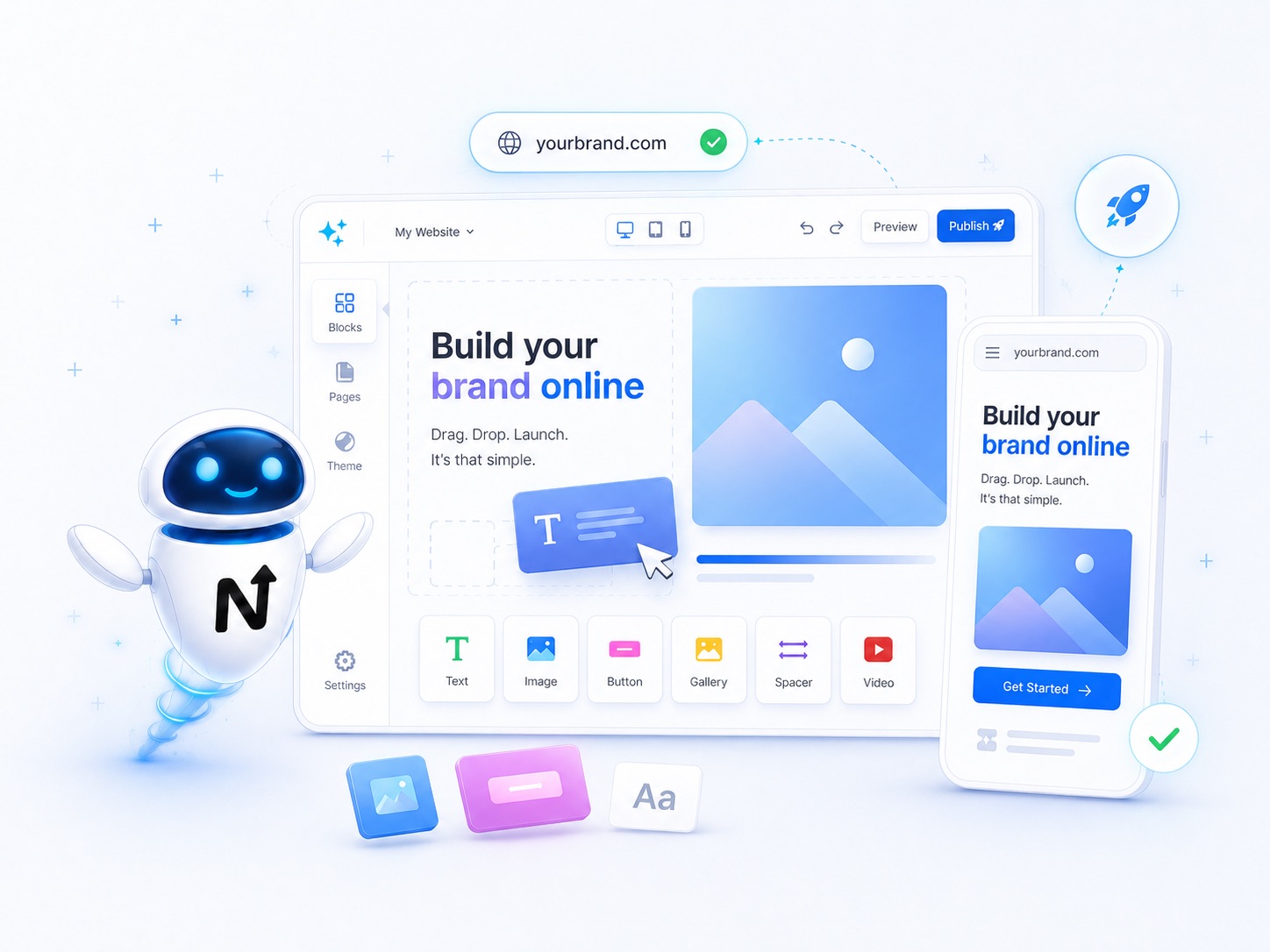
Website builders
AI website builders with drag-and-drop editing turn a simple prompt into a live, mobile-ready brand site in minutes - no developer required.
Build a website
Professional email
you@yourbrand.com on enterprise-grade email, set up the moment you own the domain. Calendar, drive and meetings included.
Set up emailFrequently Asked Questions
A strong domain name is easy to type, easy to spell, easy to remember, closely aligned with the brand, and supported by the right extension. It should make the business feel credible and intentional from the very first encounter. The best domains feel like they were always meant for that business.
Very. The extension shapes how people perceive the domain before they even visit the site. A .com carries broad familiarity. A .ai signals technology focus. A .io signals developer credibility. A .org signals mission and community. A .now signals urgency and modernity. The best extension is the one that reinforces the brand, not the one with the most prestige on paper.
Not necessarily. A .com is still widely recognized, and for many businesses a readable two word .com is a strong option. But extensions like .ai, .io, .org, .xyz, .co, .dev, and .now are increasingly trusted, especially for tech, SaaS, and digital-first businesses. In some industries, a well matched alternative extension can outperform a generic .com because it signals relevance and modernity. The best choice depends on your audience and which extension makes the domain feel most natural.
A standard registration domain is available at the normal annual cost, usually under $15. A premium domain is priced higher because it is shorter, more memorable, or better matched to a valuable brand or keyword. Think of it like real estate: some addresses are available at market rate, and some are in prime locations that command a premium. Both can be the right choice depending on fit, budget, and how much the domain matters for the brand's credibility and traffic.
As closely as possible. The closer the domain is to the business name, the easier it is for people to find you. A close match reduces confusion and makes every referral, mention, and search more effective. If an exact match is not available, look for the closest natural variation, or explore whether a premium domain or alternative extension gets you closer to alignment.
You have several paths. First, check whether the current owner is an active business or a parked page. If it is parked, the domain may be available for purchase as a premium. Second, consider whether a different extension like .ai, .io, .org, .xyz, .co, .dev, or .now works naturally for your audience. Third, explore whether a different premium domain could give you an even stronger brand than the original name. The NextBrand premium marketplace is worth browsing for exactly this reason. If none of those paths feel right, generate fresh options in the Domain Name Generator with a refined direction.
Most founders do best when they generate a broad initial set (50 to 100 options), narrow to 5 to 10 serious candidates, and then test those against the practical criteria in this guide. The danger is not looking at too few options. It is looking at too many without a clear structure for comparison. A focused shortlist with real criteria always beats an endless list with no decision logic.
Yes, when used with clear direction. A vague request produces generic output. A focused brief with specific tone, category, and style preferences produces domain options that are often stronger than what most founders find through manual searching. The Domain Name Generator also checks availability across extensions and social platforms in real time, which eliminates one of the biggest time sinks in the domain search process.
Use the Domain Name Generator to turn the strongest direction from this guide into tailored options. The generator is free, unlimited, and built to help you move from strategy to shortlist to decision. If you already know you want a premium ready-made domain, browse the NextBrand premium marketplace.
The smartest next step
You now have a clearer picture of how the strongest domain names are built, which naming styles produce the best domains, how extension strategy works in practice, and what separates domains that perform from domains that hold the business back. That clarity is the real asset. Better domain decisions do not come from searching longer. They come from knowing what to look for and having a structured way to evaluate.
If you are ready to turn that knowledge into action, the Domain Name Generator is the fastest way to explore tailored options. It is free, unlimited, and powered by advanced AI combined with proprietary naming algorithms. You will see logo-style previews, real-time domain and social availability checks, and an AI that learns your preferences as you browse. Once you find domains worth considering, shortlist them, rank them, share them with your team, and make the decision with confidence.
If you already know that a premium domain would give your brand a stronger foundation, browse the NextBrand premium marketplace to see what is available.
Either way, the goal is the same: choose a domain that is easier to trust, easier to remember, and easier to build on. Start now, while the strategy is fresh.
Ready to find your domain?
Pick your path and start exploring.