
LLCName Ideas
How to name a llc -The Complete Guide
Explore LLC name ideas with real brand examples, six proven naming styles, domain strategy, and a clear orientation to the legal layer that makes naming an LLC different from naming any other business.
A long-form guide to naming an LLC, with real brand examples, domain strategy, and practical patterns you can use to find a name that works as both a legal entity and a brand, reads as credible to customers and partners, and gives whatever business you are building room to grow.
Naming an LLC is one of the first real decisions you make as a business owner, and one of the most consequential. An LLC, a limited liability company, can be almost anything: a consulting practice, an e-commerce store, a real estate holding company, a freelance studio, a local service business, a software startup, a restaurant group, a side project that is about to become a livelihood. That flexibility is the whole appeal of the structure, and it is also what makes naming an LLC uniquely tricky. Unlike a business in a single fixed category, an LLC can operate in any industry and grow in any direction, so the name has to carry the business not just today but wherever it goes next. The name appears on your formation paperwork, your bank account, your contracts, your invoices, your website, your business cards, and every conversation a customer or partner has when they refer your business to someone else. It is the first argument your business makes to the world, and because an LLC can become anything, that argument has to be both credible now and durable for the long run.
There is also a layer to naming an LLC that most businesses never think about until they hit it: an LLC has a legal name and, very often, a separate brand name. The legal name is the one registered with your state, and in most states it has to follow certain rules, including identifying the business as a limited liability company and being distinguishable from other registered entities. The brand name, sometimes registered as a trade name or "doing business as" name, is the one customers actually see. These can be the same, or they can be different, and understanding the relationship between them is one of the most useful things a new LLC owner can learn before settling on a name. This guide covers both: the practical, real-world craft of choosing a strong, brandable name, and a general orientation to the legal-naming layer that makes an LLC different from naming a product or a project.
This guide is built for anyone forming an LLC, in any industry. Whether you are launching a one-person consulting business, a small agency, an online shop, a real estate or holding entity, a local service company, a creative studio, a software venture, or any other operation under the LLC structure, the same naming principles apply. You need a name that works as a legal entity, reads as credible to the customers and partners you want, leaves room for the business to grow in whatever direction it takes, and pairs with a domain that people can actually find. Because an LLC is industry-agnostic, this guide draws its examples from across the business world, choosing recognizable companies that illustrate each naming pattern clearly. The point is not that each example is itself an LLC, but that each shows a naming approach that any business, including an LLC, can use.
Throughout this guide you will see real brand examples from many industries, chosen to show how the underlying naming patterns work regardless of category. Some are well-known consumer brands, some are software and services companies, some are food and retail names. What they have in common is that each illustrates a specific, repeatable naming approach you can apply to your own LLC. Studying the pattern, rather than the particular company, is the fastest way to learn what actually works, because the patterns are what you can replicate for a business in any field.
By the end, you will have a clear way to evaluate your own ideas, a list of naming styles to work through, a general understanding of how the legal and brand names relate, a realistic view of how to choose a domain, and a shortlist process for locking in the winner.
At a Glance
A strong LLC name usually sits at the intersection of three qualities.
The first is flexibility for whatever the business becomes. Because an LLC can operate in any industry and pivot freely, the name has to avoid boxing the business into a single product, service, or moment in time. A name built too narrowly around one offering can become a constraint the moment the business expands, while a name with room to grow can carry the business across new products, new markets, and even new industries without ever feeling wrong. The most durable LLC names tend to be ones that signal a quality, a feeling, or a distinctive identity rather than locking in a single literal description that the business might outgrow.
The second is credibility as both a legal entity and a brand. An LLC name lives a double life: it appears on formal documents, bank accounts, and contracts where it needs to read as a legitimate, professional entity, and it appears in front of customers where it needs to feel like a brand worth trusting. The name has to work in both contexts. A name that feels credible on a contract and distinctive in the market does double duty, while a name that works in only one of those settings creates friction in the other. Understanding early whether your legal name and your customer-facing brand name will be the same or different helps you choose a name that performs well wherever it appears.
The third is memorability and ease of use. Much of an LLC's early growth comes through word of mouth, referrals, and direct search, especially for the small businesses, freelancers, consultants, and local operations that make up the majority of LLCs. A name that is easy to say, easy to spell, and easy to remember compounds every time someone passes it along, while a name that requires spelling or explanation quietly loses business in the gap between a recommendation and a successful search. Ease of use matters as much as cleverness, and often more.
The strongest LLC names pass all three. They leave room for the business to grow, they read as credible both legally and commercially, and they are easy to remember and share.
Should your domain name match your llc name?
This is where the legal name and the brand name come together in a practical way. For most LLCs, the domain should match the name customers actually use, which may be the legal name or may be a separate brand or trade name. What matters is that the name your customers hear and the web address they type are the same, or as close as possible, because so much of an LLC's growth depends on people finding the business quickly and trusting what they find.
A customer who gets a referral types a name into a phone and needs to land on the right site. A potential client researching a consultant or service provider checks the website before reaching out. A partner evaluating a small business looks it up before signing anything. A customer who had a good experience types the name in later to come back or to recommend it. Every one of those moments ends with someone typing a name into a browser. If the domain does not match the name people know the business by, you lose much of that traffic to competitors, directories, or simple confusion.
There is a useful flexibility here that is specific to LLCs. Because an LLC can operate under a brand or trade name that differs from its registered legal name, you are not locked into matching the domain to the exact legal entity name. If your legal name is, say, a longer or more formal version required by your state's rules, you can still build your customer-facing brand and your domain around a cleaner, more memorable version, provided you handle any trade-name registration your state may call for. This means the domain question is really about the brand name, the one customers will use, and you have room to choose a brand name that is clean, available, and matchable even when the legal entity name is more formal.
What you want to avoid is the trap of a strong brand name paired with a compromised domain. If the only URL you can get requires hyphens, numbers tacked on the end, or an awkward suffix, the brand will fight you every time someone tries to type it after a referral or a conversation. In a business where so much depends on confident discovery, that friction turns into real lost opportunities over the life of the business.
The short answer: choose a customer-facing brand name whose domain you can actually own, and align the legal name, the brand name, and the domain as closely as your situation allows. If the exact match is out of reach, reshape the brand name so you can own it cleanly.
Why a strong llc name and domain are worth the effort
It is tempting to treat naming an LLC as a box to check on the formation paperwork. In practice, the name and the domain together shape outcomes that show up directly in customer acquisition, referral frequency, partner trust, and how much it costs to win every new customer over the life of the business.
A strong name creates immediate online presence. When someone hears about your business from a friend, sees it mentioned somewhere, or gets a card after a good interaction, a clean matching domain means they can find you in seconds. The businesses that grow fastest through word of mouth are almost always the ones whose names and web presences are instantly findable.
A strong name signals credibility from day one. A name that reads as professional and established on a contract, an invoice, and a website earns the benefit of the doubt from customers, partners, and vendors alike. That benefit of the doubt converts into deals closed and relationships started that a weaker, more generic name would never get considered for.
A strong name is memorable and easy to share. Most LLC growth, especially early on, travels through referrals and word of mouth. A name someone can text to a friend without misspelling, or mention confidently in conversation, compounds every time it is passed along. Names that require spelling or correction quietly die between the recommendation and the search.
A strong name builds trust and loyalty over the life of the business. Customers who trust a business return to it and refer others to it, and the name is the handle they remember it by. As an LLC grows and perhaps expands into new offerings, a strong, flexible name carries that accumulated trust forward instead of leaving it stranded on an outgrown description.
A strong name also creates durable positioning. Because an LLC can grow in any direction, a name that is distinctive and flexible becomes a long-term asset that supports the business through every stage and pivot. A generic or narrowly literal name, by contrast, has to be worked around or replaced as the business evolves, which is costly and slow.
All of this compounds into reduced marketing spend and lower customer acquisition cost. When the name does some of the work in search, in referrals, and in first impressions, the business does not have to spend as hard to keep customers coming. Businesses with weak, generic names spend more per customer to reach the same milestones, year after year, and over the life of a growing LLC that gap becomes substantial.
What matters most when naming a llc
How the legal layer makes LLC naming different
Before the naming styles, it helps to understand the legal layer that makes naming an LLC different from naming a product or a project. The principles below are a general orientation, not legal advice, and the specifics genuinely vary by state and change over time, so the right move for your own business is always to check your state's filing office (often the Secretary of State) or consult a qualified attorney or formation professional before you commit. With that context, the cards that follow walk through the legal considerations worth knowing as you choose a name.
The legal name and the brand name can differ
An LLC has a legal name, the one on its formation documents, and it can also operate under a separate brand or trade name, often registered as a "doing business as" or "fictitious name." Many businesses use this flexibility deliberately: the legal entity might be one thing, and the customer-facing brand another. Knowing this early gives you room to choose a clean brand name even if the legal name ends up more formal.
Most states ask the legal name to identify the business as an LLC
As a general matter, many states require the legal entity name to include a designator such as "LLC," "L.L.C.," or "Limited Liability Company," or a variation that state allows. The exact accepted forms and abbreviations vary by state, so this is a detail worth confirming for your specific state rather than assuming.
The legal name usually has to be distinguishable from others on file
States generally require that a new LLC's legal name be distinguishable from the names of other entities already registered in that state. What counts as "distinguishable enough" varies, and a name that is available in one state may be taken in another. Most states offer a business-name search tool to check availability, and many allow you to reserve a name for a period before filing, but the rules differ, so it is worth checking your state's process directly.
Some words are commonly restricted or regulated
Many states restrict or require special approval for certain words in a business name, particularly words implying a regulated activity such as banking, insurance, or certain professional services, or words that imply a government affiliation. The specific restricted words and the approval processes vary widely by state, so if your desired name includes a word that could imply a regulated field, that is another detail to confirm before relying on it.
Trademark is a separate layer from state registration
Registering an LLC name with a state is not the same as securing a trademark. A name can be available to register as an entity in your state and still conflict with an existing trademark, or vice versa. Because of that, many business owners do a broader check, including the federal trademark database, before committing, and consult a trademark professional when the stakes warrant it.
None of the above is a checklist to follow mechanically, and it is not a substitute for professional guidance. It is simply context so that, as you work through the naming styles below, you can choose a name that is not only strong as a brand but also realistic to register and use. When it comes time to file, lean on your state's official resources or a qualified professional for the specifics that apply to your situation.
Llc name ideas by naming style
Six proven approaches to naming your llc, each with real examples and practical guidance.
Brandable llc name ideas
Brandable names are invented, coined, or distinctively repurposed words that carry little direct description but function as the whole brand. They are powerful for an LLC precisely because they are flexible: a coined word locks the business into no particular industry, so it can grow or pivot freely while keeping its name. The trade-off is that a brandable name starts with no built-in meaning and has to earn its associations over time, but once it does, the business owns the word completely.
Five real examples worth studying
- •Zappos at zappos.com:
is the American online retailer, now part of Amazon, that began in shoes and expanded into broader apparel and accessories. The coined name, adapted loosely from the Spanish word for shoes, carries no literal English meaning and functions as a fully ownable mark. Notice how the name hints at its origins without trapping the business there: it could just as easily anchor a company that sells anything, which is exactly the kind of optionality an LLC benefits from. The distinctive coined word has anchored Zappos's identity as a customer-service-led retailer, demonstrating how an invented word can give a business a flexible, ownable name with room to expand beyond its original category.
- •Chobani at chobani.com:
is the American food company known for Greek yogurt and other dairy and plant-based products. The coined name, derived from a word meaning shepherd, functions as a distinctive brandable mark with a warm, human feel rather than a literal product description. Because the name describes no specific product, it has comfortably stretched from yogurt across an expanding range of foods, a reminder that a brandable name grows with the business instead of dating it. The distinctive coined word has anchored Chobani's growth across that broadening product line, demonstrating how a brandable name leaves room for a business to expand without outgrowing its identity.
- •Spanx at spanx.com:
is the American apparel company known for shapewear and a growing range of clothing. The coined name, short and punchy with a deliberately playful spelling, functions as a memorable, ownable mark that carries personality without describing the product literally. The hard consonants and the unexpected "x" make it stick in memory after a single hearing, which is worth far more to a young business than a descriptive name nobody recalls. The distinctive coined word has anchored Spanx's identity as it expanded across apparel categories, demonstrating how a short, characterful brandable name can be both memorable and flexible for a growing business.
- •Keurig at keurig.com:
is the American beverage and brewing-system company known for single-serve coffee machines and pods. The coined name, adapted from a Dutch word suggesting excellence, functions as a distinctive mark with no literal English meaning. Its unusual spelling took time for customers to learn, the classic trade-off of a brandable name, but once learned it became unmistakable and entirely the company's own. The distinctive coined word has anchored Keurig's identity across its brewing systems and beverage partnerships, demonstrating how a brandable name can become shorthand for an entire product ecosystem while remaining fully ownable.
- •Klarna at klarna.com:
is the Swedish financial-technology company known for payment and shopping services. The coined name, short and clean with a smooth international sound, functions as a distinctive, ownable mark that signals nothing about a specific product and so can stretch across financial services as the company grows. A name that says nothing literal about lending or payments is precisely what lets the company keep adding products without ever sounding wrong, the same logic that makes brandable names attractive for an LLC with broad ambitions. The distinctive coined word has anchored Klarna's identity across an expanding set of payment and commerce products, demonstrating how a brandable name supports a business that intends to keep adding new offerings.
Brandable names are slower to build recognition for than descriptive ones, but they are the most flexible choice for an LLC, because they commit the business to no single industry or product. They work best when you expect the business to grow, evolve, or pivot, and when you are willing to invest in building the name's meaning over time, rather than relying on the name to explain the business on its own.
Compound llc name ideas
Compound names join two words into a single brand. This is one of the most common and effective approaches for any business, because it can signal something about what the business does or values while still creating an ownable, memorable mark. For an LLC, a compound can strike a useful balance: descriptive enough to give customers a clue, distinctive enough to remain a real brand.
Five real examples worth studying
- •Basecamp at basecamp.com:
is the American software company known for project-management and team-collaboration tools. The two-word compound joins "Base" and "camp" to evoke an organized home base for work, signaling the product's purpose without naming a narrow feature. The metaphor does the work that a literal name like "ProjectTracker" could not: it suggests the spirit of the product while leaving room for the tools to change underneath it. The compound has anchored Basecamp's identity across versions and product evolutions, demonstrating how a compound built on a metaphor can communicate a business's value while leaving room to evolve.
- •OpenAI at openai.com:
is the American artificial-intelligence research and product company. The two-word compound joins "Open" and "AI" to signal both accessibility and the field the company works in, creating a mark that is descriptive yet distinctive. It shows a useful middle path for an LLC that wants its name to say something about its field while still standing as a specific, recognizable brand rather than a generic descriptor. The compound has anchored OpenAI's identity as it expanded across research and consumer products, demonstrating how a compound can name a category while still functioning as a strong, specific brand.
- •Squarespace at squarespace.com:
is the American company known for website-building and online-presence tools. The two-word compound joins "Square" and "space" to suggest a clean, designed digital space, signaling the product's spirit without describing a single feature. The pairing of a shape and a space communicates a design sensibility, a reminder that the words in a compound can carry tone and not just meaning. The compound has anchored Squarespace's identity across its expanding suite of website and commerce tools, demonstrating how a compound can carry a brand's design sensibility while remaining broad enough to grow.
- •Grubhub at grubhub.com:
is the American online food-ordering and delivery company. The two-word compound joins the casual word "Grub" with "hub" to signal a central place for food, communicating exactly what the business does in a friendly, memorable way. The informal "Grub" gives the brand warmth while "hub" supplies the function, a balance that keeps the name clear without making it feel corporate. The compound has anchored Grubhub's identity in food ordering and delivery, demonstrating how a compound can be both clearly descriptive and distinctly brandable at once.
- •Stitch Fix at stitchfix.com:
is the American online personal-styling and apparel company. The two-word compound joins "Stitch" and "Fix" to evoke both clothing and a tailored solution, signaling the service in a warm, human way. Each word pulls double duty, "Stitch" suggesting craft and clothing while "Fix" suggests a problem solved, which is how the strongest compounds pack meaning into two short words. The compound has anchored Stitch Fix's identity across its styling and retail offerings, demonstrating how a compound can communicate a service's promise while remaining a real, ownable brand.
Compound names are a strong, safe default for an LLC that wants its name to hint at what it does without locking the business into an overly literal description. They are also among the easiest to secure matching domains around, because a two-word combination often remains available when a single descriptive word would be long gone. The key is choosing words general enough that the business can still grow, rather than a compound so specific it becomes a constraint.
Alt Spelling llc name ideas
Alt spelling names intentionally modify standard spelling to create a distinctive, ownable mark. For an LLC, this approach can turn an otherwise generic word into something trademarkable and uniquely yours, which matters because plain dictionary spellings are often impossible to own. The art is keeping the meaning recognizable while making the spelling distinctly the brand's own.
Five real examples worth studying
- •Chick-fil-A at chick-fil-a.com:
is the American fast-food company known for chicken sandwiches. The alt-spelled name renders "fillet" as "fil-A" and adds hyphenation and capitalization to create a distinctive, ownable mark while keeping the food reference clear. The respelling turns a generic word, fillet, into something protectable and unmistakably the brand's own, which is the central reason alt spelling exists. The styled mark has anchored Chick-fil-A's identity across decades, demonstrating how a deliberate respelling of a familiar word can produce a memorable, protectable brand.
- •Krispy Kreme at krispykreme.com:
is the American doughnut company known for its glazed doughnuts. The alt-spelled name respells both "Crispy" and "Cream" with K's to create a distinctive, alliterative mark while keeping the meaning instantly recognizable. The matched K's add rhythm and make the pair feel designed rather than accidental, showing how a consistent respelling pattern can become part of the brand's character. The styled mark has anchored Krispy Kreme's identity across its retail and wholesale business, demonstrating how a playful respelling can make a descriptive idea into an ownable, characterful brand.
- •Dunkin' at dunkin.com:
is the American coffee and baked-goods company. The alt-spelled name drops the "g" from "Dunking" and adds an apostrophe to create a casual, distinctive mark, a styling the company leaned into further when it shortened its name over time. The dropped letter signals an informal, friendly tone in a way the full spelling never could, a reminder that even small spelling choices carry voice. The styled mark has anchored Dunkin's identity as it broadened from doughnuts toward coffee and beverages, demonstrating how a respelling can carry a friendly, approachable tone while remaining ownable.
- •Xfinity at xfinity.com:
is the American brand for connectivity and entertainment services. The alt-spelled name respells "infinity" with a leading X to create a distinctive, modern mark that suggests scale and possibility without describing a specific product. Swapping a single letter took an unownable common word and turned it into a registerable brand, which is exactly the move alt spelling makes possible for a business stuck on a generic term. The styled mark has anchored Xfinity's identity across its service lines, demonstrating how a respelling can give a broad service brand a distinctive, ownable identity.
- •Skechers at skechers.com:
is the American footwear company known for casual and athletic shoes. The alt-spelled name respells "sketchers" with a leading SK to create a distinctive, ownable mark while keeping a casual, energetic feel. The change is small enough that the word still reads naturally, the mark of a well-judged respelling that gains distinctiveness without sacrificing readability. The styled mark has anchored Skechers's identity across its expanding footwear lines, demonstrating how a respelling of a familiar word can produce a memorable, protectable brand for a growing business.
Alt spelling works best for an LLC when the respelling keeps the meaning clear while making the name uniquely yours, which is especially valuable because plain dictionary words are nearly impossible to trademark. The risk is overdoing it: a respelling so aggressive that people cannot spell or pronounce the name will cost the business in referrals and searches, so the strongest examples keep the change light and the meaning obvious.
Real Word llc name ideas
Real word names use a single common word as the brand. The upside is instant recognition and a clear image; the downside is that the most valuable single words are often already taken, and the business has to work to own a common word in search and in memory. For an LLC, a well-chosen real word can be both flexible and evocative, as long as the business can secure a usable version of it.
Five real examples worth studying
- •Subway at subway.com:
is the American fast-food company known for submarine sandwiches. The single real word, referring both to the sandwich style and to an underground transit image, gives the brand an everyday familiarity while still functioning as a distinctive name in its category. A word everyone already knows needs no teaching, the upside of a real-word name, though it also means the business has to work to own the association. The real word has anchored Subway's identity across a vast franchise network, demonstrating how a common word can become strongly associated with a specific business through consistent use.
- •Caribou at cariboucoffee.com:
is the American coffeehouse company. The single real word, naming the North American animal, gives the brand a rugged, natural character that has nothing literally to do with coffee yet feels distinctive and memorable. Choosing a word unrelated to the product is what makes it ownable, since a literal word like "coffee" could never belong to one business. The real word has anchored Caribou's identity across its cafes and retail products, demonstrating how a real word chosen for its character, rather than its literal meaning, can give a business a flexible and ownable feel.
- •Crocs at crocs.com:
is the American footwear company known for its foam clogs. The single real word, a shortening of "crocodile," gives the brand a casual, distinctive character while suggesting durability and a thick-skinned toughness. The animal association lends personality the product itself does not state, showing how a real word can carry connotations a literal name would miss. The real word has anchored Crocs's identity across its expanding footwear and collaboration lines, demonstrating how a real word with the right connotations can carry personality far beyond its literal meaning.
- •Gap at gap.com:
is the American apparel retailer. The single real word, suggesting a generational gap and an everyday simplicity, gives the brand a clean, broad identity that has supported a wide range of clothing across decades. Its very plainness is the strength: a short, simple word imposes no limits on what the business can sell, which suits a company meant to span many categories. The real word has anchored Gap's identity across its retail business, demonstrating how a short, simple real word can give a business a flexible, enduring brand.
- •Method at methodhome.com:
is the American company known for cleaning and personal-care products with a design-led approach. The single real word, suggesting a considered, systematic way of doing things, gives the brand a thoughtful character without describing a specific product. Notice that the exact-match single-word domain was out of reach, so the company paired the real word with a short descriptor in the URL, the common and sensible workaround when a desirable real word is taken. The real word has anchored Method's identity across its product lines, demonstrating how a real word chosen for its connotations can communicate a business's values while remaining broad enough to grow.
Real word names work best for an LLC when the chosen word carries useful connotations and the business can secure a workable version of the domain, even if the bare single-word match is taken. The challenge is almost always availability and distinctiveness, since the best single words are claimed, which is why many strong real-word brands pair the word with a short descriptor in the domain or build the brand around a real word with an unexpected, characterful fit.
Acronym llc name ideas
Acronym names compress a longer descriptive or founding name into a short set of initials. This approach tends to suit businesses that grew out of a longer formal name or that want a compact, professional mark. For a new LLC, an acronym is usually most effective when there is a real longer name behind it, because a string of initials with no story can be hard to remember.
Five real examples worth studying
- •KFC at kfc.com:
is the American fast-food company, whose initials come from Kentucky Fried Chicken. The three-letter acronym created a shorter, more flexible mark as the company expanded internationally and beyond a single menu identity. Shortening to initials also quietly loosened the brand from the word "Fried," useful as tastes shifted, which shows how an acronym can outgrow the literal name behind it. The acronym has anchored KFC's identity worldwide, demonstrating how compressing a longer descriptive name into initials can give a business a portable, recognizable brand.
- •A&W at awrestaurants.com:
is the American fast-food and root-beer company, whose name comes from the initials of its two founders. The compact, ampersand-joined mark has carried the brand across its restaurants and its retail beverage line for generations. The initials work because there is a real story behind them, which is what separates a memorable acronym from an arbitrary string of letters. The acronym-style name has anchored A&W's identity across both businesses, demonstrating how initials drawn from a real origin can produce a durable, recognizable mark.
- •AT&T at att.com:
is the American telecommunications company, whose initials trace back to American Telephone and Telegraph. The compact acronym created a flexible, modern mark as the business evolved far beyond its original telegraph-and-telephone roots. Had the company kept its literal full name, it would sound dated today, a clear illustration of why an acronym can age better than the words it stands for. The acronym has anchored AT&T's identity across generations of technology change, demonstrating how initials from a longer historical name can keep a brand current as the business transforms.
- •3M at 3m.com:
is the American multinational known for a vast range of products across many industries. The compact name, derived from Minnesota Mining and Manufacturing, created a flexible mark ideally suited to a company whose products span far beyond its origins. A literal name tying the company to mining would badly misdescribe what it does now, so the short form set the brand free, the same logic that makes initials appealing for a business that expects to diversify. The numeronym-style name has anchored 3M's identity across an enormous product range, demonstrating how a short name derived from a longer one can free a business from any single category.
- •GE at ge.com:
is the American multinational, whose initials come from General Electric. The two-letter acronym created a compact, flexible mark for a business that has operated across many industries over its long history. Even two letters can carry a brand when there is a long, recognized name behind them, though that recognition is precisely what a brand-new business lacks. The acronym has anchored GE's identity across its various businesses, demonstrating how initials from a longer founding name can carry a diversified company without tying it to one field.
Acronyms work best for a business with a real longer name to compress or a genuine founding story behind the initials, as each of the examples above has. The cross-page standout worth knowing is MS.now, the new name of the news network formerly known as MSNBC, rebranded as part of the Versant spin-off from NBCUniversal. It is worth studying as a pattern for how a .now extension can refresh an older acronym and signal a modern repositioning, which is exactly the kind of move a business with a legacy acronym could consider. For a brand-new LLC starting from scratch without a longer name or a founding story behind the letters, leading with an acronym is usually a mistake, because a string of initials with no meaning is hard to remember, hard to find in search, and carries none of the recognition that the established acronyms earned over decades. If you do want a short, abstract mark, a coined brandable name is often a stronger choice than invented initials.
Evocative llc name ideas
Evocative names create a feeling, image, or association without literally describing what the business does. This is one of the most flexible approaches for an LLC, because an evocative name commits to a mood or an idea rather than a product, leaving the business free to grow in any direction while keeping a name that feels intentional and ownable.
Five real examples worth studying
- •Liquid Death at liquiddeath.com:
is the American beverage company known for canned water and a deliberately bold, irreverent brand. The evocative name pairs two strong words to create a striking, memorable image that has nothing literally to do with water, which is exactly what makes it distinctive in a crowded category. The deliberate shock of the pairing is the strategy: in a sea of calm, literal water brands, an evocative name that provokes a reaction is what gets remembered. The evocative mark has anchored Liquid Death's identity across its expanding beverage line, demonstrating how a bold, image-driven name can make even an everyday product unforgettable.
- •Halo Top at halotop.com:
is the American food company known for lower-calorie ice cream and frozen desserts. The evocative name suggests something elevated and virtuous, a halo, without describing the product in literal terms, giving the brand an aspirational feel. The name communicates a feeling, permission to indulge without guilt, rather than a fact about the dessert, which is how evocative names sell a benefit indirectly. The evocative mark has anchored Halo Top's identity across its dessert lines, demonstrating how an evocative name can communicate a product's positioning through feeling rather than description.
- •Burrow at burrow.com:
is the American furniture company known for modular, easy-to-assemble pieces. The evocative name suggests coziness, home, and a comfortable retreat, communicating the brand's spirit without naming a single product. A literal name about modular sofas would have boxed the company in, while an evocative word about comfort can stretch across any home product, the flexibility an LLC should prize. The evocative mark has anchored Burrow's identity across its furniture range, demonstrating how an evocative word can express a business's feeling and values while leaving room to expand the product line.
- •Bombas at bombas.com:
is the American apparel company known for socks and other basics, with a giving-focused mission. The evocative name, derived from the Latin word for bumblebee, carries a sense of warmth and community that connects to the brand's mission rather than describing the products literally. The bee association quietly reinforces the brand's give-back ethos, showing how an evocative name can carry meaning that supports the company's values without spelling it out. The evocative mark has anchored Bombas's identity across its expanding apparel lines, demonstrating how an evocative name rooted in a meaningful idea can give a business a distinctive, ownable identity.
- •Patreon at patreon.com:
is the American company known for its membership and creator-support platform. The evocative name plays on the idea of a patron, evoking patronage and support without describing the mechanics of the service, which gives the brand a warm, purposeful feel. Building the name on a single resonant idea, patronage, lets it cover everything from memberships to payments without ever sounding like a description of features. The evocative mark has anchored Patreon's identity across its creator-economy products, demonstrating how an evocative name built on a single resonant idea can carry a business as it grows.
Evocative names are especially well suited to an LLC that wants maximum flexibility, because the name commits to a feeling rather than a category and can carry the business through almost any evolution. The main consideration is balance: an evocative name usually works best when there is enough context elsewhere, in a tagline, a description, or the product itself, for customers to understand what the business actually does, so the name's mood reinforces rather than replaces clarity.
Domain strategy: standard registration vs. premium domains
Once you have a name in mind, the next real decision is how you acquire the domain that will carry it. For an LLC, this comes down to a choice between two paths: registering a clean standard domain at registrar prices, or acquiring a premium domain that has already been claimed and is held as a brand-grade asset. Each path has a different cost, a different timeline, and a different long-term effect on the business's brand.
When a standard registration is enough.
A standard registration is the right call when you have chosen a distinctive enough name that the exact match is still freely registerable, when the LLC is launching lean and every dollar of startup capital matters, or when you are building a primarily local or referral-driven business whose customers come through word of mouth and direct search rather than broad cold-traffic discovery. If your name is a coined brandable, an unusual compound, or a stylized variant that has not been registered before, a clean standard registration can carry the business through every important surface without compromise. This is how most independent LLCs, freelancers, consultants, and small businesses launch, and it is a perfectly sensible choice when the credibility is being built through reputation, referrals, and results rather than a big brand presence.
When a premium domain is the smarter move.
A premium domain is the smarter move when the LLC is being built to compete in a crowded market, to scale beyond its original niche, or to project an established, national-caliber presence from the start, when you want a name that competes credibly with larger players, or when the exact name you genuinely want is already registered, which is common for short, memorable names. Premium domains tend to be short, easy to spell, easy to say over the phone, and immediately recognizable as a real brand rather than a registrar-grade compromise. For an LLC competing for trust against more established businesses, a premium domain can close the credibility gap quickly in a way that is hard to achieve otherwise.
The tradeoffs in practice.
The decision affects almost every dimension of how the business will be perceived and how it will perform. Trust rises with a clean, short, exact-match domain because customers and partners read the URL as a signal of how established and serious the business is. Memorability is a function of length and simplicity, and premium domains are almost always shorter and cleaner than what is still available as a standard registration, which matters when someone is trying to recall the name later or pass it along. Brand strength compounds over the life of the business, and a strong domain becomes inseparable from the brand on every contract, invoice, and website. Discoverability in search and direct typing favors short, exact-match domains. Direct traffic from referrals, cards, and word of mouth all routes through whatever URL people can recall or guess. Long-term positioning is shaped by the domain customers come to associate with the business, which matters even more for an LLC that may grow into new areas. Conversion potential from a first-time visitor to a paying customer is meaningfully higher when the URL itself signals a real, established business rather than an improvised one.
Practical guidance for an LLC.
The right call usually depends on where the business sits on the ambition curve. A solo consultant, a local service business, or an early-stage venture can often build a strong brand on a clean standard registration of a distinctive name, leaning on reputation and referrals to build credibility. An LLC aiming to compete in a crowded market, scale beyond its first niche, or project an established presence from day one almost always benefits from investing in a premium domain upfront, because every year the business operates without one is a year of compounded credibility cost. The cost of a premium domain is a one-time investment. The cost of operating on a compromised domain is a recurring tax on every customer and partner who has to decide, in a few seconds, whether the business looks real.
How to choose the right domain extension
Domain extensions are not interchangeable. Each one carries signals that customers pick up subconsciously, and the right choice depends on the positioning of your LLC. The .com extension remains the strongest default for businesses that want maximum reach, recognition, and trust across every audience, including customers and partners who still treat .com as the default for an established business. Alternative extensions each carry their own meaning, and the right one can outperform a compromised .com when the extension matches the business's positioning and the brand-matching exact name is available there. Below we walk through the extensions that matter most, with both real .com pairings worth studying and strong brand-matching alternative TLD pairings worth studying that show how different extensions can communicate distinct brand positions.
Brand-matching .com pairings worth studying
The most common LLC domain strategy is a short brand-matching .com that matches the customer-facing brand name exactly. This pattern is the safest, most trusted, and most discoverable option for the vast majority of businesses, and the examples below show how to do it cleanly. The mix includes three real operating brand .com pairings plus two strategic .com pairings that show how a clean, business-ready domain can work for a new LLC starting from scratch in no particular industry.
• Subway at subway.com:
Demonstrates how a real-word brand can hold a clean exact-match .com that reads exactly as the name is spoken. The six-letter URL has anchored the brand's presence across a vast franchise network, showing how a short, exact-match .com supports a business built largely on local discovery and word of mouth.
• Basecamp at basecamp.com:
Demonstrates how a compound brand can secure a clean exact-match .com built on a memorable metaphor. The URL reads exactly as the brand is spoken and has anchored Basecamp's identity across versions and product evolutions, showing how a compound .com can stay clean and ownable for the long run.
• KFC at kfc.com:
Demonstrates how an acronym brand can hold the clean three-letter .com that matches its initials. The URL has anchored KFC's identity worldwide, showing how a short acronym .com can serve a business that operates across many markets.
• Agmus at Agmus.com:
A strong example of a coined, brandable .com worth studying for an LLC specifically. The short, invented word carries no industry meaning, which is exactly what makes it flexible: it could anchor a consulting firm, a holding company, a software venture, a services business, or a product brand equally well. For any LLC that wants a distinctive, ownable name with no built-in category limits and room to grow in any direction, the pattern shows how a clean, coined .com can carry an entire business identity without resorting to hyphens, numbers, or awkward suffixes, while leaving the founder free to define what the word comes to mean.
• Qonetix at Qonetix.com:
A strong example of a coined, technical-feeling .com worth studying for an LLC specifically. The invented word, with its distinctive Q opening and a modern, engineered sound, reads as credible and professional without naming a single product or industry. For a technology venture, a consulting or professional-services firm, a B2B company, or any LLC that wants a name that sounds established and forward-looking while staying flexible, the pattern shows how a coined .com can project seriousness and scale from day one while leaving the business free to grow into whatever the word comes to represent.
Brand-matching alternative TLD pairings worth studying
Alt TLD adoption is growing across every kind of business, driven by founders who want a short, modern, exact-match URL when the .com is taken or when the extension itself reinforces the brand's positioning. The pairings below show how strong brand-matching domain pairings can support different kinds of LLC identity, with two .now examples spanning broad-solutions and general-business positioning, plus two non-.now examples showing how the alt TLD landscape extends well beyond .now for businesses of any kind.
• SmartSolutions.now:
Captures a broad, solutions-oriented positioning with the immediacy signal of the .now extension. For a consulting firm, a professional-services business, a software or technology company, an agency, or any LLC whose positioning leans on delivering smart solutions across whatever a client needs, SmartSolutions.now does real positioning work before a customer reads a single line of copy. The pairing reads as capable, modern, and broad enough to cover a wide range of services, while the .now extension signals both immediacy (solutions, right now) and a clean, contemporary brand suffix. For an LLC that wants a flexible, services-oriented identity not tied to any single industry, the pattern shows how a broad compound on a modern extension can carry the business as it grows and adds offerings.
• MyBusiness.now:
Captures the personal, owner-operated spirit of so many LLCs, with the possessive "My" paired with the immediacy of .now. For a solo founder, a freelancer, a small-business owner, a holding entity, or any LLC built around an individual's ownership and initiative, MyBusiness.now reads as personal, direct, and modern. The phrase "my business" is one of the most natural ways an owner refers to their own venture, and pairing it with the immediacy of .now produces a brand-matching URL that signals ownership, momentum, and present-tense action. For an LLC that wants a straightforward, owner-centered identity, the pattern shows how a plain, relatable phrase on a modern extension can feel both personal and contemporary.
• Mozilla at mozilla.org:
Represents how a mission-driven organization can use the .org extension to signal a noncommercial, community-oriented identity. Mozilla, known for the Firefox browser and its open-internet advocacy, uses .org to communicate that its purpose extends beyond pure commerce, reinforcing a values-led positioning. The .org extension carries the exact right signal for a nonprofit, a foundation, an association, an advocacy group, an open-source project, or any LLC or organization whose identity centers on mission and community rather than commercial sales. For a business or entity that wants its domain to communicate purpose and trust, the pattern shows how .org can reinforce exactly the kind of values-led credibility the organization wants to project.
• Perplexity at perplexity.ai:
Represents how a technology company can use the .ai extension to signal its place in the artificial-intelligence field directly in its domain. Perplexity, known for its AI-powered answer engine, uses the .ai extension to communicate exactly the technology at the core of its product. The .ai extension carries the right signal for an AI product, a machine-learning company, a data-driven software venture, or any LLC whose positioning sits at the intersection of business and artificial intelligence, an increasingly important corner of the technology landscape. For a tech-forward LLC that wants its domain to signal where it operates, the pattern shows how a focused technical extension can communicate a business's field at a glance while remaining a clean, ownable brand.
For an LLC, the freedom to operate in any industry is exactly why the extension choice matters: the right extension can reinforce the positioning you want, whether that is broad and solutions-oriented, personal and owner-led, mission-driven, or technology-focused. A clean, modern alt TLD can carve out a memorable identity, while a technical extension like .ai can signal a field and the most values-oriented extensions like .org can signal purpose, all while .com remains the broadest default for a business that wants maximum reach.
Shortlist the strongest names
Once you have explored the naming styles above and generated real candidates, the shortlist is where discipline matters most. Most first-time business owners settle on the first name that sounds reasonable and miss the chance to find something genuinely stronger and more flexible. The goal of the shortlist phase is to narrow ten to fifteen candidates to one or two finalists that pass every test you care about.
Start by writing each candidate where it will actually appear: on a mock invoice and contract, on a mock website header, and in a sentence introducing the business to a stranger. Names that read as credible and clear across all three are the ones worth keeping. Names that work in only one setting, or that feel awkward to say out loud, are rarely worth the compromise over the life of a business.
Then run each candidate through the spoken-and-spelled test. Say the name to several people the way a customer would hear it, and ask them to spell it and type it into a search bar. If they can reproduce it accurately, the name will travel through referrals and searches without friction. If they hesitate, mishear, or misspell it, take it off the list, because a name that people cannot reproduce loses customers.
Third, check the domain, the trademark landscape, and your state's business-name availability together, alongside the social handles. Because an LLC name has both a legal and a commercial life, a finalist ideally needs to be registerable as an entity in your state, clear of obvious trademark conflicts, and available as a clean domain and set of handles. A name that fails any one of these can become a problem later, so it is worth checking all of them, and consulting a professional, before you commit.
Fourth, run the flexibility test, which matters more for an LLC than for almost any other kind of business. Imagine the name on the business you run today, and then imagine it on the business you might run in three or five years if you expand or pivot. Does it still fit? A name that only works for your current offering can become a constraint, while a name with room to grow is an asset. Favor names that will not box the business in.
Fifth, test the fit with the customers and partners you actually want. Imagine the name in front of the clients you hope to win, the partners you hope to work with, and the market you hope to compete in. Does it set the right tone? Names that are clever but off-tone for the audience, or that feel too narrow for the ambition, quietly cost opportunities over time.
Finally, trust your gut on one dimension: would you be proud to put this name on a contract and say it to a customer for the next fifteen years? A business is a long relationship between the brand and the people it serves, built one interaction at a time. The best business names belong to founders who are proud to say the name and confident it will still fit as the business grows. If you hesitate, or feel the need to explain or apologize for the name, it is not the right one.
Common mistakes to avoid
Over years of watching businesses launch, grow, and rebrand, a handful of naming mistakes show up again and again. Avoiding them does not guarantee a great name, but it removes the most common reasons business names underperform, and several of these matter especially for an LLC that may grow or pivot.
Naming the business too narrowly.
Because an LLC can grow in any direction, a name built tightly around a single product, service, or location can become a constraint the moment the business expands. A name like one that names a single offering will fight the business if it broadens, so unless you are certain the business will stay narrow, favor a name with room to grow.
Sounding generic or interchangeable.
Many new businesses reach for the same small pool of generic words, producing names that blend into a sea of similar-sounding competitors and build no distinctive equity. The strongest names find a distinctive angle, whether a coined brandable, an evocative image, or a memorable compound, rather than stacking generic descriptors.
Choosing a name people cannot spell or say.
A business name gets heard in conversation and typed into search bars from memory. A name with an unusual spelling, a hard-to-pronounce word, or a clever twist people cannot reproduce will quietly cost the business in every referral and search. Test every finalist by saying it aloud and asking people to spell it back.
Treating the legal name and the brand name as the same problem without thinking it through.
An LLC has a legal name and can have a separate brand name, and not understanding that relationship can lead to a name that works in one setting but not the other. Decide early whether they will be the same or different, and choose accordingly, so the name performs well both on the contract and in the market.
Ignoring availability across all the layers that matter.
For an LLC, a name needs to clear several checks: state entity-name availability, trademark conflicts, and a usable domain and handles. Checking only one of these, and discovering a problem later, is a common and costly mistake. A broader check up front, and professional guidance when the stakes warrant it, saves real pain.
Leaving the domain question to the end.
By the time the business has filed its paperwork, printed materials, and set up systems, the domain situation is often locked in. Founders who leave the URL decision to the end usually end up with compromised domains they regret. Bring the domain check to the front of the process, not the back.
Picking a name that cannot grow with the business.
This is the LLC-specific version of the narrowness trap, and it is worth its own mention. The whole advantage of an LLC is flexibility, and a name that does not share that flexibility undercuts it. If you have any ambition to expand, pivot, or add offerings, choose a name that can travel with the business rather than one tied to a single moment in its life.
Copying the naming style of a business you admire.
It is tempting to model a name on a company you respect, but doing so can produce a name that feels derivative or that drifts too close to an existing brand, creating both a weaker identity and potential conflict. Study the patterns the best names use, then apply those patterns to build something distinctly your own.
How to get better results from a name generator
A modern AI name generator can surface hundreds of viable business name candidates in the time it would take to brainstorm a dozen on your own. But getting the best results requires knowing how to input your goals, how to filter the outputs, and how to iterate toward a final shortlist.
Start with specific inputs about the business. The more the tool knows about your positioning, the sharper the candidates it returns. Tell the generator what kind of business you are forming, who your customers are, what tone you want, and, importantly for an LLC, whether you expect the business to stay focused or grow into new areas. Vague inputs produce generic outputs. Specific inputs produce names that actually fit the business you are building, and that leave room for where it might go.
Use the advanced filters rather than scrolling through raw lists. The strongest tools let you constrain by naming style, by syllable count, by initial letter, by domain availability, and by extension preferences. A shortlist filtered by style and domain is far more useful than a long unfiltered list, especially when the name has to work as both a legal entity and a brand.
Pay attention to the brandable previews. NextBrand shows how each name would look as a logo mark before you commit to anything, which is useful for a business where the brand will live on contracts, invoices, a website, and everything in between. A name that does not render well as a clean mark is a name that will work against the business on every surface, no matter how it sounds.
Use the shortlist feature aggressively. Save every candidate that passes your first read, then come back a day later with fresh eyes. Most names that feel clever on first read lose their shine overnight, while the ones that still feel right in the morning are usually the ones worth pursuing.
Run availability checks as you go. The generator's real-time domain and social handle checks remove one big source of wasted effort, which is falling for a name whose domain is unavailable. For an LLC, pair that with a check of your state's business-name availability and the trademark landscape, so the name you fall for is one you can actually register and use.
Share your shortlist with a few people whose judgment you trust. A fellow business owner, an advisor, a potential customer, or a partner will spot issues a generator cannot catch, from a name that sounds off to one that feels too narrow for where you want to go. A quick gut check from two or three trusted voices usually surfaces the one or two names that feel genuinely right.
Premium domain marketplace
Want to start strong?Secure an unforgettable domain name
The Featured category holds hand-picked llc brand domains, each chosen for immediate presence, lasting trust, and the market positioning a fresh registration cannot match.
- Immediate online presence
- Signals authority from day one
- Memorable and easy to share
- Strong market positioning
- Builds trust and brand loyalty
- Designed for long-term growth


Beyond the name
Everything you need after the name is yours
Once your brand name is set, we get you live and running with the partners that handle everything else - fast, professional, and ready for customers.
Business formation
Spin up an LLC, Corporation or similar entity through vetted formation partners - paperwork, EIN and registered agent in one flow.
Form your business
Logo design
Hand the brief to professional designers or run a full design contest, whichever fits your budget and timeline.
Design your logo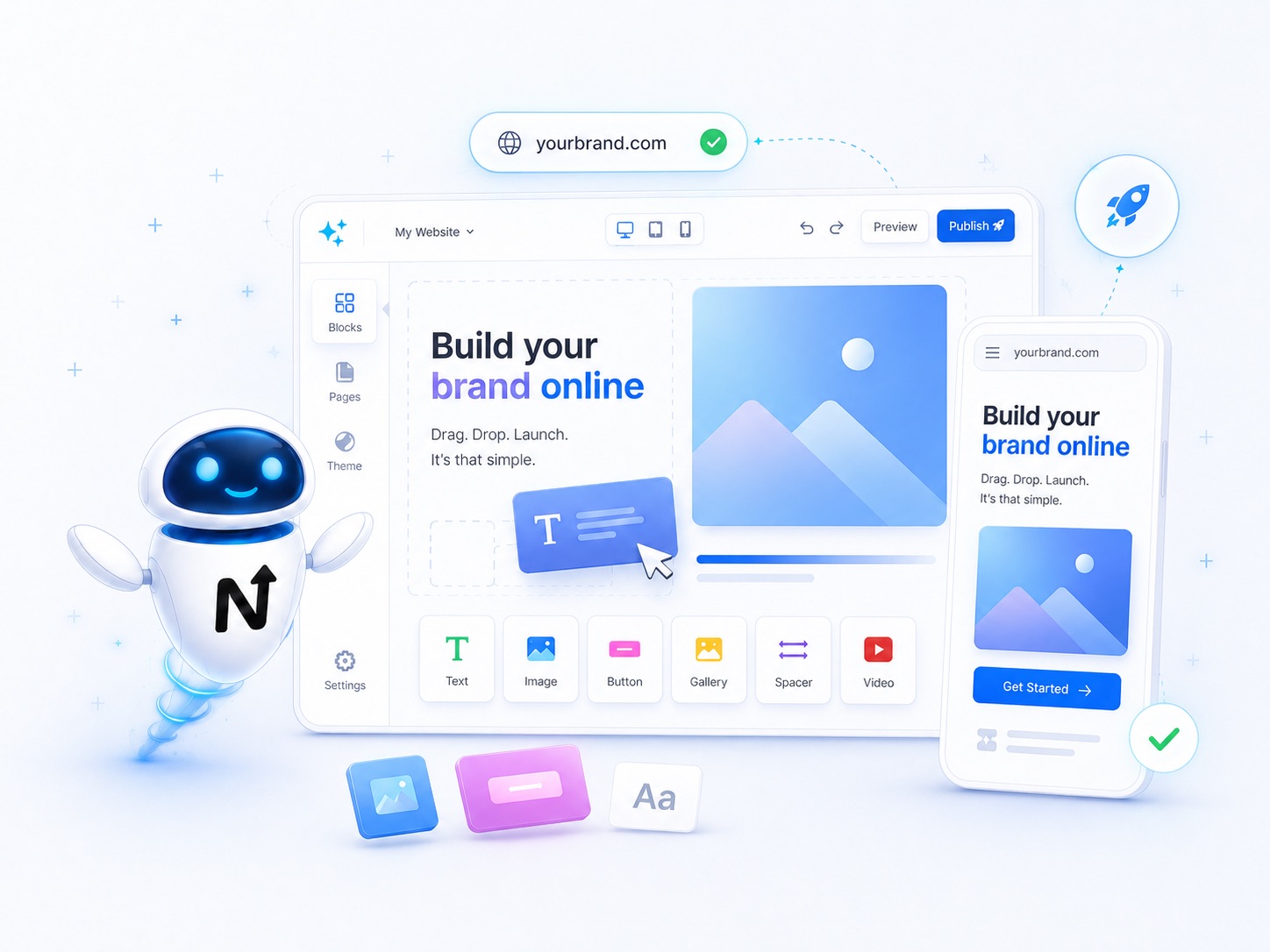
Website builders
AI website builders with drag-and-drop editing turn a simple prompt into a live, mobile-ready brand site in minutes - no developer required.
Build a website
Professional email
you@yourbrand.com on enterprise-grade email, set up the moment you own the domain. Calendar, drive and meetings included.
Set up emailFrequently Asked Questions
The strongest business names range from one short word (Gap, Crocs, Subway) to a clean two-word compound (Basecamp, Stitch Fix, Grubhub). Shorter is generally easier to say, spell, and remember, which matters for a business that grows through referrals and word of mouth. Keep in mind that your legal LLC name may include a required designator such as "LLC," while your customer-facing brand name can be the shorter, cleaner version. Aim for a brand name that fits comfortably on a website header and a business card without crowding.
This is a common question, and the general answer is that many states require the legal entity name on your formation documents to include a designator identifying it as a limited liability company, such as "LLC" or "Limited Liability Company," though the accepted forms vary by state. Your customer-facing brand name, however, often does not need to display "LLC" in everyday marketing. The specifics depend on your state's rules, so this is worth confirming with your state's filing office or a professional rather than assuming.
Generally, yes. Many LLCs operate under a brand or trade name that differs from their registered legal name, often by registering a "doing business as" or fictitious name. This is a common and useful flexibility, but the process and requirements vary by state, so check your state's rules or consult a professional before relying on it.
Before settling for an awkward variation, explore a clean two-word compound, a coined brandable version, or a strong alternative extension that signals your positioning. A clean, memorable name on a strong alternative TLD often beats a compromised, hyphenated .com. Keep in mind too that name availability differs between your state's entity registry, the trademark database, and the domain world, so a name that is taken in one of those places may still be workable, or may not, which is why checking all of them matters.
For an LLC, this means checking several places: your state's business-name database, the federal trademark registry, and the domain and social-handle landscape. A name can be clear in one and conflict in another. A broader check up front, and professional guidance when the stakes warrant it, saves months of potential trouble.
Generic, descriptive names are very hard to trademark and own, while distinctive brandables, evocative names, and stylized constructions are far easier to protect. Registering an LLC name with your state is not the same as securing a trademark, so a clean search of the trademark database before you commit is wise, and consulting a trademark professional is worthwhile when the business's stakes justify it.
You can, but it involves real cost and effort, including amending your formation documents with the state, updating your bank and contracts, rebuilding your website, and re-earning the recognition tied to the old name. Because rebranding is disruptive, it is almost always cheaper to invest the time to get the name right upfront, and to choose a flexible name that will not need replacing as the business grows, than to rebrand later.
Often yes, especially for a business aiming to compete in a crowded market or project an established presence, because customers and partners judge credibility partly by the web presence, and a clean, short, exact-match domain signals a real, serious business. A premium domain is a one-time cost that pays for itself through higher trust and lower acquisition cost over time. For a solo or local operation staying small, a clean standard registration of a distinctive name is often sufficient.
It is usually wise to settle on a name, and confirm its availability across your state's registry, the trademark landscape, and the domain world, before you file, because the name is part of the formation paperwork and is harder to change afterward. Doing the naming work, including securing the domain, before you file helps ensure the name you commit to legally is one you can actually use and build on.
The smartest next step
You now have the styles, the real-world examples, the domain logic, a general understanding of how the legal and brand names relate, and the shortlist discipline to find an LLC name that works as both an entity and a brand and that leaves room for wherever the business goes. The fastest way to turn all of that into a real shortlist is to run your positioning through a generator built specifically for this kind of decision.
NextBrand's free and unlimited LLC Name Generator combines advanced AI with naming patterns drawn from across every kind of business, and surfaces candidates in seconds with logo-style previews and real-time domain and social handle availability. You can filter by naming style, shortlist the names that feel right, share the list for feedback with people whose judgment you trust, and claim the one that fits before someone else does.
If you find a name that moves you but want a ready-made brand with the digital presence already built, NextBrand's strategic domains collection has high-impact, industry-flexible names available on both .com and high-trust alternative extensions, many of them with the kind of short, memorable roots that would take years to build from scratch, and that suit an LLC precisely because they are not tied to any single field.
Whichever path you choose, the single most valuable thing you can do right now is move the naming decision out of your head and onto a shortlist you can actually evaluate. And because an LLC name is also a legal entity name, pair that creative work with a check of your state's requirements and the trademark landscape, or a conversation with a qualified professional, so the name you choose is one you can both build on and register with confidence. The business you will run for the next fifteen years deserves a name you chose with intention.