
BusinessName Ideas
How to Name a Business -The Complete Guide
Real brand examples, proven naming patterns, and practical domain strategy to help you choose a name worth building on.
Every business starts with a name, and most founders underestimate how much that name shapes everything that follows. Your business name is the first thing customers hear, the first thing they search, and the first thing they judge before they decide whether to trust you. In the digital world, your domain is often the very first branded asset people see, and they start forming opinions about the business before they even reach the homepage. A strong name makes introductions easier, referrals more natural, and marketing more efficient. A weak name creates friction at every single stage.
The challenge is that naming advice online tends to fall into two camps. Either it is too vague - "pick something catchy and unique" - or it pushes you toward unrealistic goals like securing a single-word .com domain that would cost more than your first year of revenue. Neither approach helps a real founder make a real decision.
This guide takes a different route. You will learn how the strongest business names are actually structured, which naming styles tend to produce the best results, how to think about domain strategy without chasing fantasies, and what separates names that last from names that need replacing within a year. Every example here is a real brand, from global household names included as proof of concept to mid-stage companies included because their naming and domain decisions are closer to the ones you are making right now. Every section is designed to sharpen your judgment so you can move faster and with more confidence.
When you are ready to turn that strategy into fresh name options, the Business Name Generator is free and unlimited. If you already know you want a premium ready-made domain, the NextBrand premium marketplace is the other path worth exploring.
At a Glance
Should your domain name match your business name?
In almost every case, yes. The closer your domain is to your business name, the less work your customers have to do to find you again. When someone hears your name in conversation, sees it on a business card, or catches it in a podcast, the next step is usually typing it into a browser. If the domain matches what they heard, that path is instant. If it does not, you introduce a moment of doubt. That doubt costs you traffic, trust, and referrals.
Remember that before a visitor reads a headline or sees your product, the domain has already shaped the first impression. A clean, aligned domain tells people the business is real, intentional, and worth their attention. A clunky or mismatched domain raises questions before the homepage even loads.
This matters even more in the early stages. Established companies like General Electric can get away with ge.com because decades of brand awareness bridge the gap. A new business does not have that cushion. You need the name and the domain to work together from day one.
The practical goal is not a perfect character-for-character match. It is alignment. If your business is called Bright Loop, a domain like brightloop.com or brightloop.io feels aligned. A domain like bl-consulting-services.com does not. The first version feels like the same brand. The second feels like a workaround, and customers notice workarounds.
A strong name and domain pairing also compounds over time. It creates immediate online presence, signals authority from the start, and makes every marketing dollar go further because people can actually find you again after their first exposure. That kind of alignment is worth thinking about early, not patching later.
If you are struggling to find a name where the domain feels naturally aligned, that is a signal to keep exploring. The Business Name Generator checks domain availability across popular extensions and social handles in real time, so you can see the full picture before you commit.
Why a strong business name and domain are worth the effort
Naming can feel like a soft decision compared to product development, hiring, or fundraising. But the name touches everything. It is the first line of your pitch, the anchor of your website, the thing people Google when they are trying to remember who you are, and the signal that tells potential customers whether you are worth a closer look. In many cases, the domain is the very first thing a potential customer sees about the business. People start judging credibility before they even click through to the site.
Here is what a strong name and domain actually do for the business in practical terms.
Immediate Online Presence
A clean name and domain pairing makes the business feel real the moment someone types it in. There is no awkward redirect, no confusion, and no "is this the right site?" hesitation. The brand simply shows up where the customer expects it. A strong domain helps the business look intentional before the visitor reads a single word on the page.
Signals Authority from Day One
When the name sounds intentional and the domain matches, the business looks more established than it is. That perception matters enormously when you are competing for attention against companies that have been around for years.
Memorable and Easy to Share
People are far more likely to pass along a name they can remember after hearing it once. If your name is easy to say and the domain is easy to type, every satisfied customer becomes a more effective referral source.
Strong Market Positioning
The right name helps the business feel like it belongs in the space it is entering. A fintech startup with a sharp, modern name sounds like a fintech startup. A consulting firm with a grounded, confident name sounds like a consulting firm. Positioning starts with the name, long before the pitch deck.
Builds Trust and Brand Loyalty
Consistency between the name, the domain, the email address, and the social handles creates a sense of reliability. Customers trust brands that feel put together, and that trust starts with the basics.
Reduces Marketing Spend Over Time
This is the benefit most founders overlook, and it might be the most valuable one. When the name is memorable and the domain is easy to find, you spend less on paid reacquisition. Customers come back directly instead of needing another ad to remind them you exist. Every campaign, every piece of content, every partnership carries more momentum when the name itself does part of the work. Over months and years, that savings compounds significantly. The budget you save on reacquisition can be redirected into product development, customer experience, hiring, or growth, giving the business an advantage that starts with the name and ripples outward. A great name does not just look good. It works like a marketing asset that never stops paying for itself.
A strong name is not a luxury. It is operating leverage. The earlier you invest in getting it right, the more value it creates downstream.
What matters most when naming a business
Not every naming decision carries equal weight. Some qualities matter more than others, and understanding the hierarchy helps you make faster, more confident choices. Use the points below as a working checklist when you are evaluating any name, whether you came up with it yourself or generated it with the Business Name Generator.
Easy to say out loud
If someone hesitates before saying your business name in conversation, you have a referral problem. The best names feel natural when spoken. They work in introductions, recommendations, phone calls, and podcast mentions without needing a spelling explanation afterward. Say any name you are considering out loud ten times. If it feels smooth and confident every time, that is a strong sign.
Easy to spell after hearing it once
This is the test most founders skip. Ask someone to hear the name and then type it. If they get it right on the first try, the name passes. If they pause, guess, or add letters that are not there, you will lose direct traffic for the life of the business. In a world where people discover brands through voice, video, and conversation, spelling clarity is not optional.
Easy to remember the next day
A name can sound great in the moment and disappear from memory by morning. Strong names give the brain something to hold onto: a vivid image, a rhythmic sound, a surprising word pairing, or a familiar word used in a fresh way. The goal is a name that sticks after a single exposure, because most of your potential customers will only get one.
Right for the audience you are serving
The right name for a consumer wellness brand is the wrong name for a B2B logistics company. Naming is not about finding a universally appealing word. It is about choosing a word that resonates with the specific people you need to reach. Think about the tone your audience trusts. Think about how formal or casual your market is. Think about whether warmth, precision, energy, or calm is the right signal to send.
Distinct enough to own
You do not need an invented word to stand out, but you do need something that is not interchangeable with ten competitors. If a customer Googles your name and finds three other companies first, that is a positioning problem you will be paying to solve forever. Distinctiveness is not about being weird. It is about being the only result that matters.
Room to grow beyond day one
A name that describes exactly what you do right now can become a trap if the business evolves. That does not mean you should be vague. It means you should stress-test the name against a realistic two-to-three year vision. If the name still works after you expand your product line, enter a new market, or shift your positioning, it has the flexibility you need.
Works naturally with a domain
This is where many founders lose momentum. They fall in love with a name and then discover the domain is taken, too expensive, or only available in an awkward variation. The smartest approach is to think about the name and the domain together from the start. A slightly less exciting name with a clean, aligned domain will almost always outperform a brilliant name paired with a confusing URL.
Business name ideas by naming style
Most naming guides sort ideas into vague categories like "catchy," "creative," or "professional." Those labels describe a feeling, but they do not explain how names are actually built. The six naming styles below go deeper. They show the structural logic behind strong names so you can understand what pattern fits your business, evaluate options with sharper criteria, and give better direction to any tool you use, including the Business Name Generator.
Each style includes five real brands. Some are household names included for proof that the approach works at scale. Others are newer or mid-stage companies included because their naming and domain decisions are closer to the ones you are making right now. Study the structure, not just the name. The structure is what you can replicate.
Brandable business name ideas
A brandable name is coined or invented. It does not exist as a standard dictionary word, and that is the point. Brandable names are built to be ownable from day one. They often sound smooth, feel modern, and carry very little baggage from existing associations. That gives them the flexibility to grow with the business, even through pivots and market expansion.
The trade-off is that a brandable name requires more upfront investment in awareness. Nobody knows what the name means until you teach them. But once the association is built, the brand owns the word entirely. That kind of ownership is very hard for competitors to replicate.
Five real examples worth studying
- •Spotify at spotify.com:A coined word with a rhythmic, playful sound. It was meaningless before the company existed, which gave the brand complete ownership of the word from day one. The .com domain is a direct match.
- •Shopify at shopify.com:Built from the familiar word "shop" with a suffix that sounds both technical and approachable. The name immediately suggests commerce without describing a specific product. Because it is rooted in a recognizable word, the learning curve is almost zero despite being invented.
- •Calendly at calendly.com:Takes the well-known concept of a calendar and coins a smooth, friendly variation. The name is easy to say, easy to spell, and the .com is an exact match. This is a strong model for founders who want the ownability of a coined name without losing all connection to what the product does.
- •Grammarly at grammarly.com:A coined name that leans on the root word "grammar" while softening it into something warmer and more modern. The .com match is clean, and the name works equally well in conversation, in app stores, and in marketing. It shows that a brandable name can still be descriptive in spirit.
- •Zapier at zapier.com:A made-up word that sounds energetic and fast, loosely connected to the idea of "zapping" tasks into automation. Short, punchy, and distinctive, with an exact .com match. It demonstrates how a good brandable name can feel like a real word even though it is not.
Brandable names are especially strong when you want maximum flexibility and long-term distinctiveness. If this direction appeals to you, try generating brandable options in the Business Name Generator and pay attention to how each one sounds out loud and looks in the logo-style preview.
Compound business name ideas
A compound name combines two recognizable words or word parts into a single brand. The power of this approach is that you get built-in meaning from both halves while still creating something that feels new and specific. Compound names often perform well because they are easy to understand on first exposure, yet distinct enough to own.
The risk is stuffing too much information into the name. Two strong words can create clarity. Three or four category words jammed together usually create clutter. The best compounds feel tight, rhythmic, and balanced.
Five real examples worth studying
- •YouTube at youtube.com:"You" plus "Tube" creates an instant mental image of personal broadcasting. The compound is so clean that it reads as a single idea rather than two parts. The domain is a direct match that became one of the most typed URLs in the world.
- •PayPal at paypal.com:"Pay" delivers the function. "Pal" delivers the feeling. The combination is friendly, clear, and immediately tells you what the company does without sounding generic. The alliteration makes it stick in memory faster than most two-word names.
- •HubSpot at hubspot.com:"Hub" suggests a central place. "Spot" keeps it grounded and approachable. Together they create a name that sounds both practical and branded. The .com is an exact match, and the name scaled from a blog tool to a major enterprise platform without ever feeling too narrow.
- •SurveyMonkey at surveymonkey.com:An unexpected pairing that creates instant memorability. "Survey" is purely functional, but "Monkey" adds personality and makes the brand impossible to confuse with competitors. The domain is long by some standards, but the name is so distinctive that nobody forgets it.
- •Basecamp at basecamp.com:A single metaphor that communicates everything the project management tool wants to promise: a reliable starting point, a place to organize before heading out. The name is simple, confident, and supported by a perfect .com.
Compound names are often the safest and most effective starting point for new businesses. They give you clarity and personality without requiring the audience to learn a brand new word. Try compound directions in the Business Name Generator to see how different word pairings change the feel of the brand.
Alternate spelling business name ideas
An alternate spelling name takes a familiar word and changes it just enough to create ownership. The original meaning is still visible, but the new version becomes trademarkable and more distinctive. This approach works well when you want the warmth and instant recognition of a real word with the ownability of something new.
The danger is real: go too far with the spelling change and you create confusion. If people cannot figure out how to type the name after hearing it, every advantage disappears. The best alternate spellings are subtle. They remove a letter, swap a letter, or double a letter, and the result still reads clearly at first glance.
Five real examples worth studying
- •Lyft at lyft.com:"Lift" with a swapped vowel. The pronunciation is unchanged, and the new spelling is easy to remember. The twist is small enough that it never creates confusion but large enough to create a trademarkable identity. The domain is a clean four-letter .com.
- •Fiverr at fiverr.com:"Fiver" with a doubled final letter. The meaning is preserved, the spelling is easy to guess, and the slight alteration creates distinctiveness in a crowded marketplace category. This is a good example of how doubling a letter can feel intentional rather than accidental.
- •Tumblr at tumblr.com:"Tumbler" with the "e" removed. The result feels internet-native and slightly informal, which matched the platform's creative audience perfectly. Dropping a vowel was a common web-era naming strategy, and Tumblr is one of the few where it aged well.
- •Flickr at flickr.com:"Flicker" with the same vowel drop as Tumblr. The shorter form feels faster and more digital while keeping the original word fully recognizable. Both Flickr and Tumblr show that a consistent, light touch can make a familiar word feel like a brand.
- •Xero at xero.com:"Zero" with the Z swapped for an X. A single letter change that transforms a common word into a distinctive brand for accounting software. The pronunciation stays obvious, the .com is short, and the spelling feels sharper and more modern than the original.
Alternate spelling can be a powerful shortcut to a memorable, ownable brand, but only if the change is small and the pronunciation stays obvious. If you explore this direction in the Business Name Generator, test each option by asking someone else to spell it after hearing it once. That single test will tell you whether the twist helps or hurts.
Real word business name ideas
A real word name uses an existing word from the dictionary, applied to a business in a fresh or unexpected way. The strength of this approach is instant familiarity. People already know the word, already know how to spell it, and already have associations with it. When the fit is right, a real word name can feel both confident and effortless.
The challenge is availability and distinctiveness. Common words are harder to trademark in a broad context, and the most obvious choices often have crowded domain landscapes. The brands that succeed with real word names tend to pick words that are slightly unexpected for their category. That contrast between a familiar word and an unfamiliar context is exactly what makes these names stick.
Five real examples worth studying
- •Stripe at stripe.com:A simple, sharp word applied to a payments infrastructure company. "Stripe" suggests clean lines and precision, which fits the brand's identity around elegant developer tools. The word is short, easy to remember, and the .com is a direct match. It is a strong example of how a real word can redefine the tone of an entire category when the fit is right.
- •Lush at lush.com:A sensory word that immediately evokes richness and indulgence. The word is short, memorable, and creates a strong emotional response before the customer even sees a product. The .com is a clean one-word match, which made the brand easy to find from the start.
- •Gusto at gusto.com:A warm, energetic word applied to payroll and HR software. The contrast between the word's personality and the category's reputation for dullness is exactly what makes the brand memorable. It proves that a real word name can redefine how an entire category feels.
- •Plaid at plaid.com:A familiar, tactile word used for a fintech infrastructure company. The name feels grounded and approachable in a category that often leans toward cold, abstract branding. The .com is a direct match, and the word's visual association gives it an extra layer of distinctiveness.
- •Bench at bench.co:A simple, sturdy word for a bookkeeping platform. "Bench" suggests reliability and a solid foundation. The .co extension works well here because the name is short and the audience is digitally fluent.
Acronym business name ideas
An acronym name compresses a longer name into its initials. The result is short, compact, and often has a strong visual presence. Acronym names are common in industries where the original full name was too long, too technical, or too formal for everyday use.
The honest truth about acronyms is that they are a later-stage naming strategy for most businesses. Letters alone do not carry emotion, imagery, or meaning until the brand invests in building those associations. That is why the most successful acronym brands tend to be larger, more established companies with significant marketing presence behind them. For an early-stage business, a pronounceable, descriptive, or brandable name will usually create faster traction with less effort.
That said, acronyms absolutely work in the right situation. If the original name is important for legal, partnership, or heritage reasons but too long for daily use, compressing it into initials can be a smart solution. And in industries where initial-based names are an established convention, the audience is already comfortable with the format.
Five real examples worth studying
- •IBM at ibm.com:International Business Machines became IBM because the full name was too long and too literal for a company that expanded far beyond its original product. The acronym is now more recognizable than the original name, but that took decades and billions in brand investment.
- •IKEA at ikea.com:Technically an acronym built from the founder's initials and hometown, but it reads and sounds like a word. That word-like quality gives IKEA more warmth and approachability than most acronym names, which is a large part of why it works across cultures and languages.
- •ASOS at asos.com:Originally stood for "As Seen On Screen," but the brand quickly outgrew that meaning. The four letters are smooth enough to pronounce as a word, which gives them more personality than typical initials. The .com is a clean match.
- •GEICO at geico.com:Stands for Government Employees Insurance Company, a name that would be nearly impossible to market in its full form. The acronym is punchy, easy to say, and pairs with a simple .com. Decades of advertising made the letters universally recognizable.
- •MS.now at ms.now:Formerly MSNBC News, compressed into a sharp two-letter acronym and paired with the .now extension. The combination feels urgent, modern, and action-oriented. It shows that short initials do not need a .com to feel credible when the TLD itself adds meaning and energy to the brand.
If you are considering an acronym, it is worth testing it alongside full-word alternatives to see which direction creates a stronger first impression. Try both in the Business Name Generator.
Evocative business name ideas
An evocative name suggests a feeling, an image, or a promise instead of describing the business directly. When it works, evocative naming creates a deeper emotional connection than any literal description could. The name does not tell you what the company does. It tells you how the company wants you to feel.
This naming style is especially effective in categories where trust, aspiration, lifestyle, or identity drive purchasing decisions. The risk is that an evocative name with a weak connection to the brand can feel pretentious or confusing. The line between "intriguing" and "what does this company even do?" is thinner than most founders realize. The best evocative names create a feeling that clicks the moment you learn what the business offers.
Five real examples worth studying
- •Nike at nike.com:Named after the Greek goddess of victory. The name does not mention shoes, athletics, or equipment, yet it perfectly captures the brand's core promise of winning and personal achievement. It is proof that the right evocative name can become the most valuable asset a company owns.
- •Casper at casper.com:Named with a nod to Casper the Friendly Ghost, connecting the brand to comfort, bedtime, and approachability. For a mattress company, that association does quiet but powerful work. The name is warm, easy to remember, and the .com is a clean match. It shows how an evocative name can reposition an entire category from dull to inviting.
- •Warby Parker at warbyparker.com:Inspired by characters from Jack Kerouac's journals. The name feels literary, vintage, and sophisticated without being pretentious. The two-word .com is readable and memorable, and the literary connection set the tone for a brand that wanted to make premium eyewear feel accessible.
- •Lemonade at lemonade.com:A word that feels fresh, simple, and a little surprising for an insurance company. That surprise is the entire point. It repositions a traditionally dull category as something approachable and transparent. The .com is a clean match, and the name gives the brand an instant personality that competitors in the space cannot easily replicate.
- •Allbirds at allbirds.com:A compound that leans evocative. The name suggests nature, lightness, and movement, which aligns with the brand's identity around sustainable, comfortable footwear. It is memorable, easy to spell, and the .com is a direct two-word match that works beautifully.
Evocative names can give your brand an emotional head start that competitors cannot copy. If you explore this direction in the Business Name Generator, look for names that make you feel something, not just names that describe something.
Domain strategy: standard registration vs. premium domains
Once you have a strong name direction, the domain question becomes the next real decision. This is where many founders either freeze (searching endlessly for the "perfect" domain) or rush (grabbing the first thing available without thinking). A clearer approach helps.
There are two main paths.
Standard registration domains are domains currently available at the normal registration price, typically under $15 per year. This is the most common path and it can work well when your name is distinctive enough that the matching domain has not been taken. Many successful businesses launch on standard registration domains, especially when the name is a coined word, a fresh compound, or an alternate spelling that nobody else has claimed.
Premium domains are domains that cost more because they are shorter, more memorable, or more closely matched to a high-value keyword or brand concept. Premium domains are sold through marketplaces rather than standard registrars. When the fit is strong, a premium domain can compress years of brand building into the first impression. Before a visitor reads a single word on your site, the domain has already shaped how they perceive the business. A clean, strong domain makes that perception work in your favor from the very first moment.
The decision is not about prestige. It is about which path gives the brand more lift from day one. A standard registration domain can be a solid starting point when the name is distinctive and the match is clean. A premium domain is often the stronger move in specific situations: when the premium option is noticeably cleaner and easier to remember, when the alignment between brand and domain is unusually strong, when direct traffic and trust matter a lot in your category, or when the standard registration option would force a weaker name or an awkward workaround. In those cases, founders who invest in the premium path tend to recoup that cost quickly through stronger recall, more direct traffic, and lower customer acquisition costs.
One way to think about it: when the fit is strong, a premium domain is not just a cost. It is a brand asset that works for the business 24 hours a day. Every time someone types it directly, that is a visit you did not have to pay for. Every time someone remembers it without needing a second reminder, that is marketing spend you did not have to make. That freed-up budget can go straight into product, customer experience, or growth instead of being spent on ads that remind people how to find you again. Over the lifetime of the business, that value compounds significantly.
If you want to explore what is available, the Business Name Generator shows real-time domain availability across popular extensions. For premium options, the NextBrand premium marketplace is curated specifically for founders looking for stronger ready-made brand assets.
How to choose the right domain extension
The short answer is that a .com is still widely recognized and trusted, but it is far from the only credible option. The longer answer depends on who your customers are and how they discover you.
For businesses that serve a general consumer audience, a readable two-word .com is often a strong choice. People have been trained for decades to type .com by default, and that habit still carries weight. But "strong choice" does not mean "only choice." The key word is "readable." A two-word .com like salesforce.com or doordash.com is far more useful than a one-word .com that costs six figures and forces you to compromise on the name itself. And in many cases, a clean alternative extension can perform just as well or better when the name is strong and the audience is comfortable online.
For businesses that serve a tech-savvy, digital-first, or professional audience, alternative extensions can work very well. The credibility of extensions like .ai, .io, .app, .co, and .now has grown significantly, and in certain industries, they can actually signal that you are more current and more relevant than a generic .com.
Brand-matching .com pairings worth studying
- •Salesforce at salesforce.com:A two-word compound that became the defining name in enterprise SaaS. The .com is readable, the name is clear, and the pairing creates instant credibility.
- •Mailchimp at mailchimp.com:An unusual compound that is extremely sticky in memory. The .com match reinforces that the brand owns the idea completely. The name is long by character count but short by mental effort, which is what actually matters.
- •Squarespace at squarespace.com:A longer compound that still works as a .com because both halves are real words and the full name flows naturally. It shows that domain length is less important than domain readability.
- •Headspace at headspace.com:A calm, evocative compound paired with a perfect .com. The name sells the benefit rather than the product category, and the domain match makes the brand feel as intentional as the product itself.
- •DoorDash at doordash.com:An energetic compound that matches the speed of the service. The two-word .com is easy to say, easy to type, and the alliteration gives it extra memorability on mobile where most of the orders happen.
Brand-matching alternative TLD pairings worth studying
- •Perplexity at perplexity.ai:An AI search engine using the .ai extension. The TLD reinforces what the product does, making the domain feel more intentional than a generic .com would. For AI and machine learning companies, .ai has become a trust signal in its own right.
- •Fly.io at fly.io:A cloud infrastructure platform where the .io extension signals technical credibility and developer focus. The name is short, memorable, and the two-character domain paired with .io feels clean and purpose-built. It shows that .io can work as a primary brand domain, not just a fallback.
- •Linear at linear.app:A project management tool using .app to signal that the product is software. The extension adds useful context without cluttering the name with extra words. For tools and digital products, .app is becoming increasingly natural and expected.
- •Signal at signal.org:A privacy-focused messaging app that uses .org to reinforce its non-profit, mission-driven identity. The extension carries trust and seriousness in a way that aligns perfectly with the brand's values. For businesses built around trust, transparency, or community impact, .org can send a stronger signal than a generic .com.
- •Jobs.now at jobs.now:A job board platform focused on exposing hidden employment opportunities created by the U.S. visa process. The .now extension adds urgency and immediacy to a category where timing matters. It shows how a real word paired with .now can create a brand that feels action-oriented and current, making the extension do real work for the business.
The takeaway is straightforward. Start with the strongest option that fits your name, your audience, and your budget. A clean .com can be a strong option when it fits naturally, but it is not the only path to a credible, memorable brand. A well-matched .ai, .io, .app, .co, .org, or .now can be equally powerful or even stronger when the extension reinforces what the brand does. The worst choice is forcing a weak name just to get a .com, or settling for a confusing domain just to avoid investing in the right one.
Shortlist the strongest names
Generating options is the easy part. The harder part is knowing which names on your list are actually worth pursuing. Once you have a set of candidates, whether from your own brainstorming, from the Business Name Generator, or from a combination of both, run them through this practical filter.
The say-it-out-loud test
Say the name three times in a row. Then imagine saying it in a pitch meeting, a podcast interview, and a casual recommendation to a friend. If it sounds confident and natural in all three settings, it passes. If you stumble or feel the need to explain the spelling, that friction will follow the brand everywhere.
The phone test
Tell someone the name over a phone call and ask them to type it. If they get the domain right on the first attempt, the name and domain pairing is strong. This is one of the most revealing tests you can run, because it simulates exactly how referrals work in the real world.
The memory test
Share the name with someone and ask them about it two days later. Not two hours. Two days. If they remember it without prompting, the name has real staying power. If they need a reminder, the name may be pleasant but not sticky enough to drive organic growth.
The competitor test
Search for the name and see what comes up. If the first page of results is dominated by another company, you are starting from behind. A strong name should give you a realistic path to owning the top search result for your own brand.
The growth test
Imagine the business in three years. Has it added new products, entered new markets, or shifted positioning? Does the name still fit? A name that works today but traps you tomorrow is an expensive problem.
The domain test
Check whether the best realistic domain is available, whether that is a clean .com, a strong alternative TLD, or a premium domain that gives the brand more lift. The Business Name Generator handles this automatically, showing availability across popular extensions in real time.
Choosing between your final two or three
If you have narrowed your list to two or three strong candidates and cannot decide, that is actually a good sign. It means your shortlist is working. Here is how to break the tie.
Put each finalist through a head-to-head comparison on the three factors that matter most for long-term value: memorability, domain strength, and growth flexibility. Ask which name is easier to remember after one exposure. Ask which name has the stronger, cleaner domain path. Ask which name still sounds right if the business doubles in size or shifts direction.
If one name wins on two of those three, that is usually your answer. If the scores are genuinely even, look at the domain paths. A name with a noticeably stronger domain will outperform a slightly better name with a weaker one, because the domain is the asset that compounds every single day.
One more tiebreaker: share both finalists with three to five people who match your target audience. Do not ask which one they like more. Ask which one they remember the next day without being prompted. The name that sticks is the one that will perform better in the real world.
When a premium domain tips the decision
Sometimes the right name is clear, but the strongest domain version of that name is available as a premium rather than a standard registration. This is where many founders hesitate. Here is a simple way to think about it.
A premium domain is usually the stronger investment when the standard registration alternative would force a compromise: an awkward hyphen, an extra word, a less intuitive extension, or a domain that does not quite match the brand. If the premium version is noticeably cleaner, shorter, or more memorable, the gap in daily performance often justifies the upfront cost. Every customer who finds you directly instead of through a paid ad is recouping part of that investment.
If the gap between the premium and the standard option is small, the standard path may be the smarter move. But if you find yourself adding words, hyphens, or workarounds just to avoid the premium price, that is a sign the premium domain is doing real work for the brand. Browse the NextBrand premium marketplace to see whether a stronger option exists before settling.
Common mistakes to avoid
Most naming mistakes are not creative failures. They are practical oversights that compound over time. Knowing what to watch for can save you months of rework and thousands in rebranding costs.
- Choosing a name that sounds clever but is hard to say. If the name impresses you on paper but trips people up in conversation, it will hurt referrals and word of mouth every single day. Simplicity beats cleverness almost every time.
- Forcing a creative spelling that creates search friction. A subtle spelling twist can be powerful. A confusing one sends your traffic to someone else. If people have to guess how to spell the name, you will spend more money driving them back to the right URL.
- Stuffing too many keywords into the name. "Best Quality Fast Delivery Solutions" might sound descriptive, but it is forgettable, unbranded, and impossible to differentiate. Descriptive names can work when they are tight and focused. They fail when they try to describe everything at once.
- Locking the business into a narrow niche too early. A name like "Portland Organic Dog Treat Delivery" describes the business today but becomes a liability the moment you expand to new cities, new products, or new customers. Leave room for the business to evolve.
- Ignoring the domain until after choosing the name. This is one of the most expensive mistakes a founder can make. Falling in love with a name and then discovering that every reasonable domain variation is taken means starting the process over, often under time pressure and emotional frustration.
- Assuming only a single-word .com is legitimate. Some of the strongest brands in the world use two-word .coms, compound .coms, or alternative extensions. Chasing an unrealistic domain can push you into a weaker name than you would have chosen otherwise. The goal is the best realistic option, not the most expensive fantasy.
- Skipping the trademark check. A name that is already trademarked in your industry is not just a branding problem. It is a legal liability. Check the trademark databases in your market.
Every one of these mistakes is avoidable with a little upfront discipline. If you are unsure about a name, keep exploring. The Business Name Generator makes that easy because it is free and unlimited, so there is no cost to running one more round.
How to get better results from a name generator
A name generator is only as good as the direction you give it. Clicking a button and hoping for magic rarely works. Bringing a clear brief and using the right features can dramatically improve the quality of what you get back.
The Business Name Generator is built to help at every stage of this process, and it is completely free with unlimited generations. Here is how to get the most out of it.
Start with a brief, not a blank page
Before you generate anything, write down three things: the industry or category, the tone you want (premium, playful, warm, technical, bold), and what kind of name structure appeals to you based on the naming styles earlier in this guide. Even a rough direction will produce dramatically better results than a vague request for "something cool."
Use the advanced filters to narrow the field
The generator includes a set of filters that help you tighten the results to your preferences. You can filter by name style, length, and other attributes so you are not scrolling through hundreds of options that do not fit your vision.
Look at the visual previews
Every generated name comes with a logo-style visual preview so you can see how the name feels in context, not just as plain text. That preview often reveals things that reading alone does not. Some names look stronger than they sound. Others sound better than they look. The preview helps you catch those gaps early.
Check domain and social availability instantly
The generator checks domain availability across the most popular extensions and social handle availability across major platforms in real time. You do not need to leave the page or juggle separate tools. If a name is available where it matters, you will know immediately.
Build a shortlist and rank your favorites
As you browse, add the strongest candidates to your shortlist. Once you have a solid set, rank them against the criteria from the earlier sections. The shortlist feature is designed to make comparison and decision-making easier, especially when you are evaluating names across multiple sessions or circling back with fresh eyes.
Share with your team for a second opinion
You can share a single name or your entire shortlist with friends, co-founders, or colleagues. Good naming decisions almost always benefit from outside perspective, and the sharing feature makes that conversation simple and organized instead of scattered across text messages and email threads.
Let the AI learn what you like
As you add names to your shortlist and use the filters, the generator's AI picks up on your preferences and works to surface more names in that style. The more you interact with it, the more targeted the suggestions become. It is like working with a naming consultant who pays attention to every choice you make and adjusts in real time.
The goal is not to find one perfect name on the first click. It is to build a focused shortlist of strong candidates and then test them against real-world criteria. The Business Name Generator gives you the tools to do that efficiently, and the NextBrand premium marketplace gives you a second path if you decide that a premium ready-made domain is the stronger move for your brand.
Premium domain marketplace
Want to start strong?Secure an unforgettable domain name
The NextBrand marketplace holds hand-picked brand domains across every major category, each chosen for immediate presence, lasting trust, and strong market positioning.
- Immediate online presence
- Signals authority from day one
- Memorable and easy to share
- Strong market positioning
- Builds trust and brand loyalty
- Designed for long-term growth


Beyond the name
Everything you need after the name is yours
Once your brand name is set, we get you live and running with the partners that handle everything else - fast, professional, and ready for customers.
Business formation
Spin up an LLC, Corporation or similar entity through vetted formation partners - paperwork, EIN and registered agent in one flow.
Form your business
Logo design
Hand the brief to professional designers or run a full design contest, whichever fits your budget and timeline.
Design your logo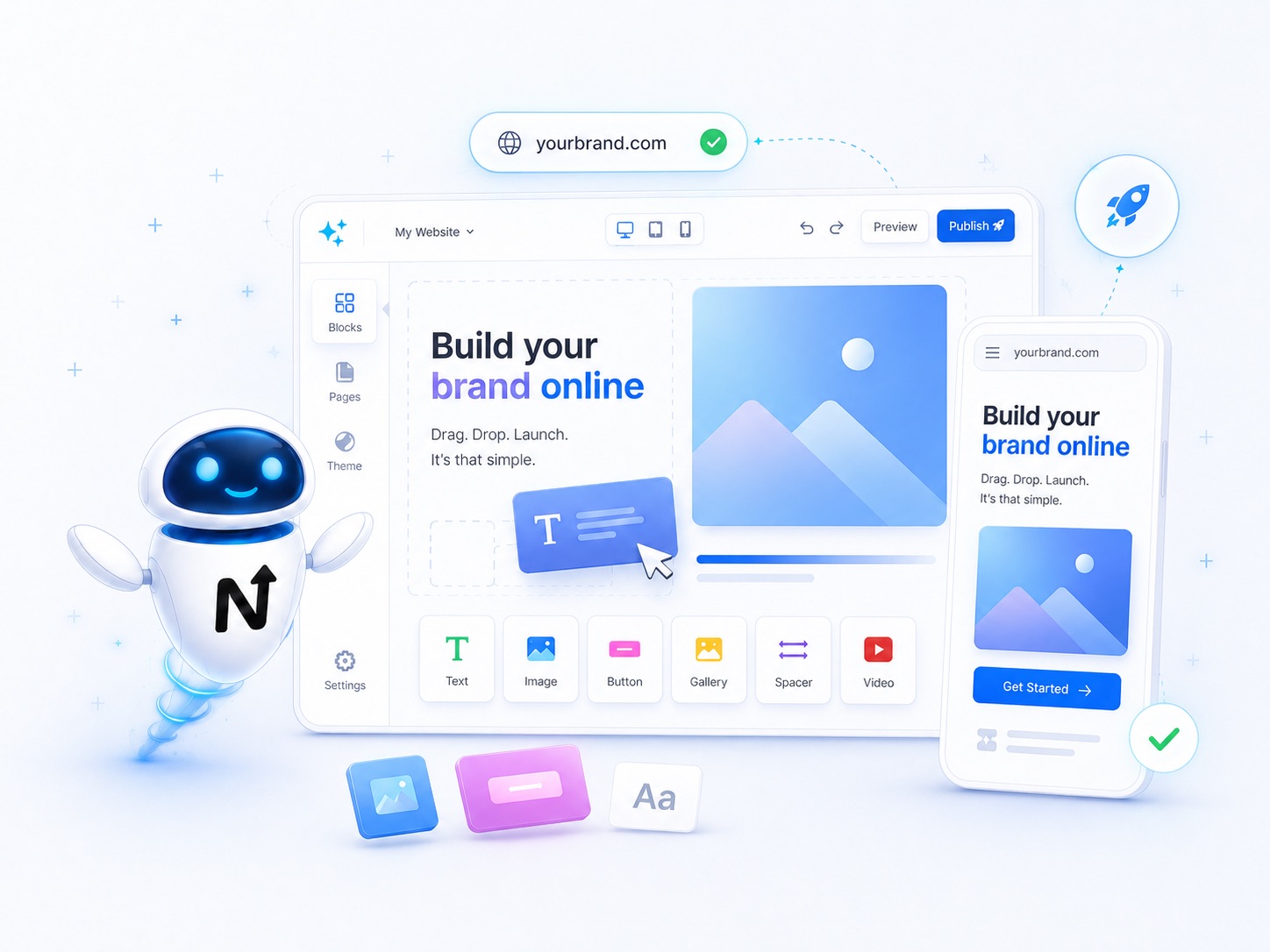
Website builders
AI website builders with drag-and-drop editing turn a simple prompt into a live, mobile-ready brand site in minutes - no developer required.
Build a website
Professional email
you@yourbrand.com on enterprise-grade email, set up the moment you own the domain. Calendar, drive and meetings included.
Set up emailFrequently Asked Questions
The smartest next step
You now have a clearer picture of how the strongest business names are built, which naming styles are worth testing, how domain strategy works in practice, and what separates names that last from names that get replaced. That clarity is the real asset. Better naming decisions do not come from guessing harder. They come from knowing what to look for.
If you are ready to turn that knowledge into action, the Business Name Generator is the fastest way to explore tailored options. It is free, unlimited, and powered by advanced AI combined with proprietary naming algorithms. You will see logo-style previews, real-time domain and social availability checks, and an AI that learns your preferences as you browse.
Once you find names worth considering, shortlist them, rank them, share them with your team, and make the decision with confidence.
If you already know that a premium domain would give your brand a stronger start, browse the NextBrand premium marketplace to see what is available.
Either way, the goal is the same: choose a name that is easier to trust, easier to remember, and easier to build on. Start now, while the strategy is fresh.
Ready to find your name?
Pick your path and start exploring.