
Law FirmName Ideas
How to name a law firm -The Complete Guide
A complete guide to naming a law firm with real brand examples (Kirkland & Ellis, Dentons, Clio, Harvey), domain strategy, and a shortlist process.
Naming a law firm is one of the most consequential business decisions a legal founder will ever make. The name sits on the letterhead of every demand letter, the signature block of every email, the glass door of every office, the footer of every engagement letter, the cover of every closing binder. Judges see it. Opposing counsel see it. Corporate general counsel evaluate it before deciding whether to send a matter. The name is the firm's first argument to the market, and it makes that argument quietly, continuously, every day the firm is open for business.
Legal is a category built on credibility, precision, and trust. Clients hand over the most consequential problems in their lives and their businesses to a firm partly because the firm sounded like it could handle them from the very first conversation. If the name is hard to say, hard to spell, or easy to confuse with three other firms in the same city, every referral costs a little more than it should. If the name reads as confident, clear, and professionally serious, it starts compounding equity from the day the partnership papers are signed.
This guide is built specifically for law firm founders. Whether you are launching a solo practice out of a shared office, opening a litigation boutique, building a transactional firm focused on private equity or M&A, starting a plaintiff-side class action shop, founding an immigration or family law practice, or building a modern alternative legal services operation, the same naming principles apply. You need a name that sounds credible on paper, holds up under professional responsibility rules, trademarks cleanly, and pairs with a domain that clients and referral sources can actually find on the first try.
Throughout this guide you will see real law firm and legal industry brand examples from every corner of the profession. Some are Am Law 100 giants like Kirkland & Ellis, Latham & Watkins, and Sullivan & Cromwell that anchor the top of the global legal market. Others are modern legal tech and alternative legal services brands like Clio, Axiom, and Harvey that are reshaping how legal work gets delivered. A third group includes UK Magic Circle and international firms like Linklaters and A&O Shearman whose naming conventions offer distinct lessons for any firm thinking about how to scale. Studying how each group named itself is one of the fastest ways to learn what actually works in legal branding, because the names that held up at scale are the ones that passed every test you will eventually face on your own.
By the end, you will have a clear way to evaluate your own ideas, a list of naming patterns to work through, a realistic view of how to choose a domain, and a shortlist process for locking in the winner.
At a Glance
A strong law firm name usually sits at the intersection of three qualities.
The first is credibility. Legal work is a credence good. Clients cannot evaluate the quality of the advice until long after they have paid for it, so the name has to signal competence and seriousness from the first read. Firms like Sullivan & Cromwell and Cravath, Swaine & Moore became shorthand for elite Wall Street work partly because the names themselves projected institutional gravity the first time a corporate client encountered them.
The second is readability in professional contexts. A law firm brand has to work on a court filing caption, on a CLE panel nameplate, on a LinkedIn headline, on a billable-hour invoice. Names with tight spacing, unambiguous pronunciation, and clear proper-noun status travel further than names stuffed with syllables or unusual characters. Dentons and Skadden work partly because they read cleanly at any size and any formality level.
The third is ethical compliance. Law firm names are governed by jurisdiction-specific professional conduct rules that vary from state to state. A name that implies a partnership that does not exist, a capability the firm does not have, or a relationship with a government agency is not merely bad branding, it can be sanctionable. The strongest law firm names are checked against the rules of every jurisdiction where the firm will have a licensed attorney before they are printed on a single business card.
The strongest law firms pass all three. They sound credible, they read clearly in every professional context, and they comply with every jurisdiction's naming rules. Most of this guide walks through how to get there.
Should your domain name match your law firm name?
The naming style you choose will shape the domain strategy you can actually execute. In law firms specifically, single-word .coms are almost all taken after decades of surname-derived practices, legal tech launches, and directory platforms. That means most new firms end up in one of four patterns. Understanding the tradeoffs upfront will save months of wasted effort on names whose domains are structurally impossible to get.
Pattern one: short partner-name .com.
This is the most reliable pattern for traditional law firms. A two- or three-surname compound produces clean URLs like jonesday.com, kirkland.com, or lw.com. The shorter the surname combination, the easier the URL. Firms with three or more surnames often adopt an abbreviated form at the domain level while keeping the full partner name as the legal entity.
Pattern two: strategic alternative TLD.
When the .com is gone but a brand-only domain on a high-trust alternative TLD is available, it can be the better choice than stretching to an awkward compromise. Extensions like .law, .now, .ai, and .org all carry specific meaning in the legal landscape. A tight one-word name on the right alt TLD often outperforms a compromised .com over the life of the firm, especially for modern legal tech platforms, alternative legal services providers, or firms positioning around a specific practice area or technology differentiation.
Pattern three: surname plus descriptor .com.
A longer but still readable option, where the firm name is paired with a category descriptor or city designator. Patterns like lawfirm, legal, or a city name added to a surname produce URLs that read cleanly and often clear trademark and domain checks when the bare surname is unavailable. This pattern is weaker for firms that plan to expand beyond a single city or practice area, because the narrower descriptor becomes a limiter later.
Pattern four: acronym or initials .com.
Used heavily by merged firms, this pattern compresses a long combined name into a short mark that doubles as the URL. DLA Piper uses dlapiper.com. A&O Shearman uses aoshearman.com. The pattern works best when the acronym has a real founding or merger story behind it, and when the letters read cleanly both visually and phonetically.
Domains that look quick and clever but fail in practice include heavily abbreviated spellings, numbered domains, hyphenated URLs that require explanation, and domains that force a prospective client to ask which TLD they should type. All four of those patterns bleed leads and referrals over time. Spend the extra creative energy upfront to find a name whose domain just works.
Why a strong law firm name and domain are worth the effort
It is tempting to think of law firm naming as a stylistic exercise separate from the business of practicing law. In the legal category, the two are inseparable. The name and the domain together drive outcomes that show up directly in client acquisition, partner recruitment, and how much it costs to compete for every new matter.
A strong name creates immediate online presence. When a general counsel hears about your firm in a context where they cannot ask follow-up questions, a clean matching domain means they can evaluate the firm in the next five minutes. Kirkland, Latham, and Dentons all anchored decades of global client acquisition partly because their digital presences looked like the scale of the firms themselves from the first click.
A strong name signals authority from day one. A name that reads as credible on a court filing, a closing binder, and a bar journal profile earns the benefit of the doubt from clients, opposing counsel, and judges alike. That benefit of the doubt converts into retained matters, higher rates, and stronger settlement leverage over the life of the firm.
A strong name is memorable and easy to share. Legal referrals travel person to person through relationships built over decades. A firm name that other lawyers, bankers, and corporate executives can drop into a conversation or an email without stumbling compounds every time someone shares it. Names that require spelling, explanation, or correction quietly die in the gap between 'I know someone' and 'let me forward you their contact information.'
A strong name builds trust and brand loyalty over the full arc of a client relationship. Sophisticated clients stay with firms for decades partly because the firm's name becomes part of their professional identity. Davis Polk, Cravath, and Simpson Thacher have each compounded that identity for more than a century. The name becomes part of how the client thinks about their most important legal matters, and that is one of the most durable business moats in all of professional services.
A strong name also creates strong market positioning. In a category where more than four hundred Am Law 400 firms plus thousands of boutiques compete for overlapping matters, the name is often the single most important differentiator at the pitch stage. A firm with a confident, ownable name can win work against firms with identical practice offerings simply because the name reads as more serious, more specialized, or more aligned with the client's own sense of who they are.
All of this compounds into reduced marketing spend and lower client acquisition cost. When your name does some of the work for you in search, in referrals, and in pitch meetings, the firm does not have to lean as hard on directory listings, paid placement, and expensive rankings submissions to keep the pipeline full. Firms with weak names spend more per partner to reach the same revenue milestones, year after year. Over the life of a firm that gap becomes enormous.
What matters most when naming a law firm
Professional responsibility compliance
Law firm names are governed by jurisdiction-specific rules of professional conduct, which vary in their specifics from one state to the next. Historically, many states adopted versions of the ABA Model Rules including Model Rule 7.5 on firm names and letterheads, and a number of jurisdictions now address the same concerns through the broader prohibition on false or misleading communications about a lawyer or the lawyer's services under Rule 7.1. The general thrust across most jurisdictions is the same: firm names cannot be false or misleading, cannot imply a partnership or association that does not actually exist, and cannot suggest a connection with a government agency. Trade names are permitted in many jurisdictions but regulated. Specific requirements vary considerably, so before you commit to any name, verify it against the current rules of every jurisdiction where the firm will have a licensed attorney, ideally with the help of a professional responsibility lawyer or your state bar's ethics counsel.
The letterhead test
Print your proposed firm name in serif type on a mock letterhead and read it aloud. Does the name carry the weight of formal correspondence? Would you be comfortable sending it to a Fortune 500 general counsel, to a federal judge, to opposing counsel in a high-stakes matter? Names that look right on letterhead usually work everywhere else, and names that look uncertain on letterhead tend to stay uncertain for the life of the firm.
The receptionist phone test
Imagine a receptionist answering the phone with the full name of your firm. 'Good morning, thank you for calling [your firm name], how can I direct your call?' Does the name flow naturally when spoken? Does it fit in the cadence of a professional phone answer? Names that stumble in that context will stumble in every client intake call, every referral conversation, and every unsolicited lead for the life of the firm.
The signature block test
Draft an email signature block with your proposed firm name below the attorney's name and title. Does the hierarchy read correctly? Does the firm name look like the kind of institution a senior partner would be proud to sit beneath their own name on every email? If the firm name dwarfs the attorney, overwhelms the title, or looks misaligned with the seriousness of the practice, that is a signal to keep working.
Pronounceability across accents and regions
Law is increasingly cross-border. Your firm's name will eventually be spoken by a German client, an Israeli counterparty, a Singapore regulator, or a Brazilian executive. Names that require specific English-language pronunciation, rely on puns that only work in one dialect, or contain letter combinations that trip up non-native English speakers will quietly cost the firm business in every international matter. Short, clean, simple names travel best.
Trademark and domain availability together
The strongest law firm names are the ones where the name, the .com or strong alternative TLD, and the social handles are all available in the same moment. A name whose matching .com is owned by a squatter and whose Instagram and LinkedIn handles belong to unrelated companies is a name you will fight every day. It is almost always better to reshape the name upfront so that the full package is clean than to launch with compromises you will regret for a decade.
State bar and trade name registration
In many states, a law firm operating under a trade name rather than the surnames of its partners must register that trade name with the state bar or the state business authority. This is a procedural step, not a barrier, but it is one more reason to pick a name whose legal clearance is smooth rather than one that triggers edge cases at every bureau.
Law firm name ideas by naming style
Six proven approaches to naming your law firm, each with real examples and practical guidance.
Brandable law firm name ideas
Brandable law firm names are single invented or repurposed words that function as the whole brand. They are harder to land in legal than in most other categories because the profession still leans heavily on founder surnames, but the firms that have succeeded with single-word brandable marks have claimed mental real estate that no surname-based competitor can fully match.
Once established, brandables are almost impossible to copy. They own the mental real estate completely and let the firm define what the word means in legal services.
Five real examples worth studying
- •Dentons at dentons.com:
World's largest law firm by headcount with over ten thousand lawyers across eighty-plus countries; the single-word brand reads as confident and global the moment a client encounters it.
- •Skadden at skadden.com:
Collapsed Skadden, Arps, Slate, Meagher & Flom into a single recognized word that the market uses across press, pitches, and the firm's own marketing.
- •Linklaters at linklaters.com:
UK Magic Circle firm derived from a founder surname; at global scale the single word functions as a pure brandable that reads modern, clipped, and ownable.
- •Clio at clio.com:
Leading cloud legal practice management software used by 400,000+ legal professionals; repurposed the Greek muse of history into a humanizing brand the legal category badly needed.
- •Avvo at avvo.com:
Invented brandable that became synonymous with US lawyer directories, distinctive and ownable in a space otherwise cluttered with descriptive phrases like 'find a lawyer.'
Best for firms with a distinctive practice identity that deserves its own word, rather than traditional partnerships where the surname structure still does most of the trust-building.
Generate Brandable Law Firm Names
Compound law firm name ideas
Compound law firm names pair two or more partner surnames, or a surname plus a descriptor, into a readable brand. This is the single most common style in legal, for good reason. The format signals partnership structure, tracks neatly to professional responsibility rules, and creates a mark that carries the credibility of the named attorneys directly into every client interaction.
Compounds signal partnership structure and personal accountability. Two or three surnames working together carry the weight of named attorneys directly into every client interaction.
Five real examples worth studying
- •Kirkland & Ellis at kirkland.com:
Highest-grossing law firm in the world (~$8.8B revenue); the two-name compound reads as confident and unambiguous from a courtroom filing to a Wall Street Journal headline.
- •Latham & Watkins at lw.com:
Global firm with 3,000+ lawyers and ~$7B revenue; the compound is clean, memorable, and widely recognized across US and international markets.
- •Sullivan & Cromwell at sullcrom.com:
Wall Street institution founded in 1879; the two-name compound has anchored the firm for nearly a century and a half, with 'S&C' as a secondary working brand.
- •Baker McKenzie at bakermckenzie.com:
Global firm whose unpunctuated two-surname pairing was the first in the industry to surpass one billion dollars in annual revenue back in 2004.
- •Jones Day at jonesday.com:
International firm whose pairing of two one-syllable surnames creates one of the most visually clean law firm marks at any scale.
Best for traditional partnerships where the surname compound already does the trust-building, and for new firms that want the safest, most ethics-compliant default.
Generate Compound Law Firm Names
Alt Spelling law firm name ideas
Alt spelling law firm names intentionally break standard punctuation or spacing conventions to create a distinctive brand mark. In legal this often shows up as camelCase merger combinations, joined compounds, or structured formats with periods and apostrophes. The pattern works in law when the deviation is intentional, minimal, and rooted in a real founding or merger story.
A small deviation from standard spelling creates a distinctive visual mark while preserving readability. When tied to a real story, the styling reinforces brand identity.
Five real examples worth studying
- •WilmerHale at wilmerhale.com:
American multinational formed in 2004 through the merger of Hale and Dorr with Wilmer Cutler Pickering; the camelCase joined form created a distinctive modern mark that honored both legacy firms.
- •LegalZoom at legalzoom.com:
Publicly traded online legal services company whose camelCase joined compound is instantly ownable and fits cleanly into a domain, a logo, and an app icon.
- •LexisNexis at lexisnexis.com:
Legal research provider whose joined alt-spelling compound combines two Latin-feeling coined terms into a single brand recognized across every jurisdiction it serves.
- •O'Melveny at omm.com:
Global law firm whose founder surname uses the Irish apostrophe styling as a deliberate visual feature of the brand, with the single-word working form functioning across client conversations.
- •LawPay at lawpay.com:
Legal-industry payments platform whose camelCase joined compound signals a modern, tech-forward identity in a traditional industry.
Best for merged firms creating a new combined identity, for legal tech brands that need a modern signature, or for surnames with heritage spellings worth preserving.
Generate Alt Spelling Law Firm Names
Real Word law firm name ideas
Real word law firm and legal industry names use a single common English word as the brand. The upside is instant recognition and strong positioning. The downside is that the most valuable single words are long gone, and the brand has to work hard to stand out in search. In legal specifically, the real-word category is dominated by modern legal tech and alternative legal services brands rather than traditional law firms.
Real words carry instant meaning and emotional resonance. When the word maps to the firm's positioning, it does marketing work directly without explanation.
Five real examples worth studying
- •Trellis at trellis.law:
AI-powered state trial court analytics platform serving tens of thousands of law firms across 3,000 courts in 45 states; the repurposed garden-structure word is instantly recognizable in legal tech.
- •Ironclad at ironcladapp.com:
Contract lifecycle management platform widely used by legal departments; the real word meaning 'unable to be broken' has direct semantic resonance to contract enforceability.
- •Axiom at axiomlaw.com:
Global alternative legal services provider serving 75% of the Fortune 100; the word borrowed from mathematics signals clarity and first principles, exactly the positioning the brand has built.
- •Luminance at luminance.com:
Cambridge-founded legal AI platform trusted by 700+ organizations across 70+ countries; the real word carries both a clarity metaphor and a technical-sounding register that fits the AI positioning.
- •Gavel at gavel.io:
Legal document automation platform built around one of the most iconic symbols of the legal profession; the category-defining word gives the brand a marketing advantage few legal tech startups ever claim.
Best for legal tech platforms, alternative legal services providers, or boutique firms with a clear positioning that benefits from a single evocative word.
Generate Real Word Law Firm Names
Acronym law firm name ideas
Acronym law firm names compress a longer partnership into a shortened mark, usually the initial letters of the founding or merged surnames. In legal this pattern is especially common among firms formed through mergers of multiple legacy houses, where the full combined name would be too long to use in practice. Acronyms also appear at the top of the global market, where scale and international reach have pushed firms toward shorter, more portable brands.
A short acronym is portable across pitch decks, courtroom filings, and LinkedIn headlines. When backed by a real founding or merger story, it carries history into a manageable mark.
Real examples worth studying
- •DLA Piper at dlapiper.com:
Multinational firm with 5,400+ lawyers and ~$4.2B revenue; the DLA acronym compresses three legacy surnames while Piper preserves transatlantic heritage.
- •K&L Gates at klgates.com:
Multinational firm formed in 2007 through the merger of Kirkpatrick & Lockhart and Preston Gates & Ellis; K&L plus Gates honors both founding lineages in a distinctive short mark.
- •BCLP at bclplaw.com:
Bryan Cave Leighton Paisner, formed in 2018 through a transatlantic merger; the four-letter acronym compresses a long combined name into a mark short enough for any pitch deck or courtroom filing.
- •A&O Shearman at aoshearman.com:
Formed in 2024 through the merger of Magic Circle Allen & Overy and white shoe Shearman & Sterling; nearly 4,000 lawyers across 47 offices in 28 countries.
- •MoFo at mofo.com:
Working brand of Morrison & Foerster; the firm officially embraced the acronym-style nickname across its own marketing, making the short form part of the firm's identity rather than fighting it.
- •MS.now at ms.now:
Formerly MSNBC, the major cable news network rebranded to MS NOW as part of its spin-off from NBCUniversal into the new company Versant. The move to the .now domain was deliberate: it signals urgency, modernity, and a fresh start while retaining the recognizable "MS" initials. For law firms, pairing initials with a modern extension like .now could work for practices positioning around rapid response and urgent matters.
Best for merged firms compressing multiple legacy names, or for established firms whose initials are already shorthand within the industry.
Generate Acronym Law Firm Names
Evocative law firm name ideas
Evocative law firm and legal brand names create a feeling, image, or association that signals the firm's positioning without literally describing the practice. Evocative names are rarer in traditional law firms because of professional responsibility constraints around misleading names, but they appear consistently in the legal tech and consumer legal services categories where the marketing freedom is broader.
Evocative names create emotional resonance and signal positioning before a client reads a word of copy. They communicate identity through metaphor rather than description.
Five real examples worth studying
- •Rocket Lawyer at rocketlawyer.com:
Online legal services platform with nearly 30 million registered customers; the two-word compound signals speed and accessibility in a category historically defined by slowness.
- •LegalShield at legalshield.com:
Pre-paid legal services membership company whose compound combines 'Legal' with the protective imagery of a shield, signaling defense, coverage, and security to consumers.
- •Harvey at harvey.ai:
Legal AI platform valued at ~$8B used by more than half the Am Law 100; named after Harvey Specter from the TV series Suits, giving the product an instantly evocative signal of sharp legal intelligence.
- •Spellbook at spellbook.legal:
Contract AI tool whose evocative name evokes mastery and arcane knowledge in a category usually defined by dry technical vocabulary, signaling capability rather than automation.
- •Relativity at relativity.com:
E-discovery platform whose name pulls from the scientific weight of Einstein-era physics; communicates intellectual depth, precision, and scale that match its positioning.
Best for legal tech platforms, consumer legal services brands, or ancillary product lines where marketing freedom is broader than under traditional firm-name rules.
Generate Evocative Law Firm Names
Domain strategy: standard registration vs. premium domains
Once you have a name in mind, the next real decision is how you actually acquire the domain that will carry it. In law firms specifically, this comes down to a choice between two paths: registering a clean standard domain at registrar prices, or acquiring a premium domain that has already been claimed and is held as a brand-grade asset. Each path has a different cost, a different timeline, and a different long-term effect on the firm's brand.
When a standard registration is enough.
A standard registration is the right call when you have a multi-partner surname compound that produces a clean domain combination still freely registerable, when the firm is launching as a small solo or two-partner practice where every dollar of capital matters, or when you are building a regional or boutique practice where new clients come primarily from referrals, bar association directories, and existing professional networks rather than broad digital search. If your firm name is built around two or three partner surnames or a coined modern legal-services brand that has not been registered before, a clean standard registration on the right extension can carry the firm through every important brand surface without compromise. This is how many independent law firms launch, and it is a perfectly defensible choice when the surnames or the brand identity itself does enough of the differentiation work.
When a premium domain is the smarter move.
A premium domain is the smarter move when the firm is being built to compete for sophisticated corporate, M&A, IP, or AmLaw 200 work, when the founders want a name that competes with the established global firms with century-long track records, or when the exact name you genuinely want is already registered, which is the case for almost every short, memorable, single-word legal brand. Premium domains tend to be short, easy to spell, easy to dictate over the phone (which still happens constantly in legal practice), and immediately recognizable as a real firm brand rather than a registrar-grade improvisation. For a modern legal services brand, an alternative legal services provider, or a tech-forward law firm competing against firms with 100+ years of brand equity, a premium domain can close the perception gap on day one in a way that no amount of attorney recruiting, conference sponsorship, or thought-leadership investment can replicate later.
The tradeoffs in practice.
The decision affects almost every dimension of how the firm will be perceived and how it will perform commercially. Trust rises sharply with a clean, short, exact-match domain because clients, opposing counsel, and referral sources read the URL as a signal of how seriously the firm invests in itself, which carries weight in a category where reputation is everything. Memorability is a function of length and pattern simplicity, and premium domains are almost always shorter and cleaner than what is still available as a standard registration. Brand strength compounds over the life of the firm, and a strong domain becomes inseparable from the firm name itself in client referrals and industry conversation. Discoverability in search and direct typing favors short, exact-match domains, which is part of why the strongest modern firms invested in the domain alongside the rest of the brand identity. Direct traffic from word-of-mouth, bar association mentions, court filings, and offline press all routes through whatever URL the audience can guess on the first try. Long-term positioning in a category as relationship-driven as legal services is permanently shaped by the domain that clients and referral partners end up associating with the firm. Conversion potential from inbound prospect to retained client is meaningfully higher when the URL itself signals a firm at the same level as the work the firm actually delivers.
Practical guidance for law firms.
The right call usually depends on where the firm sits on the ambition curve. A small surname-based practice, a solo practitioner serving a specific community, or a two-partner regional shop can often build a strong brand on a clean standard registration of a distinctive enough name. A firm aiming to compete for sophisticated corporate work, build a modern legal services brand, or scale into a regional or national practice almost always benefits from investing in a premium domain upfront, because every year the firm operates without one is a year of compounded perception cost that is harder to recover later in a category where brand longevity matters as much as fee structure. The cost of a premium domain is a one-time investment. The cost of operating on a compromised domain is a recurring tax on every client pitch the firm ever makes.
How to choose the right domain extension
Domain extensions are not interchangeable. Each one carries signals that clients, opposing counsel, and referral sources pick up subconsciously, and the right choice depends on the positioning of your law firm or legal brand. The .com extension remains the strongest default for law firms that want maximum reach, recognition, and trust across every audience including general counsel buyers, federal judges, opposing counsel, and conservative procurement teams at large corporate clients. Alternative extensions like .law, .now, .ai, and .org each carry their own meaning, and the right alt TLD can outperform a compromised .com when the extension matches the firm's positioning and the brand-matching exact word is available there. Below we walk through the extensions that matter most in legal and show how real firms have used each one to support their identity, with both the .com pairings worth studying and the alternative TLD pairings worth studying that the modern legal landscape rewards.
Brand-matching .com pairings worth studying
The most common law firm domain strategy is a short surname-based .com that matches the working brand exactly or pairs it with a clean abbreviation. This pattern is the safest, most trusted, and most discoverable option for the vast majority of traditional law firms, and the examples below show how to do it cleanly.
• Kirkland & Ellis at kirkland.com
pairs a two-name firm with a short single-surname .com, using the stronger half of the compound as the working URL. The domain is easy to spell, easy to remember, and matches how most clients refer to the firm in conversation, even though the legal entity remains Kirkland & Ellis LLP.
• Latham & Watkins at lw.com
takes the abbreviation path, compressing a two-name firm into a two-letter domain that is the shortest possible legitimate URL in the Am Law 100. The pattern works because the firm is large and established enough that clients already associate "LW" with Latham, which turns the compressed domain into a confident shortcut rather than a cryptic abbreviation.
• Sullivan & Cromwell at sullcrom.com
uses a phonetic compression of the compound name, joining the first syllables of each surname into a pronounceable URL. The pattern is distinctive in a category where most firms either use full surnames or single-word abbreviations, and it shows how a long traditional firm name can claim a manageable domain without sacrificing the full partner compound at the legal entity level.
• Dentons at dentons.com
shows the short brandable at its cleanest, with a single-word firm name matching a single-word .com. The match is as tight as it gets in the legal category, and it is one of the reasons Dentons operates as a confident global single-word brand across eighty-plus countries.
• Clio at clio.com
demonstrates the same pattern in legal tech, where a four-letter brandable sits on a four-letter matching .com. The pairing is memorable, easy to reference in pitch meetings, and signals a modern brand in a traditional industry, which is exactly what the platform needs to reach growing law firm customers.
Brand-matching alternative TLD pairings worth studying
Alt TLD adoption in legal is growing quickly, driven by legal AI platforms, alt legal services providers, legal industry associations, and firms positioning around immediacy or category specificity. The examples below show how to use non-.com extensions to reinforce positioning rather than just fill a gap.
• Attorney.now
captures two signals at once. The word "Attorney" is the universal term for a practicing lawyer across US jurisdictions, and .now communicates immediate access. For a modern legal services marketplace, an on-demand attorney matching platform, a lawyer referral service, or a consumer-legal brand built around rapid response, Attorney.now does enormous positioning work before a client reads a single product page. The domain reads as direct, confident, and built for the way consumers now expect to access professional services.
• Harvey at harvey.ai
is the legal AI platform whose .ai extension reinforces the category positioning directly. For an AI-native legal brand, .ai signals the technology foundation without requiring a word of explanation, and it helps differentiate the platform from older legal research and workflow tools sitting on .com. Harvey's scale, with more than one thousand customers across sixty countries and a valuation of roughly $8 billion, proves that a major legal brand can anchor itself on .ai without any compromise in professional credibility.
• Trellis at trellis.law
demonstrates the .law extension at its most effective, pairing a distinctive single-word real-word brand with the legal-specific TLD. For a legal research platform, an attorney-facing analytics tool, or any brand whose work lives entirely inside the legal industry, .law signals category alignment in a single character. Trellis serves tens of thousands of law firms across state trial courts in forty-five states on the .law domain, which shows how the extension can anchor a serious legal brand rather than reading as a gimmick.
• American Bar Association at americanbar.org
represents the category's most important .org, hosting the largest voluntary association of lawyers and legal professionals in the world, founded in 1878, with roughly one hundred fifty thousand paying members. The .org extension signals the standards-setting, accreditation, and professional-responsibility role the ABA plays across US legal education and ethics. For legal industry associations, legal aid organizations, pro bono networks, and access-to-justice brands, .org carries the exact right signal.
Law is a category where the alt TLD landscape is still forming. That is not a weakness, it is an opportunity. For firms and legal brands positioning around technology, immediacy, specialization, or industry infrastructure, the right alt TLD can carve out mental real estate that is still wide open in a market where the best .coms were claimed decades ago.
Shortlist the strongest names
Once you have explored the naming styles above and generated real candidates, the shortlist is where discipline matters most. Most first-time legal founders fall in love with the first name that clears a few basic checks, and miss the chance to find something genuinely stronger. The goal of the shortlist phase is to narrow ten to fifteen candidates to one or two finalists that pass every test you care about.
Test the visual fit.
Write each candidate on a mock letterhead, in an email signature block, and on a courtroom filing caption. Names that survive all three visual tests are the ones worth keeping. Names that only work in one format are rarely worth the compromise over the life of a firm.
Run the pronunciation and spelling check.
Say the name out loud to three or four people who do not know the context, including at least one person who works outside law. If they can spell it correctly after hearing it once, and repeat it accurately to someone else later, the name is likely to travel through referral networks and client conversations without friction.
Check the domain and social handle availability simultaneously.
A name where the .com is gone, the LinkedIn company page belongs to someone else, and the Twitter or X handle is squatted is a name you will fight every day. Finalists should have a realistic, recognizable path to owning their digital presence in full.
Run the professional responsibility check.
The name has to clear the rules of professional conduct in every jurisdiction where the firm will have a licensed attorney. If the name implies a partnership that does not exist, a specialty the firm has not earned, or a connection with a government agency, it is not a working name regardless of how well it tests in other dimensions.
Test the fit with the firm itself.
Imagine the name on the practice area you want to lead with, in the market you want to reach, on the clients you most want to attract. Does it set the right tone? Does it feel like the firm you actually want to build?
Trust your gut on one dimension.
Would you be proud to say this name out loud for the next thirty years? Law firms are long careers, and the best firm brands belong to founders who genuinely love saying the name every day.
Common mistakes to avoid
Over years of watching law firms launch, merge, and rebrand, a handful of naming mistakes show up again and again. Avoiding them does not guarantee a great name, but it removes the most common reasons legal brands underperform.
Stringing too many surnames together.
The four- and five-name compound firm is a historical artifact, not a modern brand. Names like Kirkland & Ellis, Jones Day, and Baker McKenzie all work partly because the combined surnames fit in a conversation. Firms that insist on preserving every founding partner's name end up with ten-syllable brands no client can remember. Pick the two or three strongest names and let the rest live on the about page.
Choosing a name with uncertain pronunciation.
A name that requires spelling or clarification on every introduction is a name that will fight the firm at every pitch, every referral, and every bar event. Especially for cross-border work, names that trip up non-native English speakers quietly cost the firm business.
Picking a name that fails professional responsibility rules.
A name that implies a specialty the firm has not earned (for example, '[City] Best Lawyers'), or a partnership that does not exist, or a connection with a government agency, can subject the firm to discipline in multiple jurisdictions. Clear the name with your state bar's ethics rules before you print a business card, not after.
Naming the firm after a single partner who might leave.
Solo-surname firms are common and often work, but naming a three-partner firm entirely after one partner creates a structural problem if that partner later departs. If the firm is likely to grow beyond its founder, a name that can scale with the partnership is almost always better than a name that binds the brand to a single person.
Ignoring the trademark landscape.
Law firm names occupy a crowded trademark space, especially around common practice descriptors like 'law group,' 'legal partners,' and 'legal associates.' A clean USPTO trademark search plus a state bar entity search in every state where the firm plans to practice should be table stakes before any commitment to the name.
Leaving the domain question to the end.
By the time the firm has ordered letterhead, printed business cards, and set up a Clio or MyCase account, the domain situation is often set in stone. Founders who leave the URL decision to the end usually end up with compromised domains that they regret for years. Bring the domain check to the front of the process, not the back.
Sounding like every other firm in the city.
Many new firms reach for the same small pool of words: law group, legal partners, associates, counsel, attorneys. The category is so saturated with these descriptors that using them is almost guaranteed to create a name that feels generic. Strong firm brands almost always avoid the obvious legal vocabulary and find something more distinctive, whether that is a single standout surname, a short acronym with a real founding story, or a clean single-word brandable.
How to get better results from a name generator
A modern AI name generator can surface hundreds of viable law firm name candidates in the time it would take to brainstorm a dozen on your own. But getting the best results requires knowing how to input your goals, how to filter the outputs, and how to iterate toward a final shortlist.
Start with specific inputs about the firm.
The more the tool knows about your positioning, the sharper the candidates it returns. Tell the generator whether the firm is a traditional partnership, a boutique litigation shop, a transactional firm, an alternative legal services provider, or a legal tech platform. Describe the target client, the practice area, the tone you want the name to carry, and the geographic scope of the firm. Vague inputs produce generic outputs.
Use the advanced filters rather than scrolling through raw lists.
The strongest tools let you constrain by naming style, by syllable count, by initial letter, by domain availability, and by extension preferences. A shortlist filtered by style and domain is far more useful than a long unfiltered list of possibilities.
Pay attention to the brandable previews.
NextBrand shows how each name would look as a logo mark before you commit to anything, which is especially useful for law firms where the name will eventually sit on letterhead, business cards, signage, and a court filing caption.
Use the shortlist feature aggressively.
Save every candidate that passes your first visual and pronunciation check, then come back a day later with fresh eyes. Most of the names that feel exciting on first read lose their shine overnight. The ones that still feel right in the morning are usually the ones worth pursuing further.
Run availability checks as you go.
The generator's real-time domain and social handle checks remove the biggest single source of wasted effort, which is falling in love with a name whose URL is unavailable. Filtering the shortlist down to names with clean availability saves weeks of rework.
Share your shortlist with someone whose judgment you trust in the legal community.
A senior lawyer, a respected referral partner, or a former partner at a well-run firm will spot issues with a name that a generator cannot catch, from subtle ethics concerns to accidental echoes of existing firm brands.
Premium domain marketplace
Want to start strong?Secure an unforgettable domain name
The Professional Services category holds hand-picked law firm brand domains, each chosen for immediate presence, lasting trust, and the market positioning a fresh registration cannot match.
- Immediate online presence
- Signals authority from day one
- Memorable and easy to share
- Strong market positioning
- Builds trust and brand loyalty
- Designed for long-term growth


Beyond the name
Everything you need after the name is yours
Once your brand name is set, we get you live and running with the partners that handle everything else - fast, professional, and ready for customers.

Business formation
Spin up an LLC, Corporation or similar entity through vetted formation partners - paperwork, EIN and registered agent in one flow.
Form your business
Logo design
Hand the brief to professional designers or run a full design contest, whichever fits your budget and timeline.
Design your logo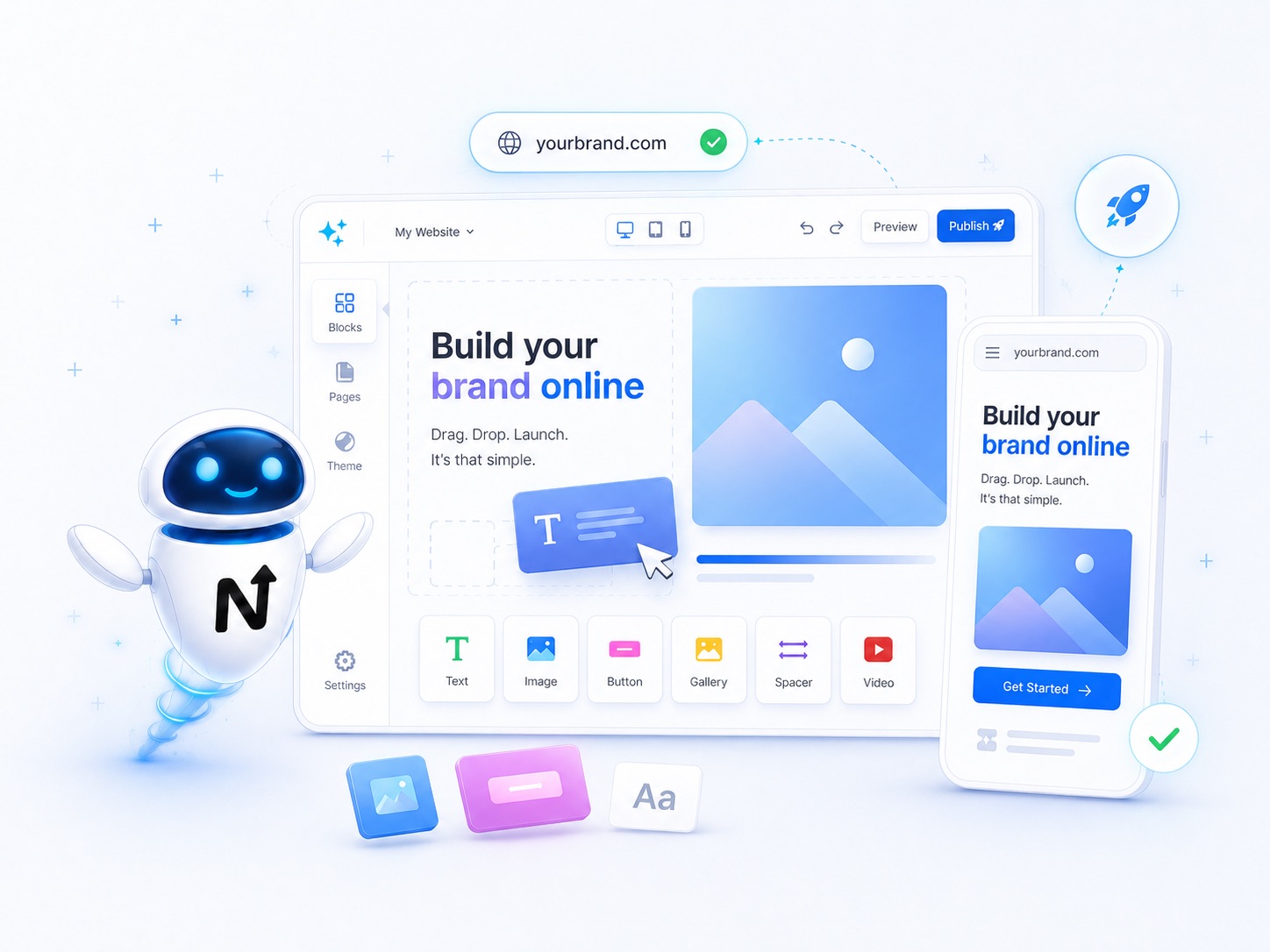
Website builders
AI website builders with drag-and-drop editing turn a simple prompt into a live, mobile-ready brand site in minutes - no developer required.
Build a website
Professional email
you@yourbrand.com on enterprise-grade email, set up the moment you own the domain. Calendar, drive and meetings included.
Set up emailFrequently Asked Questions
The strongest law firm names range from one short brandable word (Dentons, Skadden, Linklaters, Clio) to a clean two- or three-surname compound (Jones Day, Baker McKenzie, Kirkland & Ellis, Sullivan & Cromwell). Longer partnership names like Paul, Weiss, Rifkind, Wharton & Garrison do still exist, but they almost always operate with a shortened working form in practice. Aim for a name that can fit in a subject line, a signature block, and a courtroom filing caption without feeling crowded.
It depends on the positioning and the jurisdiction. Traditional partnerships almost never use descriptors like 'law group' or 'legal' in the main firm name because the surname compound already signals the practice clearly. Modern alternative legal services brands and legal tech platforms often do use these descriptors (LegalZoom, LawPay, Rocket Lawyer) because they need the category signal in consumer-facing markets. Check your state bar's rules on trade names before committing either way.
Yes, and it is one of the most common solo-practice patterns in the US legal market. The risk comes when the firm grows beyond the solo stage. If you expect to add partners, consider whether the surname-only brand will still fit the firm in five or ten years, or whether a name that can accommodate growth is a better starting point.
Before you compromise on an awkward variation, explore strategic alternative TLDs, three-surname compounds that keep the strongest surname at the front, or stylized variants using apostrophes or initials. In law specifically, the alt TLD landscape has real momentum behind it, and a clean one-word name on .law or .now often outperforms a stretched two-name .com.
Yes. Every US jurisdiction regulates law firm names through its rules of professional conduct, and the specifics vary considerably by state. Historically, many states adopted Model Rule 7.5-style provisions specifically governing firm names and letterheads. A number of jurisdictions now address the same concerns through the broader prohibition on false or misleading communications under Rule 7.1, while others retain dedicated firm-name rules. Always verify the name with current ethics counsel or the bar of every jurisdiction where the firm will have a licensed attorney before committing.
A clean USPTO trademark search before you commit to letterhead and marketing materials is essential. Generic descriptors like 'Law Group' or 'Legal Partners' are almost impossible to trademark cleanly because so many firms use similar terms. Distinctive surname compounds, coined words, or evocative phrases are far easier to protect. Consult a trademark attorney before you make major investments in branding based on the name.
You can, but it is expensive and slow. Rebranding a law firm means updating letterhead, business cards, email signatures, state bar registrations, website, firm directory listings, CLE certifications, malpractice insurance endorsements, and every retainer agreement and engagement letter going forward. Established client and referral relationships take time to re-anchor to the new brand. Almost always cheaper to spend more time getting the name right upfront than to rebrand later.
Often yes, especially in law where direct lookups, referral traffic, and search both matter for client acquisition. A high impact domain is a one-time cost that pays for itself over years of lower client acquisition cost and stronger first impressions with sophisticated prospects. Compare the investment to the cost of a single year of directory and rankings placements, and the math usually works out in favor of the stronger ready made brand asset.
The smartest next step
You now have the styles, the real-world examples, the domain logic, and the shortlist discipline to find a law firm name that will carry the practice for decades. NextBrand's free Law Firm Name Generator combines advanced AI with naming patterns drawn from thousands of real law firms and legal industry brands, surfacing candidates in seconds with logo-style previews and real-time domain and social handle availability. If you find a name that moves you but want a ready-made brand with the digital presence already built, NextBrand's strategic domains collection has high impact law firm and legal industry names available on both .com and high-trust alternative extensions. Claim the name that will still feel right after your thousandth client matter.
Ready to find your name?
Pick your path and start exploring.
Related NextBrand Links