
BrandName Ideas
How to Choose a Brand Name -The Complete Guide
Explore brand name ideas with real iconic brand examples, six proven naming styles, domain strategy, and a practical shortlist process to help you choose a name worth building on.
Naming a brand is one of the most consequential decisions a founder ever makes. The name appears on every product, every package, every storefront, every website, every social profile, every receipt, every press mention, and every conversation a customer ever has about what you make and why it matters. A buyer reads the name before they read the price. A reviewer reads the name before they read the spec sheet. A press editor reads the name before they read the pitch. A friend recommends the name before they recommend the product. The name is the brand's first argument to the world, and the strongest brands have names that win that argument from the first impression and keep winning it across decades of customer relationships.
There is a real difference between naming a business and naming a brand. A business name lets you open a bank account, register an LLC, sign contracts, and run a balance sheet. A brand name does all of that and also carries the emotional weight of why anyone should care that your business exists. Apple, Nike, Google, Tesla, LEGO, Disney, Coca-Cola, and the most iconic brands in history all started as businesses but became something far larger. They became names that customers feel something about, names that get tattooed on people's arms, names that anchor multi-generational loyalty, names that command premium pricing because the name itself signals quality and identity. That is the difference this guide is built around. You are not just naming a business. You are naming something you hope will become a brand that people remember, recommend, return to, and root for.
This guide is for founders who care about building a real brand. Whether you are launching a consumer product line, a software platform, a fashion label, a food brand, a beauty company, a fitness brand, a media operation, a service business with aspirations to scale into a household name, or any other kind of operation where the name needs to do meaningful emotional work in the market, the same naming principles apply. You need a name that reads as distinctive on a product, looks right in a press headline, works for customers recommending the brand to a friend, and pairs with a domain that those customers can actually find on the first try.
By the end, you will have a clear way to evaluate your own ideas, a list of naming styles to work through, a realistic view of how to choose a domain, and a shortlist process for locking in the winner.
At a Glance
A strong brand name usually sits at the intersection of three qualities: memorability (short, distinctive, easy to say and spell), emotional resonance (it carries feeling and identity beyond what it literally describes), and ownability (defensible as a trademark, available as a domain, ownable across social handles). The strongest brands pass all three, which is what lets them earn customer loyalty, command premium pricing, and become shorthand for an entire category over time.
If you can own the domain that exactly matches your brand name, do it. If you cannot, reshape the name so you can. Once you know the direction that fits, explore tailored options with the Brand Name Generator or browse the NextBrand premium marketplace for stronger ready-made options.
Should your domain name match your brand name?
In almost every case, yes. A brand customer sees a friend's product, asks what it is, gets the brand name in a text message, and types that name into a browser thirty seconds later. A reader sees a brand mentioned in a magazine feature, opens a phone, and types the name into Google to find the site. A reviewer hears about a brand on a podcast and tries to find the URL the next morning. Every one of those moments ends with someone typing the brand name into a browser. If the domain does not match the brand, you lose most of that traffic to competitors, squatters, or simple confusion.
Brands also operate in a category where the domain itself is part of the brand identity. A clean, short, matching domain tells customers and press that the brand cares about every detail of its own presentation. A compromised, awkward, or obviously-second-choice domain sends the opposite signal, and sophisticated buyers notice. In a consideration set where multiple brands compete for the same customer's loyalty, the domain can be part of the reason the customer chooses one brand and ignores the others. For brands that hope to become household names, the URL is almost always treated as inseparable from the brand mark itself.
The goal is a domain where the brand name and the URL are the same word, or as close as possible. If the exact .com is out of reach, the next best options are a clean two-word .com that keeps the brand word intact, a stylized variant that matches the brand's visual identity, or a clean alternative extension like .now, .ai, .io, or .bot that matches the brand's positioning.
What you want to avoid is the trap of a distinctive brand name paired with a compromised domain. If the only URL you can get requires hyphens, numbers tacked on to the end, or an awkward suffix like "brand" or "co" or "official," the brand will fight you every time a customer tries to type it, a press writer tries to link to it, or a podcast host tries to read the URL out loud. In brand-building specifically, where every micro-moment of customer attention is valuable and word-of-mouth drives most of the long-term growth, that friction turns into real lost reach and real lost equity over the life of the brand.
The short answer: if you can own the domain that exactly matches your brand name, do it. If you cannot, reshape the name so you can.
Why a strong brand name and domain are worth the effort
It is tempting to think of brand naming as a creative exercise separate from the commercial side of running a brand. In real brand-building, the two are inseparable. The name and the domain together drive outcomes that show up directly in customer acquisition cost, repeat purchase rate, press coverage frequency, social handle reach, and how much it costs to acquire every new customer over the life of the brand.
Immediate online presence.
A clean matching domain means a customer who just heard about the brand can find it in seconds. Apple, Nike, Tesla, and LEGO all anchored generations of customer loyalty partly because their digital presences looked exactly like the brand customers remembered from physical products, advertising, and conversation.
Signals authority from day one.
A name that reads as confident on a product label, a press release, and an investor pitch deck earns the benefit of the doubt from press, retailers, and customers alike. That benefit of the doubt converts into editorial features, wholesale placements, and customer trust that weaker-named brands would never even be considered for.
Memorable and easy to share.
Brand discovery travels through networks of customers, journalists, podcast hosts, and enthusiasts who recommend brands to each other in conversation and on social media. A brand name a customer can text to a friend without misspelling, mention on a podcast without explanation, or write on a gift tag, compounds every time someone shares it.
Builds trust and brand loyalty.
Brand customers often buy from the same brand across decades and across multiple product expansions. Apple customers buy Apple across phones, computers, watches, and services for thirty years. Nike customers buy Nike across shoes, apparel, and equipment from childhood through retirement. The brand becomes part of how customers think about their own identity, and that is one of the strongest retention mechanics in commerce.
Strong market positioning.
A brand with a confident, ownable name can win purchases against equivalent-quality competitors simply because the name reads as more distinctive, more aligned with the customer's values, or more likely to become part of a regular routine.
Reduced marketing spend and lower customer acquisition cost.
When your name does some of the work for you on the shelf, in search, and in word-of-mouth, the brand does not have to invest as hard in paid advertising, influencer partnerships, and performance marketing to keep the growth rate up. Over the life of a growing brand, that gap becomes enormous.
What matters most when naming a brand
The "would you tattoo it" test
The strongest brands have names that customers feel something about. Patagonia customers tattoo the Patagonia mountain logo. Apple customers buy Apple-branded apparel. Harley-Davidson customers wear Harley-Davidson patches. The brand name has to be one that the most passionate version of your customer could actually fall in love with. A name that feels generic, forgettable, or arbitrary will never earn that depth of customer connection no matter how strong the product is.
The verb test
The most iconic brands in modern commerce have become verbs in everyday speech. People google things. People Photoshop images. People Uber to the airport. They Venmo each other money. Not every brand needs to become a verb, but the strongest brand names have the linguistic potential to be used as verbs, nouns, or category descriptors in customer conversation. A name that is hard to use grammatically in a sentence is a name that will struggle to become part of how customers talk about your product.
The product expansion test
Most successful brands eventually expand far beyond their original product. Apple started as a personal computer company and now spans phones, watches, music, payments, services, and entertainment. Nike started as a running shoe company and now spans every athletic and lifestyle category. Amazon started as a bookstore. Name the brand in a way that can carry the product expansions you are likely to launch over the next decade, not just the single product you are launching with.
The merchandise test
A real brand eventually shows up on merchandise: T-shirts, hats, water bottles, stickers, tote bags, hoodies. Could the brand name fit on a hat, look right on a hoodie, work as a wordmark on a sticker? Brands that pass the merchandise test become wearable, collectible, and shareable in ways that pure utility brands never can. The name itself has to look right when it is the only thing on the product.
Pronounceability across markets
Brands often expand internationally as they scale. A name that depends on a pronunciation that only works in one dialect, or contains letter combinations that trip up non-native English speakers, will cost the brand in every cross-border conversation. Apple, Nike, Google, IKEA, and most iconic global brands chose names that work across the largest possible set of language groups. Test the name with at least one non-native English speaker before committing.
Trademark and domain availability together
The strongest brand names are the ones where the name, the .com or strong alternative TLD, and the social handles are all available in the same moment. A name whose matching .com is owned by a squatter and whose Instagram handle belongs to another brand is a name you will fight every day. It is almost always better to reshape the name upfront so the full package is clean than to launch with compromises you will regret for a decade.
Category collision check
Before committing, search your proposed name across Google, Amazon, the USPTO trademark registry, Instagram, and the major social platforms. Brands launch constantly, and a name that reads as original in your head may already belong to a brand in another category or another country. A fifteen-minute check up front can save months of rebrand pain later.
Brand name ideas by naming style
Six proven approaches to naming your brand, each with real examples and practical guidance.
Brandable brand name ideas
Brandable brand names are invented or coined single words that carry no direct descriptive meaning but function as the whole brand. They are some of the most powerful names in brand-building because the best brandable names become shorthand for an entire product experience, and the visual signature of the single coined word does enormous work on every product, every package, every ad, and every social post the brand ever produces.
Five real examples worth studying
- •Kodak at kodak.com:
The iconic American imaging company founded in 1888 by George Eastman in Rochester, New York. The single-word coined brandable was deliberately invented by Eastman to be unique, short, easy to pronounce in any language, and impossible to mispronounce or misspell. Eastman built the name around the distinctive double-K letterform and the firm phonetic structure, and the result became one of the most recognizable brand marks in the history of commerce, anchoring more than 135 years of photography, imaging, and digital media products.
- •Google at google.com:
The iconic American technology company founded in 1998 by Larry Page and Sergey Brin at Stanford University. The single-word coined brandable derives from "googol" (the mathematical term for the number 10 raised to the 100th power), reflecting the founders' ambition to organize the vast scale of information on the internet. The misspelling-as-feature became one of the most successful brand decisions of the modern internet era, and "to google" has entered everyday English as a verb meaning to search for something online.
- •Pixar at pixar.com:
The American computer animation studio founded in 1986 as a division of Lucasfilm and acquired by Steve Jobs that same year, now a subsidiary of The Walt Disney Company. The single-word coined brandable joins "pixel" with "star" to create a distinctive five-letter mark that has anchored more than four decades of animation history including the original Toy Story (1995) and dozens of subsequent feature films. The short distinctive word reads as both technological and warmly creative, exactly the positioning the studio has occupied across its entire history.
- •Verizon at verizon.com:
The American multinational telecommunications company formed in 2000 through the merger of Bell Atlantic and GTE. The single-word coined brandable was created from the Latin "veritas" (truth) and the English "horizon," producing a distinctive invented word with no prior meaning in any language. The name was selected through one of the most extensive corporate naming projects in modern brand history and has anchored more than two decades of telecom service across consumer and enterprise markets.
- •Spotify at spotify.com:
The Swedish audio streaming service founded in 2006 by Daniel Ek and Martin Lorentzon in Stockholm. The single-word coined brandable joins "spot" with "identify" into a distinctive invented seven-letter mark. The brand has anchored the transformation of the music industry from ownership-based to streaming-based models, and the distinctive word has become shorthand for streaming audio across hundreds of millions of users globally.
Brandable names are slow to build but deeply valuable once established. They work best for brands with a distinctive product or category-creating positioning that deserves its own word, rather than for brands operating in heavily descriptive product categories where a clearer naming pattern still does most of the trust-building. Try brandable directions in the Brand Name Generator to see how distinctive single words feel against your positioning.
Compound brand name ideas
Compound brand names pair two or more words into a readable brand. This is one of the most common styles in brand-building, for good reason. The format signals exactly what the brand does or who it serves, and creates a mark that reads naturally on packaging, in press, and in the conversations where customers recommend brands to each other.
Five real examples worth studying
- •Microsoft at microsoft.com:
The American multinational technology corporation founded in 1975 by Bill Gates and Paul Allen in Albuquerque, New Mexico. The two-word compound joins "microcomputer" with "software" into a distinctive nine-letter mark that signals exactly what the company makes at the founding moment when the microcomputer software market did not yet exist as a category. The compound has anchored five decades of technology commerce across operating systems, productivity software, gaming, cloud computing, and enterprise services.
- •Facebook at facebook.com:
The American social media company founded in 2004 by Mark Zuckerberg and co-founders at Harvard University, now operating under the parent company Meta Platforms. The two-word compound joins "face" with "book," referencing the printed student directories ("face books") historically distributed at colleges and prep schools. The compound captured the core social signaling function of the platform and anchored its expansion into the largest social network in history.
- •YouTube at youtube.com:
The American online video sharing platform founded in 2005 by Steve Chen, Chad Hurley, and Jawed Karim, acquired by Google in 2006 for $1.65 billion. The two-word compound joins the personal pronoun "you" with the colloquial term "tube" (a reference to television's cathode-ray tube heritage), creating a brand mark that emphasizes both the user-generated content model and the video format. The compound has anchored the platform's growth into the largest video service in the world.
- •Airbnb at airbnb.com:
The American hospitality marketplace founded in 2008 by Brian Chesky, Joe Gebbia, and Nathan Blecharczyk in San Francisco. The shortened compound derives from "Air Bed and Breakfast," referencing the original concept of renting out air mattresses in the founders' San Francisco apartment. The compound has anchored the company's growth into a publicly-traded platform with millions of active listings across more than 220 countries.
- •PayPal at paypal.com:
The American multinational digital payments company founded in 1998 (originally as Confinity, merging with Elon Musk's X.com in 2000). The two-word compound joins "pay" with the friendly noun "pal," signaling the platform's positioning as the friendlier, more personal alternative to traditional banking and payment infrastructure. The compound has anchored more than two decades of payment commerce across consumer, business, and merchant markets.
Compound names are the safest, most professionally recognized default for new brands with a clear functional or product description. They are also among the easiest to secure matching domains around, because the two-word combination often produces a URL that is still available when a single-word version would not be.
Alt Spelling brand name ideas
Alt spelling brand names intentionally break standard punctuation, capitalization, or character conventions to create a distinctive brand mark. In brand-building this often shows up as all-caps styling, lowercase prefix conventions, exclamation point integration, dropped vowels, and deliberate typographic decisions that carry brand personality directly into the mark.
Five real examples worth studying
- •LEGO at lego.com:
The iconic Danish toy company founded in 1932 by Ole Kirk Christiansen in Billund, Denmark, now the largest toy manufacturer in the world. The alt-spelled all-caps brand styles the name in uppercase across every box, every storefront, every advertisement, and every brand surface, creating a distinctive visual signature that has anchored more than 90 years of plastic interlocking brick commerce. The name itself derives from the Danish phrase "leg godt" ("play well"), and the all-caps styling is treated as a permanent and inseparable part of the brand mark across every market.
- •eBay at ebay.com:
The iconic American multinational e-commerce corporation founded in 1995 by Pierre Omidyar in San Jose, California. The alt-spelled lowercase-prefix compound treats the "e" prefix as a permanent visual signature signaling the company's pioneering role in early electronic commerce, paired with the clean "Bay" root that references the San Francisco Bay Area founding location. The lowercase styling has been a permanent part of the brand identity since the 1995 launch and helped establish the modern category convention of digital-native brands using lowercase typographic signatures.
- •Yahoo! at yahoo.com:
The American technology company founded in 1994 by Jerry Yang and David Filo at Stanford University. The alt-spelled exclamation-point compound treats the exclamation mark as a permanent and inseparable part of the brand mark, creating a distinctive visual signature that reflects the original enthusiastic spirit of the early consumer internet. The exclamation point has remained a permanent part of the visual identity across decades of corporate evolution.
- •Tumblr at tumblr.com:
The American microblogging and social networking platform founded in 2007 by David Karp in New York City. The alt-spelled dropped-vowel compound removes the "e" from "tumbler" to create a distinctive six-letter mark with a tighter visual signature than the conventional spelling. The dropped-vowel styling has been a permanent part of the brand identity since the 2007 launch and helped establish the modern Web 2.0 convention of dropping vowels to create ownable brand marks with available matching domains.
- •Flickr at flickr.com:
The American image and video hosting service founded in 2004 by Stewart Butterfield and Caterina Fake at Ludicorp in Vancouver, acquired by Yahoo! in 2005 and now owned by SmugMug. The alt-spelled dropped-vowel compound removes the "e" from "flicker" to create a distinctive six-letter mark with the same tightened visual signature. Flickr is one of the earliest and most influential examples of the Web 2.0 dropped-vowel naming convention that proliferated across the mid-2000s startup era.
Alt spelling works best when the deviation has a real reason behind it, whether that is a heritage decision tied to a specific historical moment, a deliberate typographic signature that communicates the brand's personality, or a practical decision to create an ownable mark when the conventional spelling was already taken. Names that deviate without that underlying logic tend to read as trying too hard, which is exactly the opposite of what a brand should project to customers making purchase decisions.
Real Word brand name ideas
Real word brand names use a single common English word as the brand. The upside is instant recognition and strong emotional resonance. The downside is that the most valuable single words are long gone, and the brand has to work hard to differentiate a common word in search and in customer memory. In brand-building, the real-word category is anchored by some of the most iconic brands in history that claimed their words decades or centuries ago and turned them into category-defining marks.
Five real examples worth studying
- •Apple at apple.com:
The iconic American multinational technology company founded in 1976 by Steve Jobs, Steve Wozniak, and Ronald Wayne in Cupertino, California, now one of the most valuable publicly-traded companies in the world by market capitalization. The single real-word brand, drawn from the common English word for the fruit, was selected partly because Steve Jobs admired the simplicity of the choice and partly because "Apple" appears alphabetically before "Atari" in the phone book. The name has anchored nearly five decades of computing history across personal computers, mobile phones, watches, music, payments, and entertainment services.
- •Amazon at amazon.com:
The American multinational technology company founded in 1994 by Jeff Bezos in Seattle, Washington, originally as Cadabra and renamed Amazon in 1995. The single real-word brand, drawn from the name of the largest river in the world, was chosen to signal Bezos's ambition to build the largest store in the world and to ensure alphabetical priority in early internet directory listings. The name has anchored the company's expansion from an online bookstore into a global commerce platform, cloud computing leader, entertainment producer, and consumer device maker.
- •Target at target.com:
The American big-box retail chain founded in 1902 in Minneapolis, Minnesota (originally as the Dayton Dry Goods Company, renamed Target in 1962). The single real-word brand, drawn from the common English word signaling focus and aim, was selected to signal the chain's focus on giving customers exactly what they were looking for. The brand is anchored by the iconic red-and-white bullseye logo introduced in 1962 and now operates nearly two thousand stores across the United States.
- •Shell at shell.com:
The British multinational oil and gas company founded in 1907 through the merger of the Royal Dutch Petroleum Company and the Shell Transport and Trading Company. The single real-word brand traces its origin to the original Shell Transport and Trading Company, founded by Marcus Samuel who began his career importing seashells from the Far East to England in the mid-1800s. The company's iconic scallop-shell logo (the "Pecten") has appeared in some form since 1900 and is one of the most recognized brand marks in the global energy category.
- •Visa at visa.com:
The American multinational financial services corporation that operates the Visa payment network, headquartered in San Francisco, California. The single real-word brand, drawn from the common English word for the travel document permitting entry into a country, was selected to signal the network's positioning as the brand that gives customers access and acceptance everywhere they travel. The name has anchored decades of payment commerce across more than 200 countries.
Real word brand names work best when the word itself carries strong positioning and the business can afford the patient marketing investment required to differentiate a common word in search. The challenge is almost always the domain, since single-word .coms for category-relevant real words are universally taken, which is part of why so many successful real-word brands either secured their .coms in the early commercial internet era or paid significant strategic investment to acquire them later.
Acronym brand name ideas
Acronym brand names compress a longer founder, descriptor, or merger compound into a shortened mark, usually the initial letters of the founding words. In brand-building this pattern is unusually common because so many of the largest global brands started life with descriptive corporate names that were compressed into shorter portable marks once the brands grew beyond their original constituencies.
Five real examples worth studying
- •IBM at ibm.com:
The iconic American multinational technology corporation founded in 1911 as the Computing-Tabulating-Recording Company and renamed International Business Machines Corporation in 1924. The three-letter acronym has anchored more than a century of computing history across tabulating machines, mainframes, personal computers, enterprise services, and artificial intelligence. The mark is paired with the iconic horizontally-striped "IBM 8-Bar Logo" designed by Paul Rand in 1972, one of the most recognized corporate identity systems in the history of design.
- •BMW at bmw.com:
The iconic German multinational automotive corporation founded in 1916 in Munich, Germany. The three-letter acronym stands for Bayerische Motoren Werke ("Bavarian Motor Works") and is paired with the iconic blue-and-white roundel logo that originally referenced the Bavarian state colors. The mark has anchored more than a century of automotive engineering across cars, motorcycles, and engines and now sits at the very top of the global luxury automotive market alongside Mercedes-Benz and Porsche.
- •UPS at ups.com:
The iconic American multinational shipping and supply chain management company founded in 1907 by James E. Casey as the American Messenger Company in Seattle, Washington, renamed United Parcel Service in 1919. The three-letter acronym has anchored more than a century of logistics commerce paired with the distinctive brown delivery trucks and uniforms that became one of the most recognized visual identity systems in American commerce.
- •H&M at hm.com:
The iconic Swedish multinational clothing retailer founded in 1947 by Erling Persson in Vasteras, Sweden, now one of the largest fashion retailers in the world. The two-letter acronym with ampersand stands for Hennes & Mauritz, referencing the original name "Hennes" (Swedish for "hers," reflecting the original women's-only product line) and the menswear retailer Mauritz Widforss that Erling Persson acquired in 1968. The mark has anchored decades of fast-fashion commerce across thousands of stores in dozens of countries.
- •DHL at dhl.com:
The iconic German-American international courier and logistics company founded in 1969 by Adrian Dalsey, Larry Hillblom, and Robert Lynn in San Francisco, California, now a division of Deutsche Post DHL Group. The three-letter acronym derives from the surname initials of the three founders and has anchored more than five decades of international shipping commerce across more than 220 countries.
Acronyms are an unusually strong naming pattern for brand-building when the underlying founder names, merger components, or descriptive phrases carry real heritage. The five acronym brands here all earned their marks through real founding histories paired with iconic visual identity systems that made the letters stick in customers' minds. For new brands starting from scratch without a founder compound or heritage corporate story to compress, most should be cautious about leading with an acronym that has no underlying meaning. A mark with no story behind it is one of the hardest naming patterns to make stick in a category where customers reward names that feel grounded in something real.
Evocative brand name ideas
Evocative brand names create a feeling, image, or association that signals the brand's personality and values without literally describing the product. Evocative names have become one of the most important patterns in modern brand-building, because customers in the contemporary market reward brands that feel emotionally resonant from the first read. An evocative name does that work continuously on every product, every package, every social post, and every customer touchpoint.
Five real examples worth studying
- •Tesla at tesla.com:
The iconic American multinational automotive and clean energy company founded in 2003. The single-word evocative brand, drawn from the name of Serbian-American inventor Nikola Tesla (1856 to 1943), invokes both scientific genius and electrical engineering heritage in a single mark. The name has anchored the global transition to electric vehicles and renewable energy, with the Tesla brand becoming one of the most discussed corporate brands of the modern era.
- •Patagonia at patagonia.com:
The iconic American outdoor clothing and gear company founded in 1973 by Yvon Chouinard in Ventura, California. The single-word evocative brand, drawn from the wild and sparsely populated region at the southern tip of South America, invokes adventure, wild places, environmental stewardship, and rugged outdoor exploration in a single geographic reference. The name has anchored more than five decades of outdoor apparel commerce paired with Patagonia's signature commitment to environmental activism.
- •Glossier at glossier.com:
The American direct-to-consumer beauty company founded in 2014 by Emily Weiss in New York City as a spinoff of the beauty blog Into The Gloss. The single-word evocative brand, drawn from the comparative form of "glossy," invokes aspirational beauty, minimalist aesthetics, and approachable luxury in a single coined adjective. The name has anchored the brand's growth into one of the most recognized modern DTC beauty brands.
- •Allbirds at allbirds.com:
The American footwear and apparel company founded in 2014 by Tim Brown and Joey Zwillinger in San Francisco, California. The single-word evocative brand, drawn from the historical observation that New Zealand was inhabited almost exclusively by birds until human settlers arrived, invokes natural materials, environmental consciousness, and a gentle pastoral aesthetic. The name has anchored the brand's positioning around merino wool and other natural materials in the modern sustainable footwear category.
- •Casper at casper.com:
The American mattress and sleep products company founded in 2014 in New York City. The single-word evocative brand, drawn from the friendly cartoon ghost character familiar to multiple generations of American consumers, invokes comfort, friendliness, gentle nighttime presence, and approachable sleep in a single recognizable name. The name has anchored the brand's role in pioneering the direct-to-consumer mattress category.
Evocative names are most effective in brand-building when the brand has a clear emotional or positioning point of view that benefits from atmospheric signaling. For brands operating in more functional or commodity-oriented categories, evocative names are usually best balanced with enough clarity that customers can still understand the product category in context.
Domain strategy: standard registration vs. premium domains
Once you have a name in mind, the next real decision is how you actually acquire the domain that will carry it. In brand-building specifically, this comes down to a choice between two paths: registering a clean standard domain at registrar prices, or acquiring a premium domain that has already been claimed and is held as a brand-grade asset. Each path has a different cost, a different timeline, and a different long-term effect on the brand.
When a standard registration is enough.
A standard registration is the right call when you have invented a distinctive enough name that the exact match is still freely registerable, when the brand is launching at a stage where every dollar of capital matters more than perception polish, or when you are building a tightly-focused brand serving a specific community where new customers come primarily from referrals and direct relationships. If your name is a coined brandable, an unusual two-word compound, or an evocative phrase that has not been registered before, a clean standard registration on the right extension can carry the brand through every important brand surface without compromise.
When a premium domain is the smarter move.
A premium domain is the smarter move when the brand is being built to compete for serious customer attention against established household names, when the founders genuinely want the brand to grow into a category-defining name, or when the exact name you genuinely want is already registered, which is the case for almost every short, memorable, brand-relevant name. Premium domains tend to be short, easy to spell, easy to say out loud over a phone, and immediately recognizable as a real brand mark rather than a registrar-grade compromise. For a brand competing against established competitors with decades of head start, a premium domain can close the perception gap on day one in a way that no amount of paid acquisition spend or PR investment can replicate later.
The tradeoffs in practice.
Trust rises sharply with a clean, short, exact-match domain because sophisticated customers, press, and partners read the URL as a signal of how seriously the brand invests in its own identity. Memorability is a function of length and pattern simplicity, and premium domains are almost always shorter and cleaner than what is still available as a standard registration. Brand strength compounds over the life of the brand, and a strong domain becomes inseparable from the brand mark itself in customer and press conversations. Discoverability in search and direct typing favors short, exact-match domains. Direct traffic from word-of-mouth, podcasts, press mentions, and offline marketing all routes through whatever URL the audience can guess on the first try. Long-term positioning in a category as crowded as modern commerce is permanently shaped by the domain that customers end up associating with the brand.
Practical guidance for brand-builders.
A small product brand, a single-SKU launch, or a community-focused side project can often build a strong identity on a clean standard registration of a distinctive enough name. A brand aiming to become a category leader, compete for retail placements, build a multi-product portfolio, or scale into a household name almost always benefits from investing in a premium domain upfront, because every year the brand operates without one is a year of compounded perception cost that is harder to recover later. The cost of a premium domain is a one-time investment. The cost of operating on a compromised domain is a recurring tax on every brand impression the business ever creates.
How to choose the right domain extension
Domain extensions are not interchangeable. Each one carries signals that customers, press, and partners pick up subconsciously, and the right choice depends on the positioning of your brand. The .com extension remains the strongest default for brands that want maximum reach, recognition, and trust across every audience including mainstream consumers, retail buyers, traditional press, and conservative procurement teams at major partners. Alternative extensions like .now, .ai, .io, and .bot each carry their own meaning, and the right alt TLD can outperform a compromised .com when the extension matches the brand's positioning and the brand-matching exact word is available there.
Brand-matching .com pairings worth studying
Apple at apple.com:
The iconic single-word real-word brand at its cleanest, with a five-letter brand on a five-letter matching .com.
Nike at nike.com:
The iconic single-word evocative brand at its cleanest, with a four-letter brand on a four-letter matching .com that reads exactly as the brand is spoken.
Google at google.com:
The exact brand on a six-letter matching .com that has been central to the company's positioning since founding.
Tesla at tesla.com:
A modern evocative single-word brand that secured an exact-match .com that reads exactly as the brand is spoken.
Airbnb at airbnb.com:
A modern compound brand that secured an exact-match .com that anchors a category-defining marketplace.
Brand-matching alternative TLD pairings worth studying
Alt TLD adoption in brand-building is growing, driven by modern brands, AI-native companies, automation and agent products, growth-focused platforms, and category-native brand assets that want a URL as distinctive as the brand itself.
Bloom at bloom.now:
Captures the energy of emerging brands with the immediacy signal at the same time, ideal for a modern wellness brand, a beauty or skincare line, a plant-based food brand, or any modern brand whose core positioning leans into blossoming, beginning, fresh starts, and new growth.
TopBrand at topbrand.ai:
Captures the aspirational core of brand-building paired with the AI-native modernity signal, ideal for a brand-building platform, an AI-augmented brand strategy service, or a brand-tech startup.
Magnus at magnus.bot:
Captures the AI agent and automation category with a heritage-loaded brand word, ideal for an AI agent platform, an autonomous workflow product, or any brand whose product is itself a bot or agent.
BrandGrowth at brandgrowth.io:
Captures the brand-building category paired with the technology-and-tools modernity signal of the .io extension, ideal for a brand-building SaaS platform, a marketing or growth agency, or a brand analytics product.
Brand-building is a category where the alt TLD landscape is actively forming. That is not a weakness, it is an opportunity. For brands positioning themselves around emerging energy, AI-native modernity, automation and agent products, or technology-and-growth tooling, the right alt TLD can carve out mental real estate that is still wide open in a market where the best .coms were claimed decades ago and where the alternative extensions still have room for category-defining brand-matching pairings to be claimed today.
Shortlist the strongest names
Once you have explored the naming styles above and generated real candidates, the shortlist is where discipline matters most. Most first-time brand-builders fall in love with the first name that clears a few basic checks, and miss the chance to find something genuinely stronger. The goal of the shortlist phase is to narrow ten to fifteen candidates to one or two finalists that pass every test you care about.
Mock every brand surface.
Write each candidate on a mock product label, in a mock press headline, and on a mock social media avatar. Names that survive all three brand-relevant tests are the ones worth keeping. Names that only work in one format are rarely worth the compromise over the life of a brand.
Run the pronunciation and spelling check.
Say the name out loud to three or four people who do not know the context, including at least one person who is not in your target customer demographic. If they can spell it correctly after hearing it once, and repeat it accurately to someone else later, the name is likely to travel through word-of-mouth and press coverage without friction. If they ask how to spell it or mispronounce it, take it off the list.
Check the domain and social handle availability simultaneously.
A name where the .com is gone, the Instagram handle belongs to someone else, the TikTok handle is claimed by an unrelated brand, and the X (formerly Twitter) handle is taken by a different account is a name you will fight every day. Finalists should have a realistic, recognizable path to owning their digital presence in full across every major platform.
Run the category collision check.
Search your finalist candidates across Google, Amazon, the USPTO trademark registry, Instagram, and the major social platforms. Brands launch constantly, and a name that reads as original in your head may already belong to a brand in another category or another country. A fifteen-minute collision check before commitment saves months of rebrand pain later.
Test the fit with the actual product and brand vision.
Imagine the name on the actual products you plan to make or services you plan to deliver, at the price points you plan to charge, in the channels where you most want to be discovered. Does it set the right tone? Does it feel like a brand you would be proud to stand behind in a press interview, in an investor pitch, on a podcast, or in a conversation with a competitor? Names that are technically clever but emotionally wrong fail this test and quietly lose customer trust, partner attention, and press goodwill over time.
Trust your gut on one dimension.
Would you be proud to say this name out loud for the next twenty years? Brand-building is a long, deep relationship between the founders and the customers who choose the brand over and over again, and the best brands belong to founders who genuinely love saying the name every day. If you cringe, hesitate, or feel the need to explain the name every time it comes up in conversation, the name is not right.
Common mistakes to avoid
Over years of watching brands launch, scale, and rebrand, a handful of naming mistakes show up again and again. Avoiding them does not guarantee a great name, but it removes the most common reasons brand identities underperform.
Naming the brand after a specific product the brand will outgrow.
A founder who names the business "[Brand] Cookies" will have to rebrand if the line expands into crackers, bars, or baking mixes. A brand named "[Brand] Shoes" will struggle to expand into apparel, accessories, or other categories. Names that lock the brand into a single product should be avoided in favor of names that can carry the full product range the brand is likely to explore over its life.
Choosing a name that only works in one language.
Real brands often expand internationally as they grow. A name that depends on a pun, a double meaning, or a cultural reference that only works in one dialect will quietly cost the brand in every cross-border conversation. Test the name with at least one non-native English speaker before committing.
Leaning too hard on generic descriptors.
Names like "[Adjective] Brand Co." or "[Place] Group" have become so generic that they actively dilute the brand. The strongest brands almost always either build a category word into a tight compound that carries real meaning (Microsoft, YouTube, PayPal) or leave the descriptor off entirely and let the brand word do the work alone (Apple, Nike, Google, Tesla). Let the brand signal come through the product and the marketing, not the redundant category word.
Picking a name that echoes an existing well-known brand.
Every category is crowded with names that sound similar to each other, and a name that reads as a deliberate echo of an established brand can create both trademark risk and the weaker problem of looking like a follower. Run collision checks before any commitment, and be ruthless about cutting candidates that feel too close to established names in the same category or adjacent categories.
Ignoring the trademark landscape.
Brand names occupy heavily policed trademark spaces, especially around common descriptors and category-leading words. A clean USPTO trademark search plus a check against the major international trademark registries should be table stakes before any commitment to the name. Consult a trademark attorney before you make major investments in branding based on the name.
Leaving the domain question to the end.
By the time the brand has ordered packaging, filed business entity paperwork, and locked in manufacturing partners, the domain situation is often set in stone. Founders who leave the URL decision to the end usually end up with compromised domains that they regret for years. Bring the domain check to the front of the process, not the back.
Sounding like every other modern startup.
Many new brands reach for the same small pool of words: simple, clear, smart, modern, easy, instant, friendly, transparent. The market is so saturated with these descriptors that using them is almost guaranteed to create a name that feels generic. Strong brands almost always avoid the obvious vocabulary and find something more distinctive, whether that is a brandable single word, an evocative compound, or a stylized mark with a real founding story behind it.
How to get better results from a name generator
A modern AI name generator can surface hundreds of viable brand name candidates in the time it would take to brainstorm a dozen on your own. But getting the best results requires knowing how to input your goals, how to filter the outputs, and how to iterate toward a final shortlist.
Start with specific inputs about the brand you are building.
The more the tool knows about your positioning, the sharper the candidates it returns. Tell the generator what category you operate in, who your target customer is, what your price tier is, what your emotional positioning is, what your founder story is, and what makes your product or service genuinely different from the existing options. Vague inputs produce generic outputs. Specific inputs produce names that actually match the brand you are building.
Use the advanced filters rather than scrolling through raw lists.
The strongest tools let you constrain by naming style, by syllable count, by initial letter, by domain availability, and by extension preferences. A shortlist filtered by style and domain is far more useful than a long unfiltered list, especially in brand-building where the name has to pass so many emotional and ownability tests.
Pay attention to the brandable previews.
NextBrand shows how each name would look as a logo mark before you commit to anything, which is especially useful for brand-building where the brand will eventually sit on every product, every package, every storefront, every social profile, and every press feature. A name that does not render well as a mark is a name that will struggle on every visual surface regardless of how it sounds.
Use the shortlist feature aggressively.
Save every candidate that passes your first read, then come back a day later with fresh eyes. Most of the names that feel exciting on first read lose their shine overnight. The ones that still feel right in the morning are usually the ones worth pursuing further.
Run availability checks as you go.
The generator's real-time domain and social handle checks remove the biggest single source of wasted effort, which is falling in love with a name whose digital presence is unavailable. Filtering the shortlist down to names with clean availability saves weeks of rework, especially in brand-building where both the domain and the social handles tend to be permanent parts of the brand.
Share your shortlist with a few people whose judgment you trust.
A fellow founder, a brand strategist, a designer you have worked with, or a customer who fits your target persona will spot issues with a name that a generator cannot catch, from subtle tone misalignments to accidental echoes of existing brands. A quick gut check from two or three trusted voices will usually surface the one or two names that feel genuinely right.
Premium domain marketplace
Want to start strong?Secure an unforgettable domain name
The NextBrand marketplace holds hand-picked brand domains across every major category, each chosen for immediate presence, lasting trust, and strong market positioning.
- Immediate online presence
- Signals authority from day one
- Memorable and easy to share
- Strong market positioning
- Builds trust and brand loyalty
- Designed for long-term growth


Beyond the name
Everything you need after the name is yours
Once your brand name is set, we get you live and running with the partners that handle everything else - fast, professional, and ready for customers.
Business formation
Spin up an LLC, Corporation or similar entity through vetted formation partners - paperwork, EIN and registered agent in one flow.
Form your business
Logo design
Hand the brief to professional designers or run a full design contest, whichever fits your budget and timeline.
Design your logo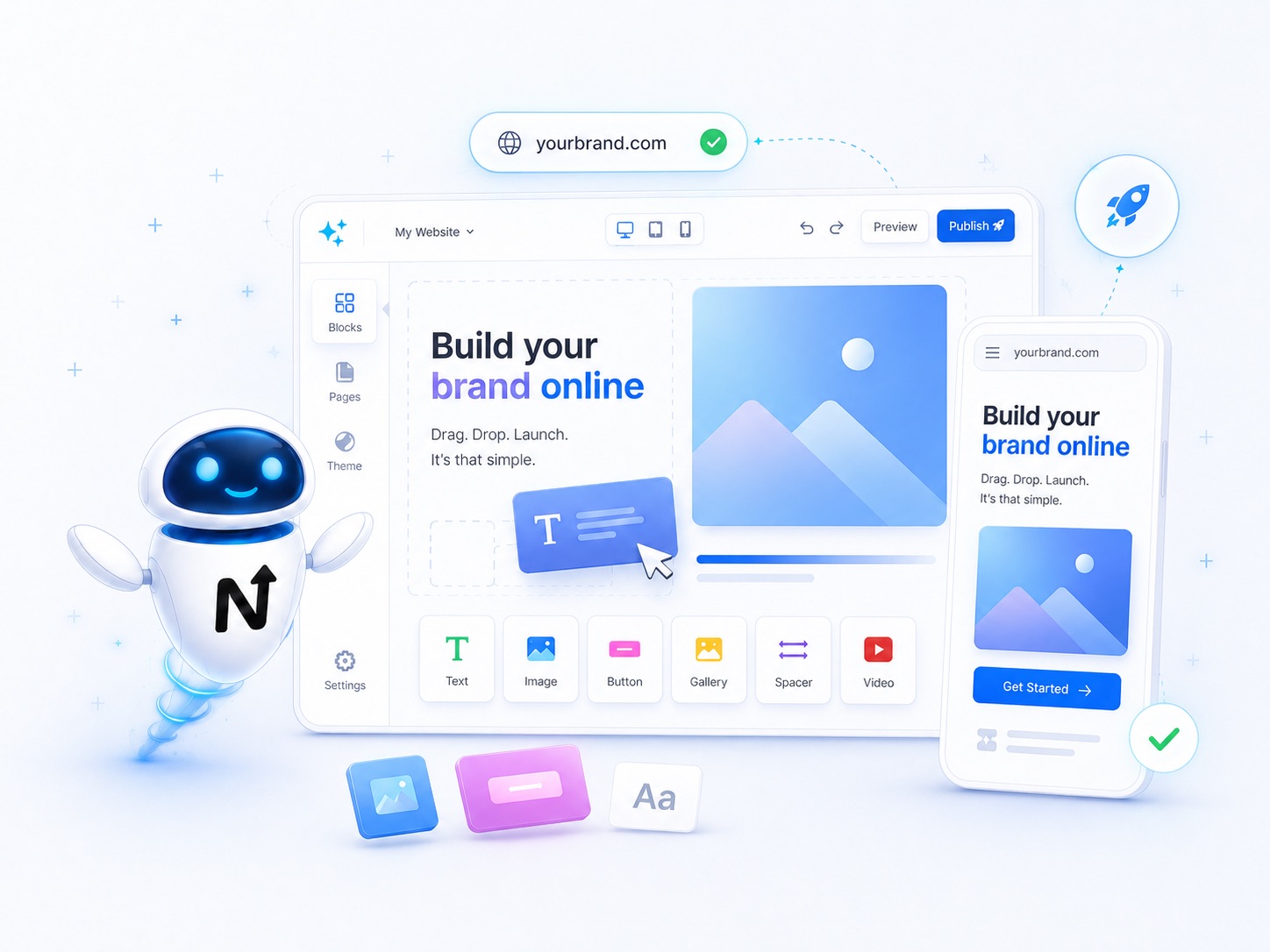
Website builders
AI website builders with drag-and-drop editing turn a simple prompt into a live, mobile-ready brand site in minutes - no developer required.
Build a website
Professional email
you@yourbrand.com on enterprise-grade email, set up the moment you own the domain. Calendar, drive and meetings included.
Set up emailFrequently Asked Questions
The strongest brand names range from one short brandable word (Apple, Nike, Google, Tesla, Kodak, LEGO) to a clean two-word compound (Facebook, Microsoft, PayPal, YouTube, Airbnb). Longer names like International Business Machines or Bayerische Motoren Werke can work when the full form has historical weight, but even long names usually operate with a shortened working form in everyday customer conversation. Aim for a name that can fit on a product, in a press headline, and on a social avatar without feeling crowded.
Almost never. Many of the strongest brands either build a category word into a tight meaningful compound (Microsoft, YouTube, PayPal) or skip the descriptor entirely and let the brand word stand alone (Apple, Nike, Tesla, Google). The weakest pattern is a generic "[X] Brand Co." or "[X] Company" that adds no distinct identity beyond the descriptor. Test your name both with and without the descriptor and pick the version that sounds more confident in conversation.
Yes, and it has a long history in commerce (Ford, Disney, Tesla, Hewlett-Packard, Procter & Gamble). The risk comes when the founder's name does not carry enough brand weight on its own, or when the business grows beyond the founder. If you expect to scale into a household name, consider whether the founder name will still work when the brand is managed by a second generation or under a new corporate parent.
Before you compromise on an awkward variation, explore strategic alternative TLDs, stylized alt spellings, or distinctive visual treatments that make the name ownable even if the plain .com is gone. In modern brand-building specifically, the alt TLD landscape has real momentum behind it, and a clean one-word name on .now, .ai, .io, or .bot often outperforms a stretched two-word .com.
Run collision checks against Google, Amazon, the USPTO trademark registry, Instagram, and the major social platforms. Brands launch constantly, and a name that reads as original in your head may already belong to a brand in another category or another country. A fifteen-minute check before commitment saves months of rebrand pain later.
A clean USPTO trademark search before you commit to branding is essential. Generic descriptors like "Best Brand" or "Premium Products" are almost impossible to trademark cleanly because so many businesses use similar terms. Distinctive brandables, evocative words, or stylized compounds are far easier to protect. Trademarks can also be complicated by existing marks in adjacent categories, so consulting a trademark attorney before you make major investments in branding is almost always worth it.
You can, but it is expensive and slow. Rebranding a real brand means replacing labels and packaging on every SKU, refreshing every retailer relationship, rebuilding the website, re-anchoring every social handle, updating every press kit, and re-training every customer who already knows the original name. Established customer and partner relationships take time to re-train to the new brand. Almost always cheaper to spend more time getting the name right upfront than to rebrand later.
Often yes, especially for brands that hope to become household names. A high impact domain is a one-time cost that pays for itself over years of lower customer acquisition cost, stronger first impressions, and the simple fact that customers can find the brand reliably on the first try. Compare the investment to the cost of a single year of paid advertising and influencer partnerships, and the math usually works out in favor of the stronger ready-made brand asset for any brand built to scale.
The smartest next step
You now have the styles, the real-world examples, the domain logic, and the shortlist discipline to find a brand name that will carry your business for decades. The fastest way to turn all of that into a real shortlist is to run your positioning through a generator built specifically for this kind of decision.
NextBrand's free and unlimited Brand Name Generator combines advanced AI with naming patterns drawn from thousands of real brands across consumer products, technology, fashion, food, beauty, fitness, media, and every other category where brand-building matters, and surfaces candidates in seconds with logo-style previews and real-time domain and social handle availability. You can filter by naming style, shortlist the names that feel right, share the list for feedback with trusted advisors, and claim the one that fits before a competitor does.
If you find a name that moves you but want a ready-made brand with the digital presence already built, NextBrand's strategic domains collection has high impact brand-grade names available on both .com and high-trust alternative extensions, many of them with the kind of short, memorable roots that would take years to build from scratch.
Whichever path you choose, the single most valuable thing you can do right now is move the naming decision out of your head and onto a shortlist you can actually evaluate. The brand you will build for the next twenty years deserves a name you chose with intention, not a name you settled on because you ran out of time. Claim the name that will still feel right on your millionth customer.
Ready to find your name?
Pick your path and start exploring.