
AgencyName Ideas
How to name an agency -The Complete Guide
Explore agency name ideas with real brand examples (Ogilvy, Wieden+Kennedy, Droga5, Mother), six naming frameworks, domain strategy, and a shortlist process to pick a name that wins pitches.
Naming an agency is one of the most consequential creative decisions a founder will ever make. The name sits on the pitch deck cover, the masthead of every case study, the awards entry form at Cannes and the One Show, and the contributor line on every campaign that goes into the world. Prospective clients read it before the first call. Industry press quote it when the work lands. Creative talent evaluate it before deciding which shops to apply to. This guide walks through how the strongest agency brands earned their names, the six naming styles that produce most great agency marks, the domain strategy that lets the name actually travel, and the shortlist discipline that turns ten candidates into the one you will be proud to say out loud for the next fifteen years.
At a Glance
A strong agency name sits at the intersection of three qualities: distinctiveness in a crowded market, pitch-deck presence on every cover slide, and voice alignment with the work the shop wants to make. Names like Mother, Anomaly, Droga5, and 72andSunny became instantly recognizable because they refused to look like every other agency from the first read. This guide covers six naming styles (Brandable, Compound, Alt Spelling, Real Word, Acronym, and Evocative), how to pair each one with a domain that actually matches the brand, when alternative TLDs like .now and .ai outperform a compromised .com, and the shortlist process that turns candidates into a final pick. The fastest way to move from theory to a real shortlist is to run your positioning through the Agency Name Generator at the end of this page.
Should your domain name match your agency name?
Yes, your domain should match your agency name, with almost no exceptions. Agencies live on referrals, press, awards recognition, and direct lookups. A prospective client reads a Fast Company profile, googles the agency, and expects to land on the right site in two clicks. A journalist covering an AdAge A-List announcement needs to link to the shop in a deadline piece. A creative director at another agency forwards a piece of work in a group chat and mentions the shop by URL. Every one of those moments ends with someone typing a name into a phone or a computer. If the domain does not match the brand, you lose most of that traffic to competitors, squatters, or simple confusion.
Agencies also operate in a category where the domain is part of the craft signal. A clean, short, matching domain tells a prospective client that the shop cares about the details of its own brand. A compromised, awkward, or obviously-second-choice domain sends the opposite signal, and sophisticated marketers notice. In a pitch competition where three shops are otherwise evenly matched, the domain can be part of the reason the tie gets broken in someone else's favor.
The naming style you choose will shape the domain strategy you can actually execute. In agencies specifically, short single-word .coms are almost all taken after a century of creative shop launches, and many of the best founder-compound .coms belong to holding company portfolio agencies that will not sell. That means most new shops end up in one of four patterns:
• Pattern one: short .com matching the working brand.
The most reliable pattern. A single-word brandable or short compound produces clean URLs like ogilvy.com, motherlondon.com, or rethinkcanada.com. The shorter the brand root, the easier the URL.
• Pattern two: strategic alternative TLD.
When the .com is gone but a brand-only domain on a high-trust alternative TLD is available, it can outperform a stretched compromise. Extensions like .now, .ai, and .org each carry specific meaning in the agency landscape.
• Pattern three: brand plus descriptor .com.
A longer but still readable option pairing the agency name with a region, specialty, or category word. Patterns like agencygroup.com, agencynyc.com, or agencycreative.com clear most domain checks but become a limiter if the shop expands beyond a single region.
• Pattern four: stylized variant as a feature.
Some of the best-known agency domains build the alt-spelling styling into the URL itself. 72andsunny.com, vaynermedia.com, and droga5.com all work because the styling is inseparable from the brand.
What you want to avoid is the trap of a distinctive agency name paired with a compromised domain. If the only URL you can get requires hyphens, numbers tacked on to the end, or a regional suffix you do not actually want, the brand will fight you every time a prospect tries to type it. The short answer: if you can own the domain that exactly matches your agency name, do it. If you cannot, reshape the name so you can.
Why a strong agency name and domain are worth the effort
It is tempting to think of agency naming as a personal branding exercise separate from the business of running a shop. In the agency category, the two are inseparable. The name and the domain together drive outcomes that show up directly in new business, talent recruitment, and how much it costs to compete for every pitch.
A strong name creates immediate online presence.
When a prospect hears about your agency in a conversation where they cannot ask follow-up questions, a clean matching domain means they can evaluate the shop in the next five minutes. Wieden+Kennedy, Ogilvy, and Droga5 all anchored decades of new business partly because their digital presences looked like the scale of the agencies themselves from the very first click.
A strong name signals authority from day one.
A name that reads as confident in a pitch deck, a client proposal, and an awards submission earns the benefit of the doubt from prospective clients, press, and creative talent alike. That benefit of the doubt converts into invitations to pitch, press coverage, and senior hires who bring their own books of business.
A strong name is memorable and easy to share.
Agency new business travels through networks of CMOs, brand directors, and other agency founders who recommend each other in conversation and in email. A name that other people can drop into a subject line or a coffee meeting without stumbling compounds every time someone shares it. Names that require spelling, correction, or explanation quietly die in the gap between 'you should talk to' and 'here is their contact information.'
A strong name builds trust over the full arc of a client relationship.
Wieden+Kennedy has held Nike for more than four decades. Droga5 held the New York Times for more than a decade. The agency's name becomes part of how the client thinks about their brand, and that is one of the strongest retention mechanics in professional services. All of this compounds into reduced marketing spend and lower client acquisition cost over the life of the shop.
What matters most when naming an agency
Voice match
The name has to sound like the work the agency wants to make. A shop doing irreverent consumer campaigns cannot name itself like a corporate strategy consultancy. A design studio working on quiet luxury brands cannot name itself like a stunt shop. Listen to the name out loud, read it in a sentence describing the work, picture it on the pitch deck for your dream client. If the voice does not match, the name will quietly fight the agency on every campaign it ever produces.
The pitch deck cover test
Print your proposed agency name at the size it would appear on the cover of a new business pitch deck. Does it read as confident? Does it carry the weight of a team that just walked into the conference room? A name that feels uncertain on a pitch deck cover will feel uncertain in every pitch the agency ever gives, which is one of the highest-leverage filters available before you commit.
The press quote test
Write a mock sentence from an Ad Age or Campaign US article: 'Founded in 2026, [your agency name] has quickly become known for...' Does the name sit naturally in that sentence? Does it feel like a shop a journalist would want to write about? Agencies live in trade press for decades, and names that sound awkward in reporter copy stay awkward for the life of the brand.
The awards show test
Picture the name being called out at a Cannes Lions, One Show, or D&AD ceremony. Does it carry over a microphone? Does it sit comfortably in a list of other winners? Names that feel right on an awards stage are names the agency will be proud to hear called out for the next twenty years. Names that do not are names the founders quietly wince at every time the shop wins.
Pronounceability across regions
Agency work is increasingly global. A New York shop will present to clients in London, Sao Paulo, Tokyo, and Berlin within the first few years if the work is good. Names that require specific English pronunciation, rely on puns that only work in one dialect, or contain letter combinations that trip up non-native English speakers create friction at every international touch point. Short, clean, simple names travel best.
Trademark and domain availability together
The strongest agency names are the ones where the name, the .com or strong alternative TLD, and the social handles are all available in the same moment. A name whose matching .com is owned by a squatter and whose Instagram, LinkedIn, and X handles belong to other brands is a name you will fight every day. Reshape the name upfront so the full package is clean rather than launching with compromises you will regret for a decade.
Category collision check
Before committing, search your proposed name plus the word 'agency' across Google, LinkedIn, and the AdAge A-List. Agencies launch constantly, and a name that reads as original in your head may already belong to a shop two cities over. A fifteen-minute check up front can save months of rebrand pain later, and it is one of the cheapest insurance policies available before any branding investment.
Agency name ideas by naming style
Six proven approaches to naming your agency, each with real examples and practical guidance.
Brandable agency name ideas
Brandable agency names are invented or repurposed single words that carry no direct meaning in advertising but function as the whole brand. They are harder to land than founder compounds because agencies have deep traditions of partner surnames and descriptive shop names, but the agencies that have succeeded with single-word brandable marks have claimed mental real estate no compound-named competitor can fully match.
A single-word brandable does marketing work every time it appears. It telegraphs the agency's point of view before a prospect reads a single case study and outlives founders by generations.
Five real examples worth studying
- •Ogilvy at ogilvy.com:
Founder surname that has long since functioned as a pure brandable in the global market, carrying decades of advertising authority on one short, ownable word.
- •Anomaly at anomaly.com:
Repurposed English word meaning 'something that deviates from what is standard'; the name signals the shop's position against conventional agency models from the first read.
- •Mother at motherlondon.com:
Repurposed real word that reads as pure brandable at scale; the warmth and confidence of the single word set a tone surname-compound shops can only imitate.
- •Preacher at preacher.co:
Repurposed single word that signals brand-first creative with soulful storytelling, giving a modern independent shop a distinctive voice the moment it appears.
- •Havas at havas.com:
Founder-derived brandable rooted in Charles-Louis Havas; functions as a pure single-word brand across dozens of countries, outliving the original founder by generations.
Best for shops with a distinctive point of view that deserves its own word, modern independents looking to punch above their size, and agencies positioning against conventional industry models.
Generate Brandable Agency Names
Compound agency name ideas
Compound agency names pair two or more surnames, or a surname plus a descriptor, into a readable brand. This is one of the most common styles in the creative industry. The format signals partnership, tracks cleanly to how founders built the shop, and creates a mark that carries the credibility of the named creatives directly into every pitch.
Compound names are the safest, most professionally recognized default for partnership-driven shops. Two surnames together also often produce a URL that is still available when a single-word version would not be.
Five real examples worth studying
- •Wieden+Kennedy at wk.com:
Two-name compound joined with a plus sign rather than an ampersand; the punctuation became part of the brand's distinctive visual identity for one of the most admired independents in advertising.
- •Weber Shandwick at webershandwick.com:
Two-surname compound that reads as confident and institutional in a PR category that historically leaned on long founder-heavy names.
- •Goodby Silverstein & Partners at goodbysilverstein.com:
Three-word compound pairing two founder surnames with the traditional '& Partners' structure; preserves founders at the brand level while the suffix signals broader ownership.
- •Johannes Leonardo at johannesleonardo.com:
Two-founder compound stripped to given names rather than surnames, creating an artful and international read in a city full of surname-heavy shops.
- •Leo Burnett at leoburnett.com:
Two-name compound that has carried the firm through nearly a century of category-defining campaigns, reading with equal weight across holding company clients and independent talent.
Best for new agencies with a partnership structure, shops where the founders' personal reputations carry weight, and firms in PR, branding, or strategy where institutional credibility matters.
Generate Compound Agency Names
Alt Spelling agency name ideas
Alt spelling agency names intentionally break standard punctuation or spacing conventions to create a distinctive brand mark. In agency this often shows up as numeric modifiers, slash styling, backslash conventions, camelCase compounds, or stylized spacing. The pattern works when the deviation is intentional and carries a reason behind it.
A well-executed alt spelling makes the agency mark instantly recognizable and impossible to confuse with any other shop, while signaling design literacy from the first impression.
Five real examples worth studying
- •Droga5 at droga5.com:
Founder surname paired with a number; instantly recognizable, named Agency of the Year more than twenty-five times, and recognized as Agency of the Decade by both Ad Age and Adweek.
- •R/GA at rga.com:
Slash-styled compression of the original R/Greenberg Associates; the forward slash was preserved as a permanent design element and reads as tech-forward in every context.
- •TBWA-Chiat-Day at tbwa.com:
Backslash styling joins three legacy agency identities into a single working brand; the backslashes are a deliberate visual signature, not typographic accidents.
- •72andSunny at 72andsunny.com:
Number, the word 'and,' and a common adjective in a single camelCase compound; reads as California, warm, and distinctive in a category full of surname defaults.
- •VaynerMedia at vaynermedia.com:
camelCase compound joining a founder surname with 'Media'; signals modern and platform-native in a category where most names were built for a different era of advertising.
Best for agencies with a founder story, design element, or deliberate point of view that justifies the styling, and digital-first or design-led shops where typographic distinction is part of the brand voice.
Generate Alt Spelling Agency Names
Real Word agency name ideas
Real word agency names use a single common English word as the brand. The upside is instant recognition and strong positioning. The downside is that the most valuable single words are long gone, and the brand has to work hard to stand out in search. In agency specifically, the real-word category has grown as modern digital and performance shops reach for words that signal their specific craft.
A real word does category and positioning work continuously. The brand becomes an invitation to think a certain way before the work even begins.
Five real examples worth studying
- •Accenture Song at accenture.com/song:
Single real word chosen to evoke creativity, rhythm, and emotional resonance; gave the world's largest professional services firm a creative identity that tech-industry parent branding could not deliver.
- •Publicis at publicisgroupe.com:
Single real-word name rooted in the Latin root for 'public' or 'publicity'; functions as both a name and a category descriptor across hundreds of agencies under the group umbrella.
- •Dentsu at dentsu.com:
Single real-word name drawn from the Japanese characters for 'electric' and 'communication'; reads as modern and ownable in both domestic and international markets.
- •Translation at translationllc.com:
Single real-word name carrying both cultural positioning and a clear functional description of what the agency does on every brief connecting brands to culture.
- •Rethink at rethinkideas.com:
Single real-word name that signals the shop's approach directly; the word itself is an invitation to reconsider, exactly the frame a creative agency wants to plant before the work begins.
Best when the word itself carries positioning that matches the shop's point of view, particularly for creative, cultural, or strategy-led agencies where the word becomes part of the value proposition.
Generate Real Word Agency Names
Acronym agency name ideas
Acronym agency names compress a longer founder or partner compound into a shortened mark, usually the initial letters of the founding surnames. In advertising this pattern is one of the most common at the top of the market, where holding company networks and long-running global agencies have almost universally collapsed multi-name compounds into short, portable acronyms.
Short acronyms are portable across global markets, fit cleanly in logos and URLs, and let an agency carry decades of legacy without dragging a long compound through every touchpoint.
Real examples worth studying
- •BBDO at bbdo.com:
Four-letter acronym derived from Batten, Barton, Durstine & Osborn; reads as confident and institutional with two hundred eighty-nine offices across eighty-one countries and seven Cannes Network of the Year titles.
- •VML at vml.com:
Three-letter acronym formed in a 2023 merger that compresses J. Walter Thompson, Wunderman, Young & Rubicam, and VML legacies into a single mark across sixty-four markets.
- •DDB at ddb.com:
Three-letter acronym derived from Doyle Dane Bernbach; short, memorable, and reads as a confident brand in its own right while carrying generations of iconic work from the Volkswagen 'Think Small' era forward.
- •McCann at mccann.com:
Acronym-adjacent compression from McCann-Erickson into a cleaner single-surname mark; shows how a founder name can be optimized without losing heritage equity across one hundred plus countries.
- •WPP at wpp.com:
Three-letter acronym originally Wire and Plastic Products; now anchors one of the largest brands in professional services with roughly fourteen billion pounds in 2024 revenue, even after the underlying letters lost their original reference.
- •MS.now at ms.now:
Formerly MSNBC, the major cable news network rebranded to MS NOW as part of its spin-off from NBCUniversal into the new company Versant. The move to the .now domain was deliberate: it signals urgency, modernity, and a fresh start while retaining the recognizable "MS" initials. For agencies, pairing initials with a modern extension like .now could work for shops positioning around fast turnaround, always-on campaigns, or real-time creative.
Best for established agencies with real founding partner structures or major merger histories that need a portable global mark, and legacy networks looking to modernize an unwieldy compound.
Generate Acronym Agency Names
Evocative agency name ideas
Evocative agency names create a feeling, image, or association that signals the shop's personality and point of view without literally describing the work. Evocative names have become one of the most important patterns in modern independent agencies, because the category rewards shops that feel distinctive from the first read, and an evocative name does that work continuously.
An evocative name plants a feeling before the work is shown. It attracts the talent and the clients who respond to the positioning the name directly implies, doing brand voice work continuously.
Five real examples worth studying
- •Mischief @ No Fixed Address at mischiefusa.com:
Evocative compound combining a personality descriptor with a geographic provocation; named Adweek's U.S. Agency of the Year for the second time in 2025 with revenue up forty-eight percent year-over-year.
- •Pentagram at pentagram.com:
Evocative single word referencing the five-pointed star geometric form; signals design sophistication and classical sensibility for the world's largest independent design studio.
- •GUT at gut.tv:
Evocative three-letter brand signaling instinct, conviction, and creative honesty in a category often crowded with consulting-speak; the short distinctive word attracts the talent and clients the positioning implies.
- •Huge at hugeinc.com:
Evocative single word signaling ambition, scale, and confidence without describing any specific capability; reads as a pure brand statement in a digital agency landscape full of descriptive compounds.
- •Barbarian at barbariangroup.com:
Evocative single word signaling disruption and a willingness to push past conventional marketing thinking; creates immediate voice in a crowded digital-creative category at roughly twenty-seven million dollars in annual revenue.
Best for independent shops with a clear personality and creative point of view, design-led studios, and agencies where atmospheric signaling separates the brand from a sea of descriptive compounds.
Generate Evocative Agency Names
Domain strategy: standard registration vs. premium domains
Once you have a name in mind, the next real decision is how you actually acquire the domain that will carry it. In agencies specifically, this comes down to a choice between two paths: registering a clean standard domain at registrar prices, or acquiring a premium domain that has already been claimed and is held as a brand-grade asset. Each path has a different cost, a different timeline, and a different long-term effect on the agency's brand.
When a standard registration is enough.
A standard registration is the right call when you have invented a distinctive enough agency name that the exact match is still freely registerable, when the shop is launching at a stage where every dollar of capital matters more than perception polish, or when you are building a small founder-led practice where the domain will primarily serve a referral-and-pitch audience rather than a broad cold-traffic acquisition motion. If your name is a coined brandable, an unusual founder-compound, or an evocative phrase that has not been registered before, a clean standard registration on the right extension can carry the agency through every important brand surface without compromise. This is how many independent shops launch, and it is a perfectly defensible choice when the name and the work itself are doing enough of the differentiation.
When a premium domain is the smarter move.
A premium domain is the smarter move when the agency is being built to compete for serious account-level work from sophisticated brand clients, when the founders want a name that competes with the established holding-company shops with decades of head start, or when the exact name you genuinely want is already registered, which is the case for almost every short, memorable, agency-relevant name. Premium domains tend to be short, easy to spell, easy to say out loud over a phone, and immediately recognizable as a real brand mark rather than a registrar-grade compromise. For an agency competing against shops that have spent decades building brand equity, a premium domain can close the perception gap on day one in a way that no amount of new business outreach or trade press investment can replicate later.
The tradeoffs in practice.
The decision affects almost every dimension of how the agency will be perceived and how it will perform commercially. Trust rises sharply with a clean, short, exact-match domain because sophisticated marketers read the URL as a signal of how the agency invests in its own brand, and an agency that cannot brand itself well has a credibility problem from the first slide. Memorability is a function of length and pattern simplicity, and premium domains are almost always shorter and cleaner than what is still available as a standard registration. Brand strength compounds over the life of the shop, and a strong domain becomes inseparable from the brand mark in client and trade-press conversations. Discoverability in search and direct typing favors short, exact-match domains, which is part of why the most successful agencies over time have invested in the domain alongside the rest of the brand identity. Direct traffic from word-of-mouth, podcast appearances, awards mentions, and offline press all routes through whatever URL the audience can guess on the first try. Long-term positioning in a category as taste-driven as advertising and creative services is permanently shaped by the domain clients end up associating with the shop. Conversion potential from prospect to pitch invitation to retained client is meaningfully higher when the URL itself signals an agency at the same level as the work the shop actually produces.
Practical guidance for agencies.
The right call usually depends on where the agency sits on the ambition curve. A part-time creative consultancy, a small two-founder shop, or a regional boutique can often build a strong brand on a clean standard registration of a distinctive enough name. An agency aiming to compete for sophisticated account work, attract senior creative talent, or scale into a multi-discipline shop almost always benefits from investing in a premium domain upfront, because every year the agency operates without one is a year of compounded perception cost that is harder to recover later. The cost of a premium domain is a one-time investment. The cost of operating on a compromised domain is a recurring tax on every pitch the agency ever gives.
How to choose the right domain extension
Domain extensions are not interchangeable. Each one carries signals that prospects, journalists, and creative talent pick up subconsciously, and the right choice depends on the positioning of your agency. The .com extension remains the strongest default for agencies that want maximum reach, recognition, and trust across every audience including senior brand-side marketers, agency review consultants, trade press, and conservative procurement teams at major holding-company clients. Alternative extensions like .now, .ai, .agency, and .org each carry their own meaning, and the right alt TLD can outperform a compromised .com when the extension matches the agency's positioning and the brand-matching exact word is available there. Below we walk through the extensions that matter most in agency and show how real shops have used each one to support their identity, with both the .com pairings worth studying and the alternative TLD pairings worth studying that the modern agency landscape rewards.
Brand-matching .com pairings worth studying
The most common agency domain strategy is a short brand-matching .com that matches the working shop name exactly or pairs it with a clean styling element. This pattern is the safest, most trusted, and most discoverable option for the vast majority of creative shops, and the examples below show how to do it cleanly.
• Ogilvy at ogilvy.com
shows the short single-word brandable at its cleanest, with a six-letter founder-derived brand sitting on a six-letter matching .com. The URL is easy to spell, easy to remember, and matches exactly how prospects refer to the agency in conversation.
• Wieden+Kennedy at wk.com and wklondon.com
uses two abbreviation strategies at once. The global flagship sits on a two-letter initials .com for the simplest possible direct lookup, while the London office claims a two-letter-plus-city variant that makes the office's identity easy to find. The pattern shows how a major independent network can handle multiple office URLs without fragmenting the brand.
• Droga5 at droga5.com
demonstrates how a stylized alt-spelling brand can claim an exact-match .com when the styling is treated as part of the domain itself. The URL carries the same distinctive visual signature as the brand, which is part of why the mark is instantly recognizable in every context.
• BBDO at bbdo.com
shows the acronym pattern at its cleanest, with a four-letter acronym sitting on a four-letter matching .com. The URL is as short and portable as it gets in global advertising, and it is one of the reasons the network operates as a single unified brand across eighty-one countries.
• R/GA at rga.com
takes the abbreviation-of-stylized-brand path, dropping the slash at the domain level to produce a three-letter URL that works universally across email, browsers, and pitches. The pattern is instructive for any agency whose brand includes a stylized mark that cannot travel into a URL cleanly: the .com can carry the letters without the styling, while the brand preserves the full styling everywhere else.
Brand-matching alternative TLD pairings worth studying
Alt TLD adoption in agency and marketing is growing, driven by modern creative shops, performance agencies, AI-native marketing platforms, and studios that want a URL as distinctive as the work. The examples below show how to use non-.com extensions to reinforce positioning rather than just fill a gap.
• Agency.now
captures the category noun and the immediacy signal at the same time. For a modern creative shop, a performance marketing agency, an on-demand creative studio, or any new brand positioning itself as the next generation of agency work, Agency.now does enormous positioning work before a prospect reads a single line of copy. The domain reads as confident, category-defining, and built for how brands now expect to access creative partners. It is also one of the few URLs that can anchor an entire brand on its own, with the name and the URL doing the same work.
• American Association of Advertising Agencies at aaaa.org
represents the category's most important .org, hosting the national trade association representing the advertising agency business in the United States since 1917. The 4As serves more than six hundred member agencies across twelve hundred offices, which together direct more than eighty-five percent of total US advertising spend. The .org extension signals the standards-setting, advocacy, and industry-infrastructure role the association plays across American advertising, and it carries the exact right signal for any trade group, industry initiative, or non-commercial organization in the agency ecosystem.
• Media.now
captures a slightly different positioning, anchoring the media buying and planning side of the industry. For a media agency, a programmatic platform, a modern media consultancy, or an integrated media-plus-creative shop that wants to differentiate from both traditional media networks and pure creative agencies, Media.now signals the specific discipline the shop operates in alongside the immediacy of the .now extension. The short, clean pairing is easy to remember, reads as modern, and gives a media-focused brand a URL as distinctive as the work itself.
• Copy.ai at copy.ai
demonstrates the .ai extension at full strength for a modern marketing platform serving more than seventeen million users including enterprise clients like Lenovo, Autodesk, Siemens, and ServiceNow. The pairing of a single common verb with the .ai TLD creates a domain that reads as both functional and category-defining, signaling AI-native positioning the moment a prospect sees the URL. For any modern marketing agency, AI-native creative shop, or copy and content platform building around generative AI, the lesson is direct: a clean common word on .ai can anchor a serious brand at scale without any compromise in credibility.
Agency is a category where the alt TLD landscape is actively forming. That is not a weakness, it is an opportunity. For shops positioning themselves around immediacy, category specificity, or a distinctive creative approach, the right alt TLD can carve out mental real estate that is still wide open in a market where the best .coms were claimed decades ago.
Shortlist the strongest names
Once you understand the six naming styles, the question becomes which one to lead with. Use this logic as a starting point:
Choose Brandable
if you want maximum trademark strength, global flexibility, and a single word that becomes the agency's mental shortcut. Best for independent creative shops with a distinctive point of view, modern AI-native agencies, and design-led consultancies.
Choose Compound
if you want instant clarity about who built the shop and a structurally professional mark that procurement processes recognize. Best for partnership-led agencies and PR or consulting firms where the named principals are part of the offering.
Choose Alt Spelling
if you want a deliberate twist on a familiar idea that creates an unmistakable visual signature. Best when the styling carries a real story, whether a founder name compressed with a number, a legacy mark preserved through a slash, or a camelCase compound reflecting modern positioning.
Choose Real Word
if you want elegance, simplicity, and pre-loaded meaning the moment a prospect hears the brand. Best for shops whose word choice carries strategic meaning aligned with the work, especially when paired with .ai or .now.
Choose Acronym
if your full name is long but well-known, or if a major merger event has produced multiple legacy brands worth compressing. Best for established networks rather than new shops inventing initials.
Choose Evocative
if you want to convey feeling and personality over literal function. Best for independent creative shops, design studios, and modern hybrid agencies whose positioning is as much emotional as functional.
Most strong agency brands lean primarily on one style and borrow lightly from a second. Mother is brandable but reads as evocative. Wieden+Kennedy is compound but the plus-sign styling is alt spelling. Pick a primary direction, then test variants inside the Agency Name Generator until the shortlist feels distinctive in your category.
Common mistakes to avoid
Over years of watching agencies launch, merge, and rebrand, a handful of naming mistakes show up again and again. Avoiding them does not guarantee a great name, but it removes the most common reasons agency brands underperform.
Hard to pronounce.
Agency new business depends on people saying the name out loud in referral conversations and pitch meetings. Names that require pronunciation guidance lose momentum every time they are introduced.
Hard to spell.
If a journalist on deadline cannot type the URL on the first try, the press mention does not convert into traffic. Test the name with three or four people who hear it once and try to write it down.
Too generic.
Names like 'The [X] Agency' or '[X] Studio Group' have become so common that they actively dilute the brand. The strongest shop brands almost always avoid the obvious agency vocabulary.
Too narrow.
Naming the shop after a single founder, a single discipline, or a single region creates a structural ceiling if the agency grows beyond its original scope. Choose a name that can accommodate new partners, new capabilities, and new markets.
Skipping domain and trademark checks.
Founders who leave the URL and USPTO checks to the end of the process usually end up with compromised domains and trademark exposure they regret for years. Bring both checks to the front of the process.
Looks clever in text but fails in conversation.
Some names look brilliant on a moodboard and die the first time a CMO tries to recommend them in a meeting. Always read the shortlist out loud to people outside the agency before committing.
Echoing an existing well-known shop.
Run collision checks against the AdAge A-List, the Adweek Agency List, LinkedIn, and Google. A name that reads as a deliberate echo of an existing shop creates both trademark risk and the weaker problem of looking like a follower.
Premium domain marketplace
Want to start strong?Secure an unforgettable domain name
The Agency & Consulting category holds hand-picked agency brand domains, each chosen for immediate presence, lasting trust, and the market positioning a fresh registration cannot match.
- Immediate online presence
- Signals authority from day one
- Memorable and easy to share
- Strong market positioning
- Builds trust and brand loyalty
- Designed for long-term growth


Beyond the name
Everything you need after the name is yours
Once your brand name is set, we get you live and running with the partners that handle everything else - fast, professional, and ready for customers.
Business formation
Spin up an LLC, Corporation or similar entity through vetted formation partners - paperwork, EIN and registered agent in one flow.
Form your business
Logo design
Hand the brief to professional designers or run a full design contest, whichever fits your budget and timeline.
Design your logo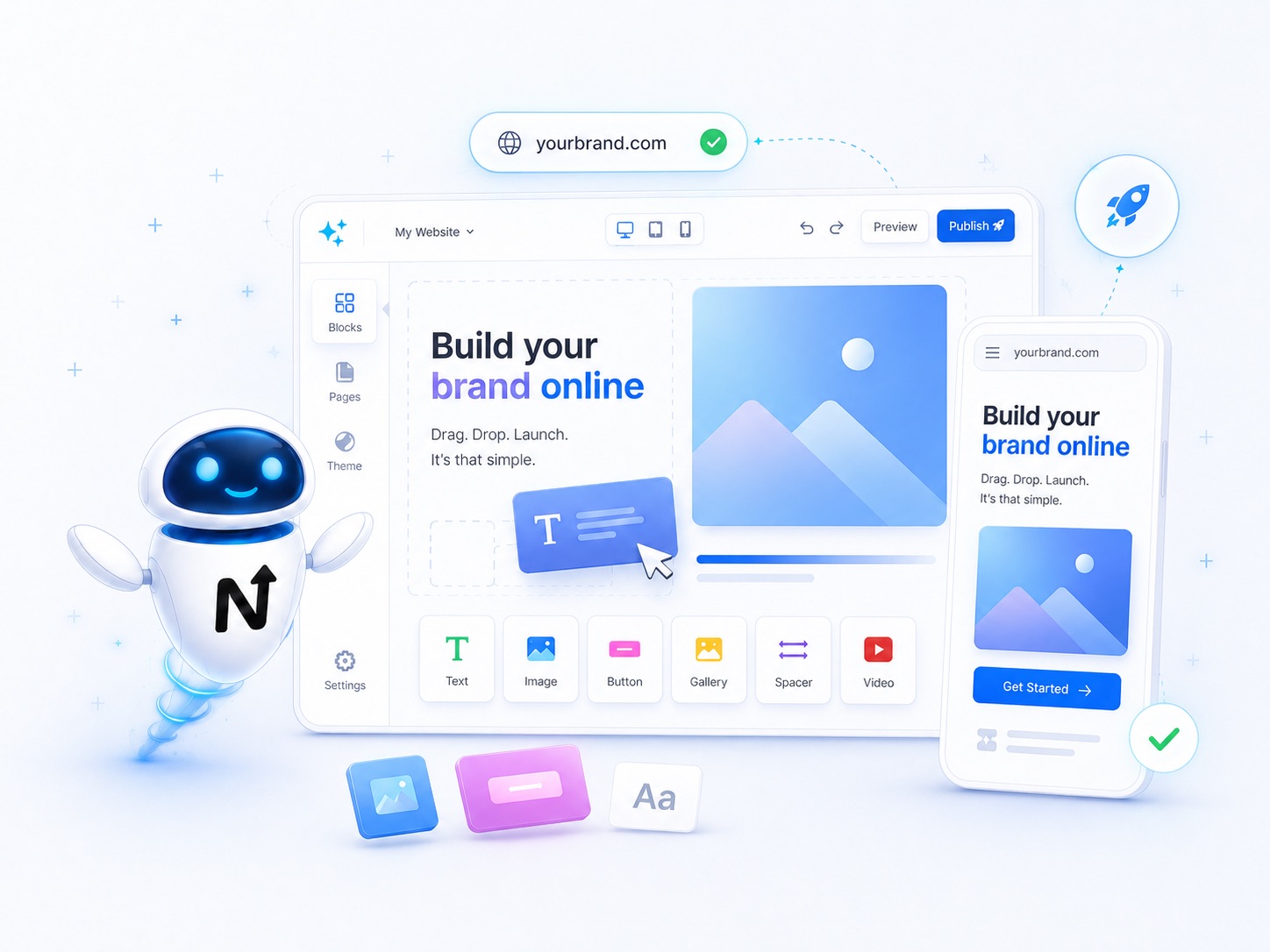
Website builders
AI website builders with drag-and-drop editing turn a simple prompt into a live, mobile-ready brand site in minutes - no developer required.
Build a website
Professional email
you@yourbrand.com on enterprise-grade email, set up the moment you own the domain. Calendar, drive and meetings included.
Set up emailFrequently Asked Questions
The strongest agency names range from one short brandable word (Mother, Anomaly, Ogilvy, Havas) to a clean two- or three-name compound (Wieden+Kennedy, Leo Burnett, Goodby Silverstein & Partners). Longer names like Mischief @ No Fixed Address can work when the full form is part of the agency's voice, but even long names usually operate with a shortened working form in everyday use. Aim for a name that fits in a pitch deck cover, a trade press headline, and a social handle without feeling crowded.
Usually not. The strongest shop brands almost never use descriptors like 'agency' or 'studio' in the main name because the brand word itself is doing the distinctive work and the category is understood from context. Modern performance, design, and consulting-adjacent shops sometimes use descriptors when they need the category signal in non-industry conversations, but check whether the descriptor is pulling weight or diluting the brand before you commit.
Yes, and it is one of the most common patterns in agency history. The risk comes when the shop grows beyond the solo founder. If you expect to add partners or scale beyond the original principal, name the agency in a way that can accommodate growth rather than binding the brand permanently to a single person.
Before you compromise on an awkward variation, explore strategic alternative TLDs, stylized alt spellings, or distinctive visual treatments that make the name ownable even if the plain .com is gone. In agency specifically, the alt TLD landscape has real momentum behind it, and a clean one-word name on .now or .ai often outperforms a stretched two-word .com.
Run collision checks against the AdAge A-List, the Adweek Agency List, LinkedIn, Google, and the USPTO trademark registry. Agencies launch constantly, and names that read as original in your head can belong to shops in other cities. A fifteen-minute check before commitment saves months of rebrand pain later.
A clean USPTO trademark search before you commit to branding is essential. Generic descriptors like 'Creative Agency' or 'Brand Studio' are almost impossible to trademark cleanly because so many shops use similar terms. Distinctive brandables, evocative words, or stylized compounds are far easier to protect. Consult a trademark attorney before you make major investments in branding based on the name.
You can, but it is expensive and slow. Rebranding an agency means replacing pitch decks, case study templates, the website, social handles, business cards, signage, and every press mention going forward. Established client and press relationships take time to re-anchor to the new brand. Almost always cheaper to spend more time getting the name right upfront than to rebrand later.
Often yes, especially in agency where direct lookups, referral traffic, and press coverage all depend on prospects finding the shop quickly. A high-impact domain is a one-time cost that pays for itself over years of lower new business acquisition cost and stronger first impressions with sophisticated prospects. Compare the investment to the cost of a single year of rankings submissions and the math usually works out in favor of the stronger ready-made brand asset.
The smartest next step
You now have the styles, the real-world examples, the domain logic, and the shortlist discipline to find an agency name that will carry the shop for decades. The fastest way to turn that into a real shortlist is to run your positioning through a generator built specifically for this kind of decision.
The Agency Name Generator is free and unlimited, combining advanced AI with naming patterns drawn from thousands of real agencies and marketing industry brands. You will see logo-style previews, real-time domain and social handle availability checks, and the ability to filter by naming style, shortlist the names that feel right, and share the list for feedback with trusted creative colleagues.
If you find a name that moves you but want a ready-made brand with the digital presence already built, the NextBrand premium marketplace has high-impact agency and creative industry names available on both .com and high-trust alternative extensions. Either way, the goal is the same: claim the name that will still feel right after your thousandth pitch.
Ready to find your name?
Pick your path and start exploring.